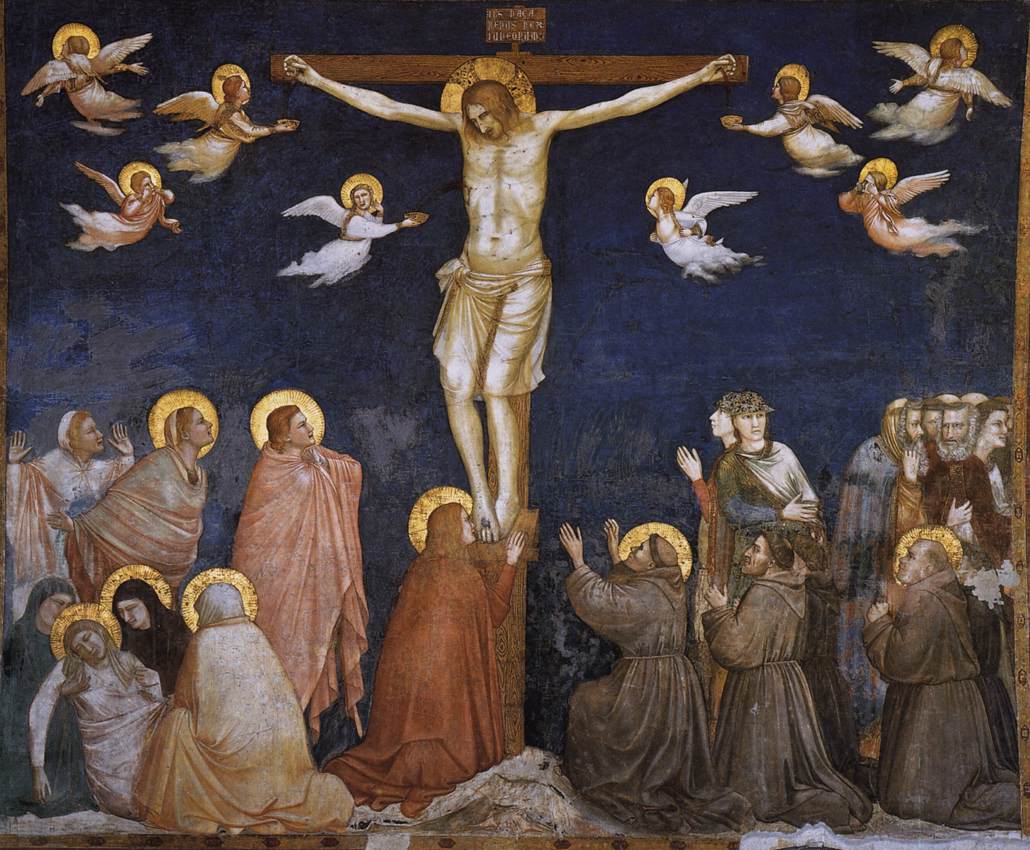
In John 11:47, as Jesus’ popularity grew, the Pharisee had asked of one another: what are we to do? The Pharisees themselves testify to the fulfillment of their fears in v.19: “So the Pharisees said to one another, “‘You see that you are gaining nothing. Look, the whole world has gone after him.’” Their confession of vulnerability (“You see that you are gaining nothing”); their hyperbolic announcement that the “world” (kosmos) has gone after Jesus provides ironic testimony to the truth of Caiaphas’s prophecy: 50 nor do you consider that it is better for you that one man should die instead of the people, so that the whole nation may not perish.” 51 He did not say this on his own, but since he was high priest for that year, he prophesied that Jesus was going to die for the nation, 52 and not only for the nation, but also to gather into one the dispersed children of God. (John 11:50-02) Continue reading
Monthly Archives: March 2018
Now is the time: context
20 Now there were some Greeks among those who had come up to worship at the feast. 21 They came to Philip, who was from Bethsaida in Galilee, and asked him, “Sir, we would like to see Jesus.” 22 Philip went and told Andrew; then Andrew and Philip went and told Jesus. 23 Jesus answered them, “The hour has come for the Son of Man to be glorified. 24 Amen, amen, I say to you, unless a grain of wheat falls to the ground and dies, it remains just a grain of wheat; but if it dies, it produces much fruit. 25 Whoever loves his life loses it, and whoever hates his life in this world will preserve it for eternal life. 26 Whoever serves me must follow me, and where I am, there also will my servant be. The Father will honor whoever serves me. 27 “I am troubled now. Yet what should I say? ‘Father, save me from this hour’? But it was for this purpose that I came to this hour. 28 Father, glorify your name.” Then a voice came from heaven, “I have glorified it and will glorify it again.” 29 The crowd there heard it and said it was thunder; but others said, “An angel has spoken to him.” 30 Jesus answered and said, “This voice did not come for my sake but for yours. 31 Now is the time of judgment on this world; now the ruler of this world will be driven out. 32 And when I am lifted up from the earth, I will draw everyone to myself.” 33 He said this indicating the kind of death he would die. Continue reading
Making room…
Lately, during weekday Mass celebrations, I have been asking people, “So…how’s your Lent going? Are you getting there?” It is just under three weeks until we celebrate the Mass of the Lord’s Supper on Holy Thursday. So…. how’s your Lent going?


A lot of the time people tell me that they have given up such and such for Lent and they are still good, sticking to the plan. That is a good thing. But I wonder, and often ask, “does that make room in your life for God?” Continue reading
Everyone who believes: a reflection
A Reflection from Gail O’Day [554-56]
In interpreting John 3:1–21, then, it is not enough to say on the basis of the discourse in vv. 11–21, for example, that this text is about faith, decision, and judgment, because that way of interpreting diminishes the full impact of the text. One needs the preceding dialogue, with Nicodemus’s misunderstanding and Jesus’ repeated offer of new images, to understand what the words of vv. 11–21 are really saying. The interpreter must attend to how John tells this story of Jesus and Nicodemus, how he moves the reader through the give and take between the two characters and thus affords the reader the chance to understand what Nicodemus can only misunderstand. Because the reader has participated in the dialogue between Jesus and Nicodemus, the words in vv. 11–21 are heard with more immediacy. Moreover, the reader has read the Prologue and attended to the witness of John, so that he or she has a wider theological context in which to place those words. Continue reading
Everyone who believes: living the truth
19 And this is the verdict, that the light came into the world, but people preferred darkness to light, because their works were evil. 20 For everyone who does wicked things hates the light and does not come toward the light, so that his works might not be exposed. 21 But whoever lives the truth comes to the light, so that his works may be clearly seen as done in God. These three verses portray this intricate balance between judgment and decision in the metaphorical language of light and darkness. This language recalls the language and imagery of the Prologue (1:5, 9-10). To love darkness more than light is the same as not believing, and it results in judgment (v. 19). Continue reading
Everyone who believes: given
Given. For God so loved the world that he gave his only Son, so that everyone who believes in him might not perish but might have eternal life. Verse 16 provides the link between the two parts of the discourse. It sums up vv. 14-15 by reiterating the salvific dimensions of Jesus’ death, but moves the argument forward with its reference to God’s love. God gave Jesus to the world because God loves the world. Continue reading
Everyone who believes: lifted up
Lifted up to Eternal Life. This section of the Gospel concludes with an impressive statement of the purpose of the death of Jesus. Jesus recalls the incident wherein, when fiery serpents bit the Israelites, Moses was told to make a snake of bronze and set it on a pole (Num. 21). Whoever looked at the bronze snake was healed. And, just as that snake was “lifted up” in the wilderness, so, Jesus says, “so must the Son of Man be lifted up.” Continue reading
Everyone who believes: context
14 And just as Moses lifted up the serpent in the desert, so must the Son of Man be lifted up, 15 so that everyone who believes in him may have eternal life.” 16 For God so loved the world that he gave his only Son, so that everyone who believes in him might not perish but might have eternal life. 17 For God did not send his Son into the world to condemn the world, but that the world might be saved through him. 18 Whoever believes in him will not be condemned, but whoever does not believe has already been condemned, because he has not believed in the name of the only Son of God. 19 And this is the verdict, that the light came into the world, but people preferred darkness to light, because their works were evil. 20 For everyone who does wicked things hates the light and does not come toward the light, so that his works might not be exposed. 21 But whoever lives the truth comes to the light, so that his works may be clearly seen as done in God. Continue reading
Temptation and Technology

The playwright Oscar Wilde once wrote, “I can resist anything except temptation.” The humor of the remark is mixed with a sad recognition that we fail so often to resist the temptations that come our way each day and from every direction. Of course, there are temptations and then there are temptations writ large. What are people’s greatest temptations? Why? What are their “favorite” sins — indicated by frequency and repetition? Why do we so often find ourselves in the same position as St. Paul? “What I do, I do not understand. For I do not do what I want, but I do what I hate.” (Romans 7:15). During this Lenten season, each of us is called to name our temptations as part of a moral and ethical struggle in trying to live a holy and righteous life. Then once we name that temptation, we begin to unfold and inspect, to then start to answer what it is about this temptation that becomes especially alluring. Such are the first steps to healing. Continue reading
My Father’s House: clarity
Clarity. 21 But he was speaking about the temple of his body. 22 Therefore, when he was raised from the dead, his disciples remembered that he had said this, and they came to believe the scripture and the word Jesus had spoken.
Verse 21 makes the second level of meaning of Jesus’ words is now made explicit. The Evangelist tells the reader that Jesus speaks of “the temple of his body.” Since for Judaism the Temple is the locus of God’s presence on earth, v. 21 suggests that Jesus’ body is now the locus of God. Verse 21 recalls 1:51 where the Son of Man replaces Jacob’s ladder as the locus of God’s interaction with the world. Continue reading