
 Next Sunday is the celebration of the 29th Sunday in Ordinary Time. You can read a complete commentary on the Gospel here.
15 Then the Pharisees went off and plotted how they might entrap him in speech. 16 They sent their disciples to him, with the Herodians, saying, “Teacher, we know that you are a truthful man and that you teach the way of God in accordance with the truth. And you are not concerned with anyone’s opinion, for you do not regard a person’s status. 17 Tell us, then, what is your opinion: Is it lawful to pay the census tax to Caesar or not?” 18 Knowing their malice, Jesus said, “Why are you testing me, you hypocrites? 19 Show me the coin that pays the census tax.” Then they handed him the Roman coin. 20 He said to them, “Whose image is this and whose inscription?” 21 They replied, “Caesar’s.” At that he said to them, “Then repay to Caesar what belongs to Caesar and to God what belongs to God.” 22 When they heard this they were amazed, and leaving him they went away. (Matthew 22:15-22) Continue reading
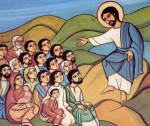
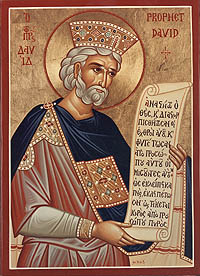 “The kingdom of heaven may be likened to a king…” Kings? Abraham, Isaac, Jacob, Moses, Joshua – some of the great names of Israel’s history. And none of them were king. Yet under the leadership of God, they led Israel from slavery to the freedom of the promised land. Deborah, Gideon, Samson – none of them were kings, yet under the leadership of God, these Judges united Israel to defend itself and its identity against the other nations. To be the qahal Yahweh – the people of God. And the last of the judges was Samuel. It was to Samuel (1 Sam 7) that the people came and said “Now that you are old, and your sons do not follow your example, appoint a king over us, as other nations have, to judge us.” When Samuel prayed about this before the Lord, God said in answer: “Grant the people’s every request. It is not you they reject, they are rejecting me as their king.” And God warned the people of the rights of those other kings:
  In the book of Genesis, the garden of Eden is portrayed as a high place where heaven and earth are one, and human relationships reflect this unity. But Eden is lost when humans rebel against God, so the unity between heaven, earth, and all humanity is fractured. God’s work throughout the rest of the Bible is all about recovering this lost unity. Israel’s tabernacle and temple served as symbolic Edens as they allowed for human and divine space to overlap. Because of Jesus, this place is no longer limited to one location, and the unity of Eden can be experienced wherever God’s people gather together in his love.
 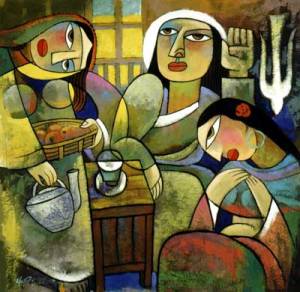 n this story I think more Martha is given a bit of a hard time. After all, Jesus says that Mary has chosen the better part and it will not be denied her. And what do we then conclude about the part that Mary has chosen. Another way to look at this is to put yourself in Martha’s shoes. Jesus shows up at your door – would you have the presence of mind and the willingness to throw open the door and invite him in? Regardless of the readiness or what’s in the refrigerator? Maybe there is a thing or two to learn from Martha
  Next Sunday is the celebration of the
 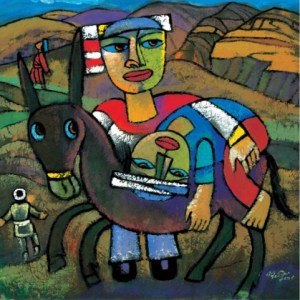 “Go and do likewise.” This seems like a pretty clear command from Jesus. You just heard the parable of the Good Samaritan, so what is it that you are to go and do likewise? Clearly the context for the parable is Jesus’ effort to tease out the scholar of the law what it means to love God and to love one’s neighbor – that’s the theory of it, but what are practical elements of the divine command? The scholar of the law never gets to that “because he wished to justify himself.” He asks Jesus, “And who is my neighbor?” And that is where the proverbial rubber hits the road. Even if the scholar figures out who his neighbor is, there are the practical matters of “doing.” Jesus words punctuate the ending: “Go and do likewise.”

 friarmusings