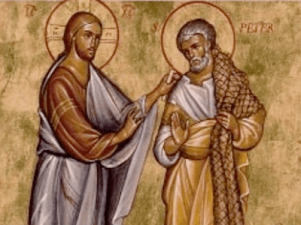
 He summoned the crowd with his disciples and said to them, “Whoever wishes to come after me must deny himself, take up his cross, and follow me. 35 For whoever wishes to save his life will lose it, but whoever loses his life for my sake and that of the gospel will save it. (Mark 7:34-35)
As Jesus often does, the private conversation gives way to summoning the crowd and the offer of a larger, summary teaching. Earlier (v.33) when Jesus accuses Peter of “thinking” (phreneo) there is an indication of not simply cognitive thought, but something arising from an inner disposition or attitude – something pointing to the role of the human will. This become more clear in the phrase (v.34), “Whoever wishes” – pointing to the idea of human will and freedom of carrying out that will. What is the role of the will in the practical implications of discipleship: deny oneself, take up your own cross, and follow Jesus.
Continue reading →
 The “blind leading the blind” is an idiom that can be traced back to the Upanishads (late Vedic Sanskrit texts of Hindu philosophy), which were written around 800 BCE:

