
Descent from the Cross

Museum of the Bible in Washington DC has a beautiful exhibition, Descent from the Cross. This exhibition explores how 21 artists across five centuries, multiple genres, and mixed media have visualized the scene in The Gospel of John, chapter 19, the moment Jesus is removed from the cross. This moment, traditionally called “Deposition” or “Descent from the Cross,” is not described in the Bible. There are no details explaining the process or who was present. Because of this, artists across the centuries have interpreted this emotional moment in unique and varying ways, each filling in the blanks with what they think might have happened. It has become a popular scene in art history, and thus a part of our shared visual language.

The earliest-known renderings of the scene appeared in the ninth century and soon became part of a cycle through the life of Christ and his passion, later known as the Stations of the Cross. But perhaps the most influential depiction was painted by Flemish master painter Rogier van der Weyden in 1435. The unique shape of the composition and the cramped “box” that the characters occupy create a theatrical look, like that of a stage play or a diorama. The sharp angles and rich details reflect the late Gothic, early Renaissance styles of northern Europe, and the crossbows seen in the corners honor the patron of this piece, the Leuven Guild of Archers.

Museum of the Bible
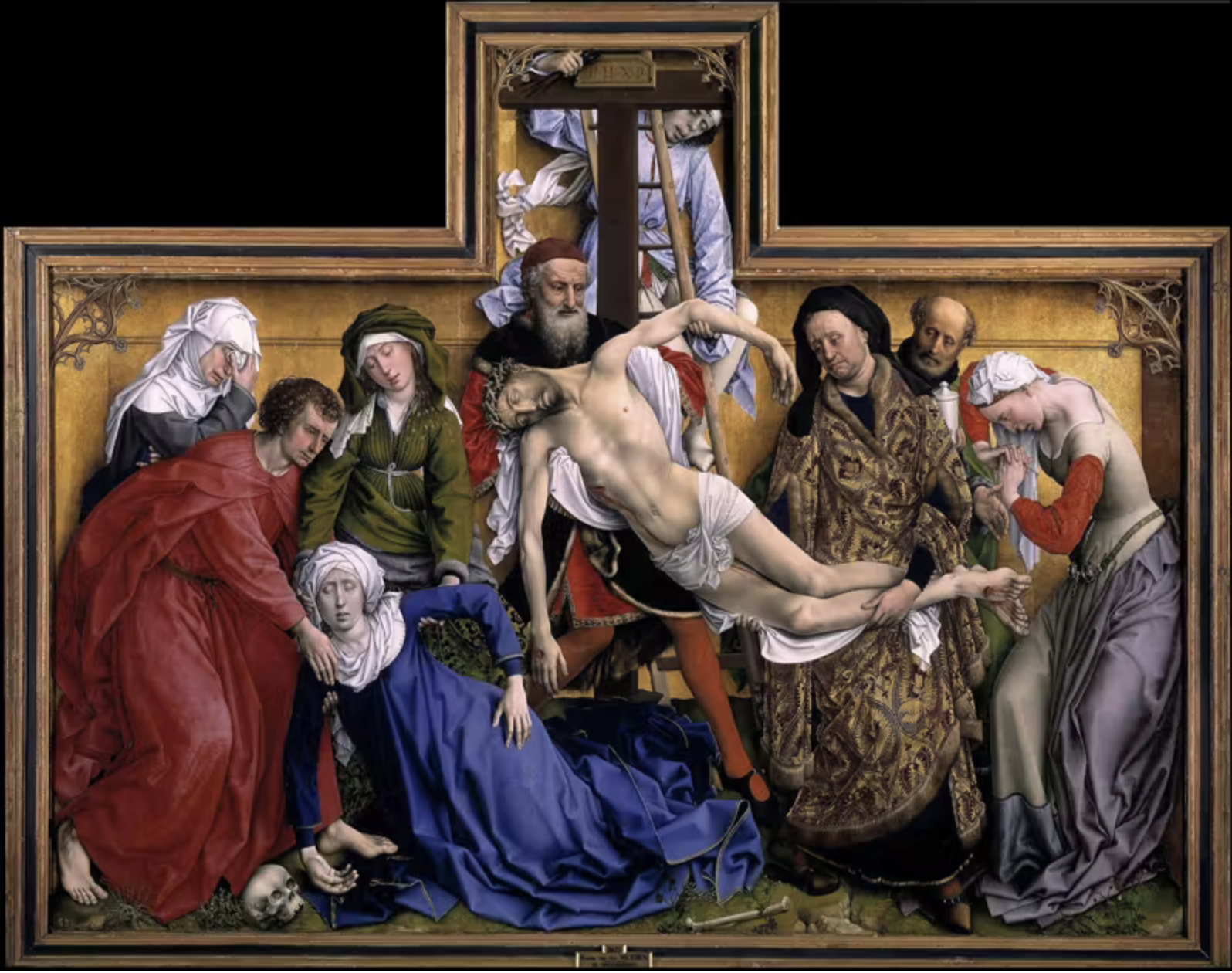
You can see the exhibit virtually at the Museum’s website by clicking the button below.


Image credit: Descent from the Cross | Rogier van der Weyden, ca. 1435 | Museo del Prado, Madrid | PD-US

In the darkness

There have been many a Good Friday in the course of my life. I have heard the Passion narrative. I led the Passion narrative during Good Friday liturgies. Over the many years of Bible study I have covered the Passion narrative more than a few times. And now thru the gift of my friends Jerry and Maureen, I experienced Good Friday in a way not to ever be forgotten.

Continue reading

The Presence of God

It seems to me that over the last year in homilies, bible studies and our OCIA classes for the folks entering the Catholic Church on Saturday evening at the Easter Vigil – that I have returned to a consistent theme: the efforts and the extent to which God strives to be present to us. One overarching theme of the Old Testament is a story of God drawing near and the people, hesitant to draw close and even eventually stepping back, keeping God at a distance. “Return to God” – a constant cry of Moses, Joshua, the Judges and Prophets of Israel – the signs of God’s care and compassion are everywhere. God wants to be close to us.

Holy Thursday’s first reading is taken from the story of Exodus. In that book the signs of God’s presence are everywhere: in the miracles done attempting to persuade Pharaoh, the great sign of the Passover, the parting of the Red Sea, leading the people through the wilderness as a pillar of fire by night and a cloud during the day. While encamped at Sinai after the “Golden Calf” incident, God instructed Moses to build the Tent of Meeting – literally a place where God could meet the people. The Tent was with them during the 40 years in the wilderness, and came with them into the Promised Land. Did you know that later the Tent was replaced by the great Temple in Jerusalem.  There is a description in First Chronicles of the dedication of this new “Tent of Meeting.”  During the dedication the glory of God is seen filling the Temple – the presence of God among people. Throughout the Hebrew Scriptures, God continually showed his people signs pointing to his presence, revealing His desire to be close to them. I could go on and on, but I think you get the point. All the while the people hesitated to draw close; they eventually drift away despite all the signs, the warnings of the prophets, and so much more.

All the while the compassion of God remained: the desire to be close to us.

Continue reading