The gospel for today’s Feast of St. Simon and Jude is the simple list of the Apostles as given in the Gospel of Luke. Early Christian writers and later stories link Simon and Jude as missionary partners, evangelizing together in Persia (modern Iran) or Mesopotamia (modern Iraq) where they suffered martyrdom together. For this reason, their feast days were merged very early on.
On this feast day, my attention was drawn to the first reading: “So then you are no longer strangers and sojourners, but you are fellow citizens with the holy ones and members of the household of God, built upon the foundation of the apostles and prophets, with Christ Jesus himself as the capstone.” (Eph 2:19-20) Specifically, I thought about the way St. Paul used the term foundation. In 1 Cor 3:11, St. Paul writes: “for no one can lay a foundation other than the one that is there, namely, Jesus Christ.” And what are we to make of Matthew 16:18 – “And so I say to you, you are Peter, and upon this rock I will build my church, and the gates of the netherworld shall not prevail against it.” That sounds pretty foundational.
It caught my attention because of the way different Christian denominations understand and misunderstand the Scriptural use of the same word as well as the broader metaphor of “building” the spiritual life in Christ. Consider 1 Peter 2:5 – “...like living stones, let yourselves be built into a spiritual house to be a holy priesthood to offer spiritual sacrifices acceptable to God through Jesus Christ.” The “spiritual house” clearly needs a foundation.
In New Testament writings we see the foundation described in Ephesians as the Apostles (New Covenant witnesses of Christ’s resurrection) and the Prophets (usually understood either as Old Testament prophets or Christian prophets active in the early Church). In this view the foundation represents the historical and revelatory basis upon which the Church is built. Christ is the keystone or cornerstone, the essential aligning and sustaining element. The Apostles and Prophets are the humaninstruments through whom the divine revelation and structure of the Church are communicated.
Other scripture points to Christ as the only foundation: “According to the grace of God given to me, like a wise master builder I laid a foundation, and another is building upon it. But each one must be careful how he builds upon it, for no one can lay a foundation other than the one that is there, namely, Jesus Christ.” (1 Cor 3:10-11) Here, Christ himself is the sole and irreplaceable foundation and the subsequent building (the Church’s growth and ministries) is built upon that foundation. Whereas Ephesians emphasizes apostolic tradition and continuity, Corinthians stresses Christ’s primacy.
In the letter to the Hebrews we read: “Therefore, let us leave behind the basic teaching about Christ and advance to maturity, without laying the foundation all over again: repentance from dead works and faith in God, instruction about baptisms and laying on of hands, resurrection of the dead and eternal judgment.” (Heb 6:1-2). Here, the foundation is doctrinal, not personal. It refers to the basic tenets of Christian faith and practice. The metaphor casts the foundation as the core teaching that allows growth toward spiritual maturity.
In the Book of Revelation we read: “The wall of the city had twelve courses of stones as its foundation, on which were inscribed the twelve names of the twelve apostles of the Lamb.” (Rev 21:14) This usage takes the eschatological image of the new Jerusalem as permanently built upon the apostolic foundation. Christ is the Lamb, but the Apostles are the named foundational stones — indicating the enduring authority and witness of apostolic teaching in the Church’s eternal form.
What does this all mean? It is what the Catholic Church has always proclaimed: the ultimate foundation of the Church is Christ Himself — the one in whom revelation, salvation, and unity originate. In his human lifetime Jesus was the means of communication, the teaching, eschatological fulfillment and “continuity.” After his death and resurrection, the foundation in the world rests on the teachings and story of Jesus, but now continuity is dependent upon the sure transmission of the faith via the Apostles and those appointed by them. This apostolic foundation refers to the instrumental mediation of the revelation of Jesus. They are the foundation through whom Christ’s word and authority are transmitted. They are the foundation in witness and structure.
The Church is the sure means by which you “...like living stones, let yourselves be built into a spiritual house to be a holy priesthood to offer spiritual sacrifices acceptable to God through Jesus Christ.”
Image credit: Flevit super illam (He wept over it) | Enrique Simonet (1892) | Museo del Prado, Madrid | Wikimedia Creative Commons | PD-US
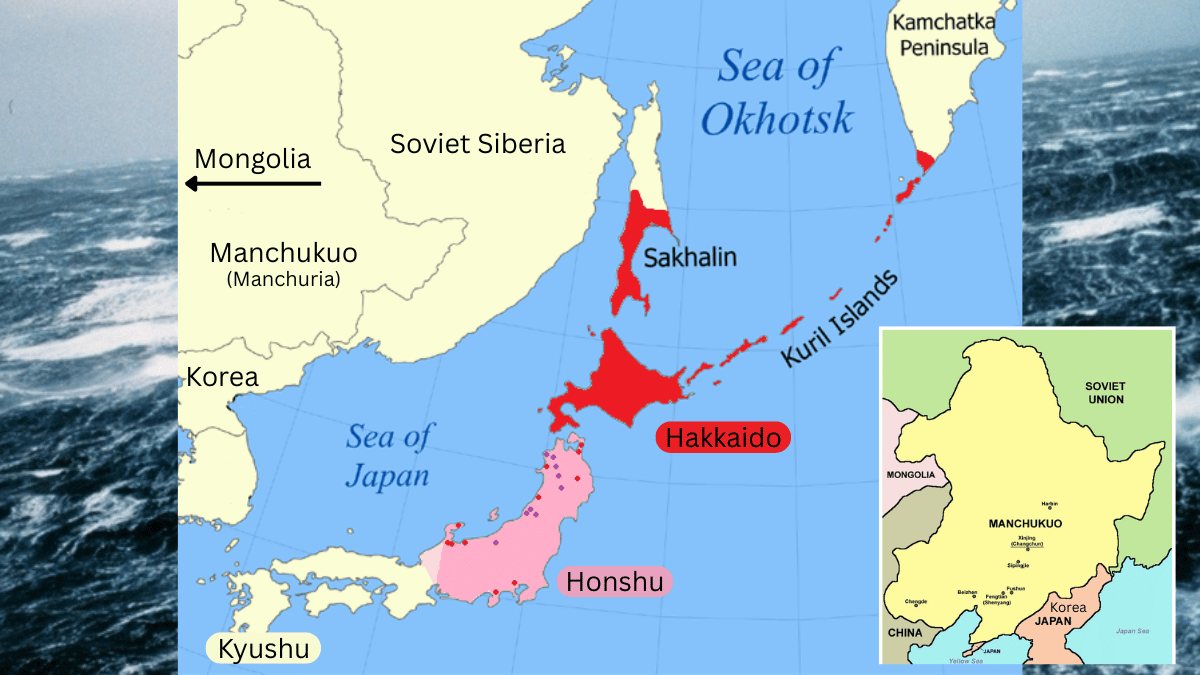
The Japanese-Soviet story is more detailed than discussed in this series to this point. It is important to understand the “history” between these two Asiatic imperial powers. In the series to date, we picked up the “story” when the Soviets announced that they would not renew the neutrality pact with Japan in April 1945, giving the required one year notice that by April 1946 the pact would lapse. As previously noted, the Soviets were already transferring soldiers, transportation, armaments and ammunition to their “Eastern Front” – meaning Mongolia and Siberia. This was in accord with the February 1945 promises made to the Allies at the Yalta Conference when they promised to declare war on Japan within 3 months of Nazi Germany’s surrender. And all the while Japan was attempting to recruit the Soviets to represent Japan and broker an end to the war (detailed in Japanese-Soviet Diplomacy).
But why did Japan enter into a neutrality pact with the Soviets in the first place? Weren’t the Soviets part of the Allied war effort against the Tripartite Pact of Germany-Italy-Japan? Yes, but conflict with Japan and Russia (and then later the Soviet Union) had history in each country’s expansionist interests. Those interests included Korea, Manchuria, and Inner Mongolia.
An Imperial Collision in Asia
The Russian Tsars always held a vision of a “Greater Russia” that extended from west to east. With the completion of the Trans-Siberian Railway in the late 19th century, Russia sought economic and strategic footholds in Manchuria and Korea. This meant they needed ice-free ports on the Pacific (Port Arthur, later Dalny) to replace Vladivostok, which freezes in winter. At the same time, they saw the decline of the Qing dynasty and unrest in China as an opportunity to expand influence.
After the Meiji Restoration (1868), Japan rapidly modernized and adopted imperial strategies modeled on Western powers. For Japan the interest was raw materials, food imports to the home islands, and “room to grow” for the Japanese people. Japan needed to secure resources and strategic depth for its new industrial power. Korea was vital to its national security—“a dagger pointed at the heart of Japan” (per a common Meiji slogan) but strategic depth and raw materials widened the ambitions to Manchuria and beyond.
In 1895, Russia, Germany, and France forced Japan to return the Liaodong Peninsula to China after the Sino-Japanese War (a peninsula to the west of the Korean peninsula containing Port Arthur). For Japan this was a humiliation with its victory over China nullified by European imperial powers, especially Russia. The dagger was “twisted” in the wound three years later when Russia leased the returned territory from China in 1898, establishing Port Arthur as a naval base. To make matters worse during the Boxer Rebellion (1900), under the pretext of restoring order, Russia occupied Manchuria and was slow to withdraw. At the same time Russia began asserting control over northern Korea, despite earlier informal understandings that Korea would remain in Japan’s sphere.
Over the next several years tensions rose between the two nations, diplomacy started, stopped, stalled and fueled the rising tensions. Of primary importance to Japan was the formal recognition of its national interests and its preeminent role in the Asian world with an equal footing to European colonial powers. Japan proposed recognition of Russia’s dominance in Manchuria in exchange for recognition of Japan’s dominance in Korea. Russia refused, offering instead to make Korea a neutral buffer and demanding Japan stay north of the 39th parallel which allowed Russian continuing control over Port Arthur.
Russian diplomacy stalled negotiations while the Russians expanded troop presence in Manchuria. Japan interpreted this as an attempt to exclude it entirely from the Asian mainland. After months of fruitless negotiation, Japan broke off talks. Without a declaration of war, the Japanese Navy launched a surprise attack on Port Arthur (Feb. 8, 1904). Japanese victory at the naval battle of Tsushima in 1905 ended the war. In the subsequent treaty Japan gained recognition of their special interests in Korea (which they annexed in 1910), southern Sakhalin Island, and lease rights to Port Arthur and the South Manchurian Railway. This was the first time an Asian nation defeated a European one in modern warfare. It changed the hierarchy of imperial power in the Asia Pacific region, established the Japanese military as the embodiment of the Japanese ideals and virtue, and fed the view of Japan’s destiny as leader, not just of the Asia Pacific but of the “eight corners of the world.”
Japanese-Soviet Conflict in the 1930s
By 1931 Japan sought to expand its dominance in Manchuria and northern China for economic and strategic security. Japan’s Kwantung Army seized Manchuria and established the puppet state Manchukuo. The Soviets, weakened by internal purges and economic strain, avoided open conflict but reinforced defenses in the Far East in order to preserve its influence in Mongolia. Both sides increased military presence along the Manchurian–Mongolian frontier. Another imperial collision was inevitable – only the scale of the collision was in question.
By 1935 small scale conflicts and cross border actions ratcheted up tensions in the region, so much so that by 1936 Japan signed the Anti-Comintern Pact with Nazi Germany identifying the Soviet Union as a common ideological enemy. In 1937 the Second Sino-Japanese War was fully underway. While the Soviets were not actors in the conflict, they were essential suppliers of arms, ammunition and airplanes to the Chinese forces – both Nationalists and Communists.
In 1938 there were growing border conflicts that led to a large-scale battle along the Manchukuo border with Mongolia. The action was initiated by the Japanese but Soviet–Mongolian forces decisively defeated the Japanese Sixth Army. This was a key moment in the years before the attack on Pearl Harbor. The Japanese Army recognized the limits of land war against the Soviets and as a strategic consequence the Army (Kwantung faction) was humiliated allowing the Navy to gain influence.
The Strategic Fallout
The result was a Japanese strategy focused on expansion toward Southeast Asia and the Pacific instead of northern expansion into Siberia. As for the Soviets, they undertook a “wait and see” attitude as the rise of Nazi Germany complicated their western borders. In August 1939 the Soviets agreed to the Molotov-Ribbentrop Pact with Nazi Germany. This pact guaranteed that neither country would attack the other, and for the Soviets was a strategic piece to avoid a two-front war. This was followed by the Soviet–Japanese Neutrality Pact (April 13, 1941) in which both sides pledged mutual neutrality and respect for territorial integrity of Mongolia and Manchukuo – the other piece the Soviets needed to avoid a two front war. But it also served the same purpose for Japan as it pursued its plans to expand into Southeast Asia and the Pacific.
Four Years Later – August 1945
With Nazi Germany defeated, the Soviets were not at war. All was quiet of their Western front facing Europe – the first Berlin crisis was almost 3 years away. All was busy on their Eastern front facing Japanese occupied Manchuria and Korea as Soviet troops, tanks, artillery, and supplies amassed opposite the Japanese Kwantang Army – once the pride of the Imperial Japanese Army, but not a shell of its former self with its resources transferred to fighting the allied advance in the Central and Southwest Pacific.
The Soviet’s imperial aspirations in the East had not changed since the 19th century – their 1945 entry into war against Japan was the fulfillment of a promise to the U.S. and Britain and a reason to do what they always intended to do: occupy Manchuria and Korea. In history, they took advantage of the bombing of Hiroshima and formally declared war just hours before Nagasaki. Historians seem united in their view that it was a rushed decision as regards timing because they wanted to declare war before Japan surrendered. Otherwise, their August Storm plan was pointed at the last week in August.
As mentioned in a previous post the outcome in Manchuria was not in question. The odds and manpower were overwhelmingly in the Soviet’s favor. The Soviets captured about 2.7 million Japanese nationals with 1/3rd of them civilian. The dead and permanently missing numbered ~470,000.
Beginning immediately after the surrender, the NKVD (Soviet secret police) organized the mass transfer of Japanese POWs to labor camps across the USSR. Between 500,000 and 600,000 Japanese soldiers and officers were deported to Siberia, the Urals, Kazakhstan, and other regions as slave labor. The Soviet reasoning for the internment was framed as legitimate war reparations—compensation for Japanese aggression in 1904–1905 and in the 1930s. While in the gulag-like conditions, between 50,000 and 100,000 died from conditions of forced labor, poor nutrition, disease, and other causes. Repatriation of soldiers began in late 1946 with the release of 400,000 POWs and continued off and on until the mid-1950s. In the end, tens of thousands were never accounted for.
Around 1.5 million civilians were stranded in Manchuria. Thousands were killed in the chaos following Japan’s surrender due to Chinese revenge attacks, bandit raids, and Soviet troop abuses (looting, executions, and rape, particularly in the first weeks). Women and children were especially vulnerable. There are remembrances and contemporary Japanese accounts that speak of mass assaults and suicides. Repatriation of civilians began in late 1946 and continued until the mid-1950s.
These numbers are the history and most view that our counter-factual history would have turned out the same way. The primary question that is unanswerable is whether the Japanese would have invaded Hokkaido – would the allies let them? – and would the Soviets have advanced to northern Honshu? It is clear that the Soviets did not have amphibious capability to sustain an invasion.
That being said, it is hard to know the effect of the Soviet declaration in our scenario. There are historians such as Tsuyoshi Hasegawa’s [Racing the Enemy: Stalin, Truman, and the Surrender of Japan (2005)] that hold, absent atomic weapons, the Soviet invasion into Manchuria would have galvanized the Imperial Japanese Army to overthrow the home government, declared martial law, and continued the war – not only waiting for the invasion of Kyushu but unleashing widespread warfare in part of Southeast Asia where their armies still maintained control. There is no feasible way to estimate the increase in civilian deaths except to note that the already horrific numbers of lost non-Japanese Asian lives (and Japanese lives) would only become horrific at a new level.
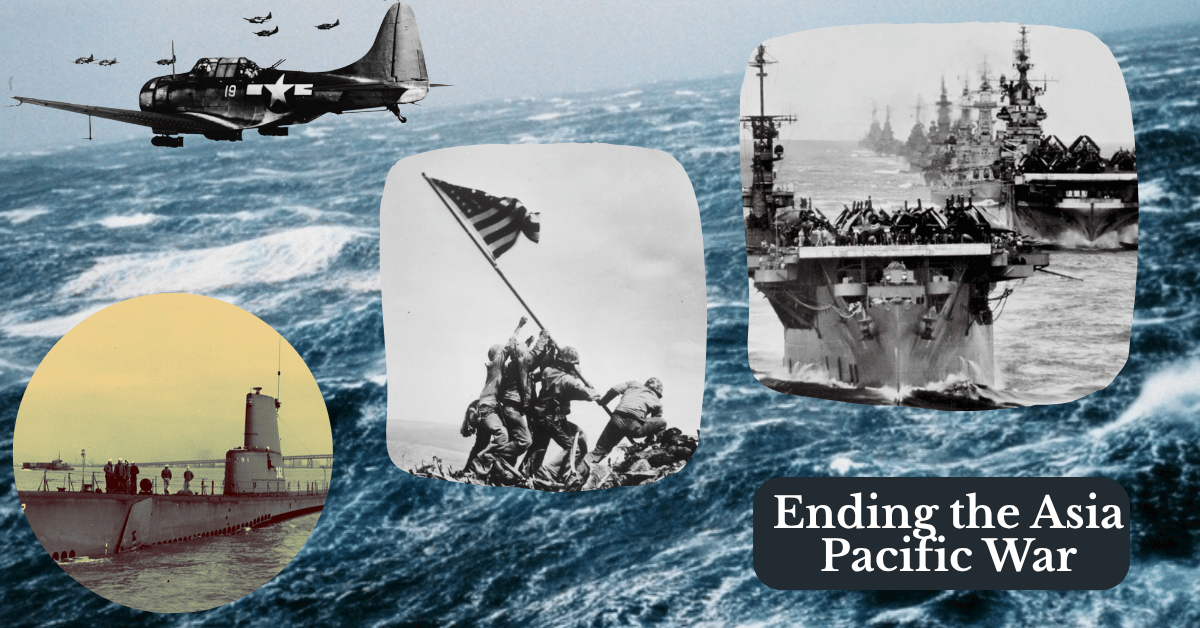
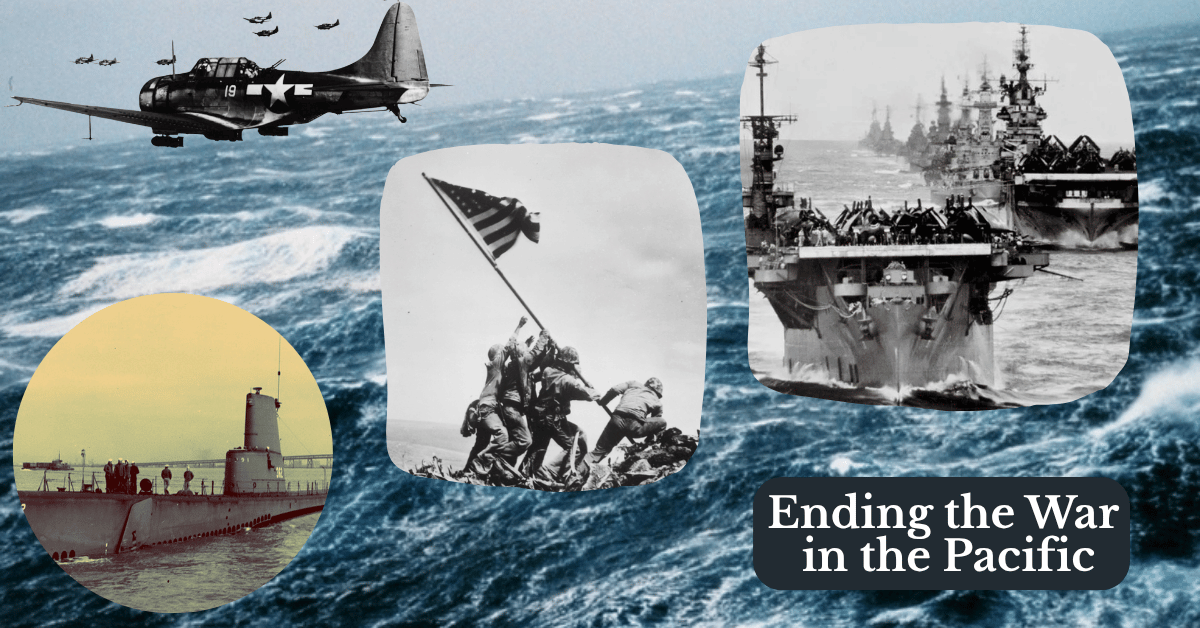
Image credit: Image credit: various photographs from Naval Aviation Museum, National World War II Museum, and US Navy Archives.
A good place to begin our exploration of All Souls is to start with the concept of Holiness. If you’d like to take a 6-minute detour, take a moment to watch this video on Holiness which traces the scriptural roots of holiness, explaining how “becoming holy” is more than living a moral life, but a process of preparation for entering into the presence of God in the eternal Temple of Heaven. In speaking of the heavenly city and its eternal Temple, Scripture tells us that “nothing unclean will enter it” (Rev 21:27). In the biblical tradition, “unclean” (or impure) is not limited to sin. The Old Testament lists non-sinful things that can cause one to become ritually impure. What is common to the list is that they are things of “death” that reflect the incompleteness of the world and of people. When St. Matthew writes, “So be perfect, just as your heavenly Father is perfect” (Mt 5:48) he is speaking of a wholeness, a completeness that carries no trace of corruption or death; a state ready to enter into the heavenly Temple. The Catholic Church teaches that Purgatory is a state/”process” of purification to become truly holy by ridding oneself of the last impure vestiges of our temporal life. If you are 99% generous, there remains 1% selfish which you need to let go.
Freya India posted an interesting article on “The Free Press” website (and on her substack channel also). The basic premise is that what we watch on TV or stream is wasting our lives on mindless entertainment – but more than that some lives are becoming mindless entertainment for others as people post their lives in images and video on all manner of social media … all for the clicks. It was an interesting read. Enjoy.
“Why look good without getting a selfie; why go out without uploading an Instagram Story?” writes Freya India. (Illustration by The Free Press)
For more than a week we have been reading from The Letter to the Romans. We transitioned from hearing about Abraham as an example of faith working its way through human imperfection to the source of that imperfection: sin. “Through one man sin entered the world, and through sin, death.” (Rom 5:12) The readings that followed traced the unfolding of the consequences of sin unleashed into the world. But St. Paul offers us hope in the person of Jesus Christ. “…just as through one transgression condemnation came upon all, so through one righteous act acquittal and life came to all. For just as through the disobedience of one person the many were made sinners, so through the obedience of one the many will be made righteous.” (Rom 5:18-19) St. Paul is making the point that now it is the obedience of the faith that keeps us on the path of righteousness as an antidote to the death brought about by sin.
That obedience is necessary because we live in a world where temptation roams unrestrained emerging from an evil that St. Paul describes as an entity seeking to corrupt the good of the world and people so that we experience death rather than glory. Evil seeks to reign over all, and rob us of the glory God intended for us. It is as St. Peter (1 Peter 5:8), evil is on the prowl and means to devour you. And it is not just you. It is as Paul describes in Romans 8, “…creation itself would be set free from slavery to corruption and share in the glorious freedom of the children of God.” (Rom 8:21). The whole world waits for us to accept our adoption as daughters and sons of God. That acceptance brings us into the presence of God.
Being in the presence of God is a big deal, as big as it comes. Being in God’s presence was lost in Eden and perhaps the rest of Scripture can be thought of as God’s efforts to restore us to that intimate presence afforded to the family of God.
What could keep us from that presence? In the language of the Old Testament it is because something has rendered us “impure” in that we have come in contact with Death. Death that entered the world through the sin of one man. The Book of Leviticus has two whole sections on ritual and moral purity. Leviticus provides rituals of thanksgiving and atonement with one purpose in mind: that we be mindful that we worship the God of Life – Life that is meant to be whole, complete, and without the corruption of decay. Life that is meant to be lived in the presence of God. Life that is Holy as God is Holy.
In the Old Testament, there were regulations to keep the faithful from contact with that which would make them impure and not ready to enter into the presence of God. These regulations were designed so the impurity of forbidden things (e.g., a corpse) would not “infect” the person. The rituals were to restore the person.
In the New Testament, Jesus reaches across those regulations to touch the ritually impure. The lepers, the blind, and in today’s gospel, the woman who was “crippled by a spirit” and as a result was so “bent over” that she was “completely incapable of standing erect.”
Jesus reached out to touch her. Was Jesus made corrupted and rendered impure? No, his holiness “infected” the woman, removing that which was never desired or intended by God. Now she stands upright, a child of God, an heir to the glory of God.
Now she may draw near into the presence of God as the taint of death has been removed.
May we realize that in this Eucharist we are again touched by Jesus that we may be made holy and live fully in the presence of God. We are “heirs of God and joint heirs with Christ … that we may also be glorified with him.”
Image credit: Healing of the Crippled Woman. By Theophylact, Byzantine Archbishop of Ochrid and Bulgaria. 1055 AD | PD USA
July 1945, in some ways was like the lull before the storm. I remember my first experience of the eye of a hurricane passing over my home town. I was a small child and my parents told me about what would happen. Sure enough in just a moment we went from hurricane winds and lashing rains to an amazing stillness. We wandered outside just to feel the stillness and utter silence. In time and slowly, the winds picked back up to the full whip of hurricane winds. July 1945 is like the passing of the eye of a hurricane. The winds of Okinawa have quieted, the “divine winds” of the kamikaze are still … for the moment. And the world waits to see if the winds of the Asia-Pacific war will roar back with the advent of Operation Olympic, the invasion of Kyushu.
Analogical imagining aside, there were key events that continued to play out in the month of July, both on the battlefield and behind the curtains in the halls of allied and Japanese governance.
As it sometimes does, in the year 2025, The Commemoration of All the Faithful Departed – otherwise known as “All Souls” falls on a Sunday. This affects the liturgical calendar in two ways: All Saints falls on a Saturday and remains a Holy Day, but not one of obligation. All Souls replaces the 31st Sunday of Ordinary Time and is celebrated in its stead.
From the earliest centuries, Christians prayed for the dead. Inscriptions in the Roman catacombs bear witness to intercessory prayers offered for the repose of departed souls. The Eucharist especially was celebrated in memory of the faithful departed. As time passed the monastic communities, particularly Benedictines, played a major role in shaping the Commemoration. Monks would set aside days to remember and pray for confreres who had died. A well-known example is Cluny Abbey in the 10th century, where Abbot Odilo established a commemoration of all the faithful departed, a practice that gradually spread throughout Europe. As the practice moved from monasteries to parishes, local churches and chapels, it developed into a universal observance, deeply tied to the life of ordinary Christian families, who saw it as a time to pray for deceased relatives and friends.
The early 20th century evangelist, Billy Sunday is reported to have said once that the best thing that could happen to any person would be to reach a moment of deep conversion, to be justified by God, to accept Jesus Christ as his personal Savior, walk out of the revival tent, be hit by a truck, and killed instantly. There would be no backsliding, no withering under the scorching sun of modern life, and no chance to move from this one moment of original holiness.
I wonder what Billy Sunday had to say about the Pharisee in our gospel parable? The introduction kinda’ says it all. The Pharisee is someone who is “convinced of their own righteousness and despised everyone else.” I guess the Pharisee needs to look both ways upon leaving the Temple and avoid anything resembling a 1st century truck.
From the outside, I suspect the Pharisee is a model of piety. He is praying, fasting, and giving generously to the poor. He is doing what the Law demands, what God requires. He is doing what all the prophets demanded. How is he the “bad guy” in this parable? From the outside he looks OK.
Many years ago I prepared a couple for Sacramental Marriage. He was an Army Officer assigned to a local joint operations base and had primarily served in the Quartermaster Corp (Supply). He had written a history of Army Logistics in World War II. He gave me a copy and it was very interesting. My take away from the book was that perhaps the German generals and divisions were better than the Allied counterparts, but integrated allied logistics won the war in Europe. He certainly made a case. One of the examples he used in his book was the Battle of Anzio in Italy, especially during the major German counter attack against the Anzio beachhead. It was a detailed explanation of the same observation Rick Atkinson makes in his The Liberation Trilogy, the second book, The Day Of Battle. In short, the ability of the allied forces to deliver a massive tonnage of munitions (air, shore bombardment, artillery, etc) across the entire front of the German advance turned the battle.
This post is my homage to the logistics forces of the war in the Pacific.
This coming Sunday the gospel is the parable of the Pharisee and the Tax Collector.
The Pharisee’s prayer is filled with himself. He speaks of his virtues, compares himself to others, and essentially reminds God how good he is. He asks for nothing, because he believes he needs nothing. His prayer is not really prayer—it is self-congratulation before heaven.
The tax collector, on the other hand, has no illusions. He stands at a distance, cannot lift his eyes, and prays only, “God, be merciful to me, a sinner.” He knows the truth about himself, and he places his whole hope in God’s mercy. And Jesus tells us it is this man, not the Pharisee, who goes home justified.


 friarmusings