What did you take away from today’s readings? Before reading on, take a moment. Click on the link and peruse the readings for today. What are the one or two notions or ideas that stand out for you? We’ll wait…
The first reading is largely a confession of sin, a lament and recounting of all that the people of God have done that led to the Babylonian Exile and the ensuing tribulation. It is a prayer by the prophet Daniel as he meditates on Jeremiah’s prophecy that seventy years would pass while Judah remained desolate and its people captive. As ponders he also does penance and fasts. It is a very Lenten scene.
Daniel offers a prayer that opens with a frank confession of the disobedient sinfulness of the covenant people. Then just beyond the scope of our reading, Daneil recalls God’s graciousness in leading the people out of Egypt and God’s justice in punishing Jerusalem. Then Daniel petitions God to deliver the holy city and the nation that bears God’s name. He does so in a threefold request which is akin to an Old Testament version of Kyrie eleison or “Lord, have mercy.”
The Responsorial Psalm is, in its way, also a frank confession of our sad condition in the valley of tears – we are sinners who acknowledge the justice due to the Lord and yet we hope: “Remember not against us the iniquities of the past; may your compassion quickly come to us. Lord, do not deal with us according to our sins.”
Then in the Gospel, after all our pleading, God doesn’t not recount our sins, does not lecture us on the justice due the Lord, the litany from our loving God is this: Be merciful…stop judging…forgive. Do these things and “Give and gifts will be given to you; a good measure, packed together, shaken down, and overflowing.”
A litany for life: Be merciful…stop judging…forgive.
Like Daniel, people of Faith are quite good at recounting their sins. But as a priest and confessor it seems to me, like the first reading, we stop short. We fail to recall God’s graciousness and loyal love. Like the psalmist we are good at asking the Lord to not remember our sins and to be compassionate. And yet, even when forgiven, we are a people who not only recall our failures, but dwell on them, failing to let the compassion of the Lord infuse our souls in a way that we are able to be compassionate with ourselves.
Be merciful…stop judging…forgive. We are better at doing that for others than ourselves as though it is a litany for every life except our own.
Be merciful…stop judging…forgive. These are Jesus’ words, akin to a divine version of Kyrie eleison. It is the Lord’s prayer for us about ourselves.
Image credit: “Kyrie Eleison” by Soichi Watanabe, Japan; used with permission
I wonder how many readers know the name “Harry Dexter White.” Not a lot I suspect. I know that I didn’t before researching and writing this series. White is best known as the high-ranking U.S. Treasury official and influential economist who served as a primary architect of the postwar international financial system. As a key aide to Treasury Secretary Henry Morgenthau Jr., White was the creative mind that led to the creation of the International Monetary Fund (IMF) and the World Bank agreed to at the 1944 Bretton Woods Conference. He served as the first U.S. executive director of the IMF in 1946. He was accused in 1948 of spying for the Soviet Union, which he adamantly denied. Although he was never a Communist party member, his status as a Soviet informant was confirmed by declassified FBI documents related to the interception and decoding of Soviet communications, known as the Venona Project. Shortly after defending himself against these charges before Congress, White died of a heart attack in August 1948.
…and what does this have to do with the Asia Pacific War? White served as the director of the Division of Monetary Research and later as Assistant Secretary of the Treasury, shaping U.S. financial policy during World War II. In May 1941 he began a draft of a bold proposal to change the direction and tone of U.S. negotiations with Japan. The draft proposal was submitted to Treasury Secretary Morgenthal on June 6, 1941. As part of the submission, the background briefing described White’s view of the pattern of diplomacy that had been the craft of the Secretary of State Hull:
“19th century patterns of petty bargaining with its dependence upon subtle half promises, irritating pin prinks, excursions into double dealing, and copious pronouncements of good will alternating with vague threats – and all of it veiled in an atmosphere of high secrecy designed or at least serving chiefly to hide the essential bareness of achievement…Where modern diplomacy calls for swift and bold action, we engage in long drawn out cautious negotiations; where we should talk in terms of billions of dollars, we think in terms of millions; where we should measure success by the generosity of the government that can best afford it, we measure it by the sharpness of the bargain driven; where we should be dealing with all embracing economic, political and social problems, we discuss minor trade objectives or small national advantages; instead of squarely facing realities, we persist in enjoying costly prejudices; where we should speak openly and clearly, we engage in protocol, in secret schemes and subtleties.”
To put it mildly, he was not a fan of Hull’s modus operandi. From his position at Treasury he had watched 4 years of ineffective diplomacy as the nation moved closer to war. White believed it was time for boldness and one that addressed Japan’s interests more broadly than “stop aggression.”
The White Plan
Drafted before the de facto oil embargo and before Japan’s move into southern Indochina, Washington still hoped to avoid war through phased de-escalation. Perhaps the key feature of the June draft of the White Plan was that there was no demand for immediate and total Japanese withdrawal from China. The draft indicated that a gradual, staged withdrawal, tied to restoration of peace in China and stabilization of East Asia was acceptable. Implicitly, if not explicitly, the draft offered continued recognition of Japan’s existing position in Manchuria. The tone and emphasis was on non-aggression, respect for national sovereignty, and equal commercial opportunity in the region. To that end, the draft proposed that Japan would halt further expansion and that the U.S. would resume trade, including oil, under controlled conditions. The plan anticipated a multilateral framework involving China and other powers, but without forcing immediate regime change or humiliation of the current aggressive Japanese governing system. This version assumed that China policy could evolve over time and that Japan might be persuaded to disengage without losing face.
The June draft’s resumption of trade envisioned a restoration of the U.S.–Japanese trade, including strategic materials; unfreezing of Japanese assets under controlled conditions; renewed Japanese access to dollar earnings through exports so as to reduce pressure on the yen and improved Japan’s balance-of-payments position which was becoming an increasingly unmanageable problem. White’s draft reflected the belief that some economic relief could reinforce moderation in Japanese policy and give any moderate element in the Japanese government some leverage during internal debates. From a trade perspective the language of the June draft reveals White’s view that U.S. policy was treating Japan as a second tier power rather than a negotiating partner – which was a Japanese complaint for all of the 20th century up to 1941. White’s thinking was incremental: first stabilize behavior, then normalize trade and only then consider deeper financial engagement. Hull’s policy had been complete agreement on the end game without incremental stages along the way.
One of the elements in a May 1941 draft that was dropped after discussions with Morgenthal was a substantial line of credit. Morgenthal and other Treasury officials were cautious because a line of credit before stabilized behavior could be seen as subsidizing Japanese aggression. Also, in general Congress and public opinion were hostile to aiding Japan. And so the idea of loans or a line-of-credit was deliberately removed to preserve the possibility of future financial assistance after some evidence that Japanese behavior in the region was stabilized and some level of trade was restored with existing Japanese assets. The Treasury leadership wanted maximum leverage with minimal commitment. But it is also an indication of the thinking that was not constrained by Secretary Hull’s less-than-flexible process of diplomacy.
Another element of the May draft that was removed: modification of the 1924 Immigration Act: specifically, removal of the provision that excluded all Japanese from immigrating to the U.S and then setting quotas for Japanese as had been set with other nations. This was a major issue of honor for Japan, but by the summer of 1941 was a non-starter for the American public and Congress.
When the June draft was forwarded from the Treasury Department to the Far East Division with the State Department, who quickly endorsed it and adapted it into diplomatic language. It was then circulated through the War and Navy Departments for review and comment.
This was the first wave of reviews, strike outs, revisions, and rewording by various groups, departments, and leaders. Long story told short: in the end the intent of the original author had disappeared and the document morphed into another version of Cordell Hull’s “four principles.” Perhaps its weakness was its radical departure from previous and current U.S. diplomatic engagements and the associated uncertainty of how it would be received. Not in content, but in motivation. Would it appear that the U.S. was trying to appease Japan because it feared combat in the Pacific? If the U.S. would offer this, would Japan assume that if pressed, there might be more that the U.S. was prepared to offer?
Would the original White Proposal have made a difference? Hard to say.
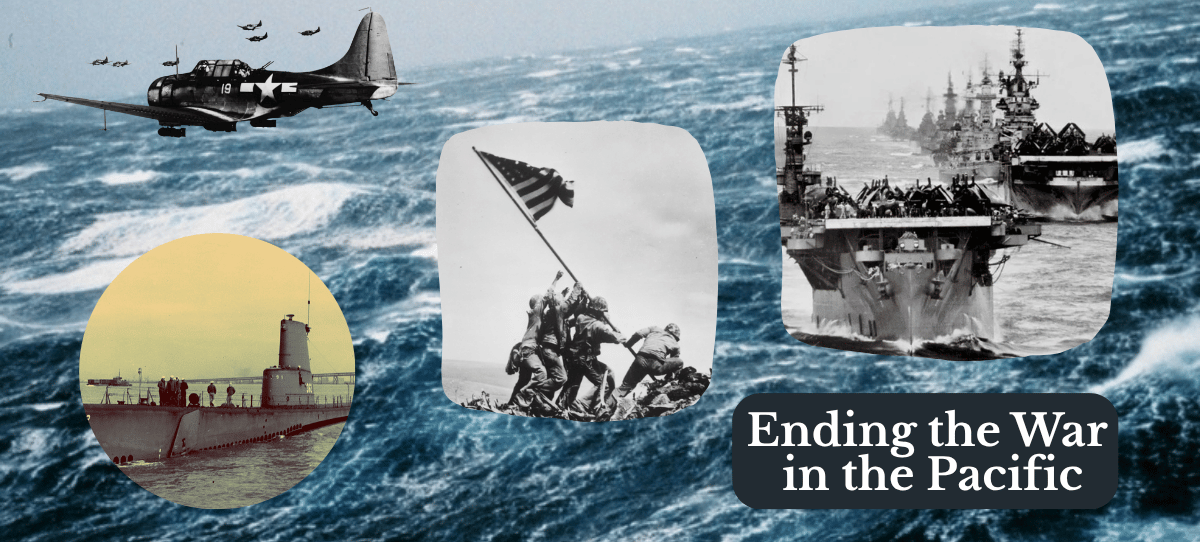
Image credit: various photographs from Naval Aviation Museum, National World War II Museum, and US Navy Archive. | Source credit: Going to War with Japan: 1937-1941, Jonathan Utley
This coming weekend is the 3rd Sunday of Lent. In the previous post we quickly reviewed the religious and political history of the Samaritans in order to place this story in stark contrast to what came before: when Jesus spoke with Nicodemus (3:1-21), he spoke with a named male of the Jewish religious establishment, a “teacher of Israel.” When Jesus speaks to the Samaritan woman, he speaks with an unnamed female of an enemy people.
5 So he came to a town of Samaria called Sychar, near the plot of land that Jacob had given to his son Joseph. 6 Jacob’s well was there. Jesus, tired from his journey, sat down there at the well. It was about noon.
As O’Day [565] notes, the introduction provides the setting for the narrative. Verse 4 links the Samaritan text to vv.1-3; to get from Judea to Galilee (4:3), Jesus “had to go through Samaria.” Scholars are divided on whether the necessity of this Samaritan journey is strictly geographical or has theological overtones. The geographical necessity of the trip is supported by Josephus who notes that the most expedient route from Judea to Galilee during the first century was through Samaria; however, there is ample support to indicate crossing the Jordan so as to not enter Samaria was also routine. The word translated as “had to” (edei), however, usually is associated in the Fourth Gospel with God’s plan (e.g., 3:14, 30; 9:4). It seems best, therefore, to read the necessity of the journey through Samaria as both geographical and theological. Jesus’ itinerary may have been governed by geographical expediency, but his stay in Samaria was governed by the theological necessity of offering himself to those whom social convention deemed unacceptable.
Verses 5-6 provide a detailed description of the location of Jesus’ conversation with the woman. This description is important because of the OT imagery in which the geography is couched. The references to Jacob and his well introduce the patriarchal traditions that will figure prominently in the conversation between Jesus and the Samaritan woman (vv.11-14). The description of Jesus’ arrival at the well (v.6b) also establishes the conditions of his request for water in v.7. Jesus was tired from his journey, and he arrived at the well in the heat of the day (“about noon;” lit. “about the sixth hour”).
Eisegesis is the process of (mis)interpreting a text in such a way that it introduces one’s own ideas into and on top of the text. It is difficult to know what to make of the literal expression “the sixth hour.” In John’s narrative, when he points to a specific hour it is an indication that he wants the reader to pay close attention. What is not clear is why this encounter between Jesus and the woman happens midday. The women of the developing world typically see the timing of the meeting as a sign that the woman is an outcast in her own village. Water is usually drawn from the well at sunrise and sunset, outside the heat of the day. It is the place/time when women gather to meet, chat and have community. Someone who comes at noon to draw water is either avoiding the others, is unwelcomed to the community of women, has been formerly shunned, or just happens to need water at that time of day. Eisegesis is to insist on one of the first three choices. And that may well be the correct reading, but exegesis (following where the text leads) is always preferable.
Christ and the Woman of Samaria | Pierre Mignard, 1681 | The North Carolina Museum of Art, Raleigh | PD
This coming weekend is the 3rd Sunday of Lent. In the previous post we refreshed our understanding of the encounter between Nicodemus and Jesus as a prelude to the encounter with the Samaritan Women.
In John 4:4-42, Jesus’ ministry enters a new stage. He leaves the confines of traditional Judaism and turns to those whom his Jewish contemporaries reckoned as outsiders and enemies: the Samaritans. The breach between Jews and Samaritans can be traced to 10 of the 12 tribes of Israel withdrawing from the throne of David in Jerusalem upon the death of King Solomon. They formed a competing confederation building a new capital city and a new temple (Mt. Gerizim), claiming that this was the true place of worship of God. To the people of the south (Judah) they were traitors and heretics.
When the Assyrian Empire conquered the north some 200 years after the division (721 BCE; see 2 Kings 17), there was likely little sympathy in the south. But it was 500 years later that the rivalry intensified when the armies of Judah marched north and destroyed the Temple at Gerizim. It did little but to deepen and inflame the divisions as witnessed in John 4:9: “For Jews use nothing in common with Samaritans.”
When Jesus meets the Samaritan woman at the well, he meets someone who stands in marked contrast to all that has come before in this gospel. When Jesus spoke with Nicodemus (3:1-21), he spoke with a named male of the Jewish religious establishment, a “teacher of Israel.” When Jesus speaks to the Samaritan woman, he speaks with an unnamed female of an enemy people.
This long passage of the encounter at the well consists of two main blocks of conversation (vv.7-26, Jesus and the Samaritan woman, and vv.31-38, Jesus and his disciples) surrounded by their narrative frames. The structure of the text can be outlined as follows:
4:4-6 Introduction: Jesus’ arrival at the well 4:7-26 Conversation between Jesus and the Samaritan woman 4:27-30 Transition: Arrival of the disciples and departure of the woman 4:31-38 Conversation between Jesus and his disciples 4:39-42 Conclusion: Jesus and the Samaritan townspeople
Christ and the Woman of Samaria | Pierre Mignard, 1681 | The North Carolina Museum of Art, Raleigh | PD
This coming weekend is the 3rd Sunday of Lent in lectionary cycle A. The gospel account is that of the Samaritan Woman at the well (John 4:4-52). It is a long passage and on several days there are two posts. In addition the Tuesday and Wednesday posts are fairly lengthy because St. John has just packed so much into the telling of the encounter. Today’s post is going to provide some context. I’d suggest that while the story stands on its own, it is best read with an eye toward the story that precedes it: Jesus’ encounter with Nicodemus. It then stands as bookends framing the whole of Jesus’ ministry even as it is positioned at the beginning of the Johannine telling of the story of Jesus. So, before moving ahead let us review the encounter with Nicodemus so that we understand the deep contrasts between these two protagonists.
Nicodemus was a Pharisee (3:1) and a “teacher of Israel” (3:10) a moniker from which we can infer a number of things: he was Jew by birth, married, and the head of rabbinic school. He was not “the man on the street.” He was someone who was particularly familiar with Scripture and the traditions of Judaism. While within the official ranks of Judaism there was likely already great concern about Jesus because of the incident of the cleansing of the Temple (John 2). Was he another would-be-claimant to the title Messiah whose campaign would only bring the harsh response of the Romans? One suspects their judgment was negative, but it seems Nicodemus was curious – but cautious, and so he approaches Jesus under the cover of darkness (3:2). In John’s gospel, a weak, wavering or incomplete faith emerges from the night or darkness. Nicodemus has been attracted by Jesus’ signs, an attraction not to be despised, yet he remains at a distance from true faith.
A dialogue ensues, animated by ambiguity and the potential for misunderstanding; a particular feature of Johannine stories. Jesus tells Nicodemus: ““Amen, amen, I say to you, no one can see the kingdom of God without being born ańothen.” (3:3). I deliberately left the Greek ańothen in place because the word has dual meanings: “again/anew” or “from above.” In American Christianity which so often opts for “from above,” they lose the nuance of the exchange and the inherent choice being offered to Nicodemus.
The expression “born again” has a context and meaning in Judaism of Nicodemus’ day. One is born again when one converts to Judaism, comes of age, is married, crowned a king, ordained a rabbi or becomes the head of a rabbinic school. Nicodemus has done all these things (that pertain to him) and hence the question: “How can a person once grown old be born again?” There is no achievement or milestone left for him and hence the follow-on: “Surely he cannot reenter his mother’s womb and be born again, can he?” (3:4). Nicodemus apparently does not consider that he is being offered the choice to be born from above. He cannot understand who it is before him and what he offers: two choices, earthly (again) or heavenly (from above), Nicodemus seems to only understand the earthly choice; he does not understand that “without being born of water and Spirit” he will not have eternal life in the kingdom. Nicodemus is being asked to let go of all he knows/believes to be true in order to be “reborn” but from above.
The expression “born again” is a slogan, a rallying cry, and a test – “Have you been born again.” It is a short-hand to reduce the contemporary Christian experience to a sound bite. While the phrase has its merits, it is also taken out of the context of a much more nuanced dialogue. It flattens the word ańothen to only be connected to an individual’s private moment of conversion. As Gail O’Day notes, it privileges anthropology over Christology. It is the mistake that Nicodemus makes in not grasping the decisive Christological meaning of ańothen – the source of the change: the cross. And in doing so lose the emphasis of the newness of life possible for which there are no precedents. To approach the text of the Nicodemus story already assured that one knows the meaning/translation, is to repeat the experience of Nicodemus.
To approach the text of the Samaritan women already assured that one knows the meaning is to miss an encounter with Jesus that leads her to the newness of life. But then she is a Samaritan. She is a woman. What could she possibly understand that would elude Nicodemus, the teacher of Israel? The answer lies in the telling of the story.
Christ and the Woman of Samaria | Pierre Mignard, 1681 | The North Carolina Museum of Art, Raleigh | PD

 friarmusings