The connection between the first reading and the Gospel becomes much deeper when we notice how the Servant imagery in Isaiah quietly anticipates the way Jesus speaks about Himself in John’s Gospel. I think the two connections are especially striking. Isaiah 49 belongs to the Second Servant Song (Isaiah 49:1–13). In this passage God appoints His Servant to restore Israel and bring salvation to the nations. God says: “I will keep you and give you as a covenant to the people…to say to the prisoners: Come out! to those in darkness: Show yourselves!” This Servant is presented as the one through whom God’s saving work reaches the world. Now listen to the language Jesus uses in John 5: “Just as the Father raises the dead and gives life, so also the Son gives life to whom He wills… the dead will hear the voice of the Son of God, and those who hear will live.” I am struck by the parallels:
Isaiah 49 The Servant Who Restores Life
John 5 The Son Who Gives Life
God appoints a Servant to restore the people
The Father sends the Son
The Servant liberates prisoners
The Son calls the dead to life
The Servant brings people out of darkness
The Son’s voice awakens the spiritually dead
What Isaiah describes poetically as release from captivity, Jesus interprets at a deeper level as the gift of divine life. In other words, Jesus is presenting Himself as the fulfillment of the Servant’s mission.
When these connections are noticed, the readings create a unified message. Isaiah presents God’s promise that He has not forgotten His people and will send a Servant to restore them. John reveals the fulfillment that His Father is still at work and that the Son carries out that work by giving life and bringing judgment.
The tenderness of Isaiah—“Can a mother forget her child?”—finds its concrete expression in Christ’s mission. God does more than merely remember His people. He comes among us in the person of the Son to restore our life. What Isaiah promised in poetry, Jesus accomplishes in person.
Image credit: detail of Jesus Falls the Second Time by Giovanni Domenico Tiepolo, c. 1745-49 | Church of San Polo (Venice) | PD – Wikimedia Commons
From early 1941 onward, the Japanese were establishing and refining their war strategy which, as regards the U.S., which translated into a three part movement: attacking the Pacific Fleet in Pearl Harbor, establishing a defensive line across the Central Pacific, and attriting the U.S. fleet when they moved westward. Meanwhile, the United States did not want war with Japan and yet ended up in exactly the war Japan did not want: an extended war of attrition and logistics pitted against the manufacturing power of American industry and resources.
The historical record is quite clear that the Roosevelt administration was committed to a “Germany-first” strategy, stopping Hitler in Europe. Hitler’s facism was viewed as the modern plague that must be stopped lest it infect the whole world. In 1941 the U.S. was engaged in an undeclared shooting war with Nazi submarines in the North Atlantic that was a precursor to what awaited the U.S. in the event of a declared war. In the first half of 1942, almost 600 allied merchant ships were lost to German U-boats. The Roosevelt Administration needed to keep Britain in the war with supplies and a key to that was avoiding war with Germany. The last thing Roosevelt wanted was a war in the Pacific.
Jonathan Utley observes “No one during the fall of 1941 wanted war with Japan. The Navy preferred to concentrate on the Atlantic. The Army said it needed a few more months before it would be ready in the Philippines. Hull had made the search for peace his primary concern for months. Roosevelt could see nothing to be gained by a war with Japan. Hawks such as Acheson, Ickes, and Morgenthau argued that their strong policies would avoid war, not provoke one.”
The administration maintained military sales to China with the goal of keeping the Soviets in the fight, focused on Germany without having to worry about an eastern front attack by Japan. With military supplies delivered via the “Burma Road” the Chinese were able to continue to keep IJA troops engaged, bogged down, and thus Japan was unable to initiate any incursions into Siberia or Mongolia. This ensured that the Soviets did not have to wage a two-front war.
But there was a limit: the U.S. administration was not willing to go to war with Japan over China. With Japan controlling all significant Chinese ports, the only two available supply routes were the Burma Road and smuggling via Hong Kong. The U.S. goal was to provide enough arms to China so as to deter or inhibit a Japanese advance into Southeast Asia. This goal was advanced by relocating the Pacific Fleet to Pearl Harbor from their California ports, the imposition of economic sanctions, and beginning a slow build up on forces and long-range bombers in the Philippines. The administration was mistaken in their belief. The U.S. presumed realism and rationality on the part of the Japanese and failed to understand that severe sanction (i.e. the financial freeze and de facto oil embargo) would be tantamount to an act of war.
The Germany First Priority
The U.S. posture vis-a-vis Japan was complicated by a “Germany First” outlook that guided U.S. policy even before Pearl Harbor and shaped military planning and diplomacy. President Roosevelt and military planners believed that Nazi Germany posed the greatest global threat. In November 1940, Chief of Naval Operations Adm. Harold Stark recommended a defensive posture in the Pacific as regards Japan while prioritizing the defeat of Germany and Italy in Europe. He produced this recommendation in a memorandum that came to be known as “Plan Dog” which laid out U.S. options in the event of war against Germany, Japan, or both. He reviewed several possible scenarios and plans, lettering them from “A” through “D,” and ultimately recommended Plan “D.” At that time, the U.S. Navy’s phonetic alphabet for “D” was “dog”: hence the name.
U.S. leaders came to realize that the scenarios underlying the older “color-coded” war plans were based on the assumption that the United States would fight a war against a single enemy one-on-one. It was increasingly clear that these were no longer realistic assumptions. The United States was increasingly likely to face war against multiple enemies across the globe. In which case, the country would need allies, which meant Britain, Australia, New Zealand, and the Netherlands, all of whom had interests in the Southwest Pacific.
By November 1940, France had fallen, and Britain stood alone against Nazi Germany and its Italian allies. The German bombing campaign against Britain had begun. Recognizing the consequences of a British defeat, President Franklin Roosevelt had been gradually increasing U.S. support to the United Kingdom, first through the “cash and carry” policy in September 1939, and then through the “destroyers for bases” deal in September 1940 which became the December 1940 Lend-Lease program. In Asia, meanwhile, Japan’s invasion of China continued, and in September they occupied the northern part of French Indo-China.
Roosevelt was constrained by public opinion, which strongly opposed U.S. involvement in another major foreign war. Stark’s memorandum, therefore, came at a critical time—before the United States was formally at war, but as war was looking more and more likely. It was by no means clear what course the United States should or would follow. Admiral Stark laid out the essence of the grand strategic problem facing the United States, and he concisely crafted the best courses of action. Plan A was war with Japan only and no allies. Plan B was war with Japan only supported by British Allies. Plan C was war with the Axis allies and no allies of our own. Plan E was no stay out of the wars all together
Plan Dog was we’d be at war with Germany and Italy in support of Britain while Japan was not yet involved. Any involvement with Japan would be at the initiation of the United States.
“…our major national objectives in the immediate future might be stated as preservation of the territorial, economic, and ideological integrity of the United States, plus that of the remainder of the Western hemisphere; the prevention of the disruption of the British Empire… and the diminution of the offensive military power of Japan, with a view to the retention of our economic and political interest in the Far East. It is doubtful however that it would be in our interest to reduce Japan to the status of an inferior military and economic power. A balance of power in the Far East is as much to our interest as a balance of power in Europe.” (emphasis added)
Admiral Stark was not optimistic of Britain’s ability to remain in the war and as a result he recommended an immediate, intentional build up of U.S. Army and Navy capability. He wrote, “Until such time as the United States should decide to engage its full forces in war, I recommend that we pursue a course that will most rapidly increase the military strength of both the Army and the Navy, that is to say, adopt Alternative (A) without hostilities.”
President Roosevelt took Stark’s recommendations regarding the build up of the nation’s military capability, but President Roosevelt soon concluded that Nazi Germany posed the greatest global threat. The Plan Dog memorandum recommended that if the United States were forced into war against both Germany and Japan, it should fight defensively in the Pacific while concentrating resources on defeating Germany in Europe. As a result U.S. rearmament focused heavily on the Atlantic theater, increasing support was given to Britain through Lend-Lease, and the Navy was deeply engaged in convoy protection in the Atlantic and already clashing with German submarines.
Because Roosevelt wanted to prevent Japan from expanding while the U.S. focused on Europe, Washington set out to deter Japanese expansion through economic pressure rather than immediate war. Japanese diplomats and naval intelligence closely followed these developments. Tokyo concluded that the United States expected eventual war with Germany, were prioritizing European commitments and so the U.S. resources would be divided between two oceans. From the Japanese perspective, this created a temporary window of opportunity in the Pacific.
The “Germany First” strategy shaped Japanese thinking in two ways. First, it suggested that the United States might avoid a prolonged Pacific war if forced to fight Germany simultaneously. Second, Japanese planners believed that if the Pacific Fleet were crippled, the United States would be strategically compelled to concentrate on the European war. This assumption encouraged the idea that a surprise strike could secure time for Japan to seize Southeast Asian resources, establish a defensive perimeter in the Central Pacific, and force the United States to negotiate their exit from the Asia-Pacific conflict
The unintended consequence of all this was “Plan X” – not envisioned by Admiral Stark: war with the Axis allies, a two-ocean war, all initiated by Japan’s attack on Pearl Harbor. Japan’s reasoning underestimated American political and military capacity. Instead of forcing strategic restraint, the attack on Pearl Harbor produced immediate ramp-up in U.S. mobilization and a long-term industrial expansion that Japan could never hope to match.
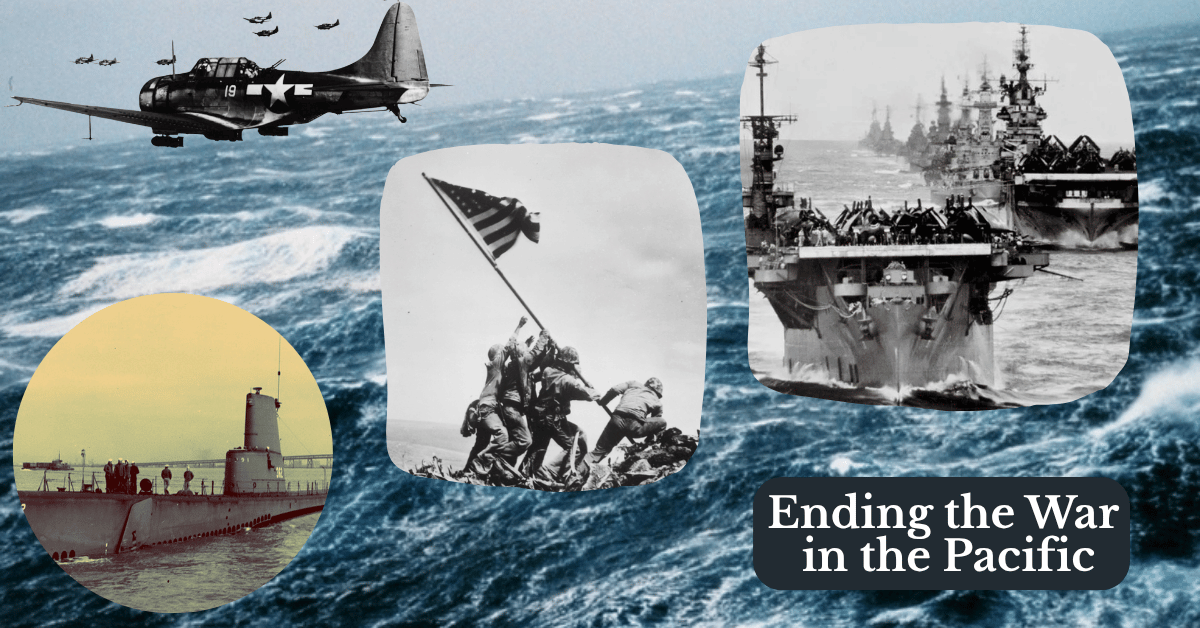
Image credit: various photographs from Naval Aviation Museum, National World War II Museum, and US Navy Archive| Plan Dog available online at the FDR Library at Marist College.
The gospel reading for 5th Sunday in Lent is the account of the raising of Lazarus from the dead (John 11:1-45). In yesterday’s post we discussed the outline of the passage and the setting of the gospel story, introducing a theme previously given by John:“I have come that they might have life and have it to the full” (10:10). Today we consider the debate among Jesus and the disciples about returning to Galilee to attend to the illness of Lazarus. Continue reading →

 friarmusings