Lifted Up

The first reading today is from the Book of Numbers 21:4-9:

With their patience worn out by the journey, the people complained against God and Moses, “Why have you brought us up from Egypt to die in this desert, where there is no food or water? We are disgusted with this wretched food!” In punishment the LORD sent among the people saraph serpents, which bit the people so that many of them died. Then the people came to Moses and said, “We have sinned in complaining against the LORD and you. Pray the LORD to take the serpents from us.” So Moses prayed for the people, and the LORD said to Moses, “Make a saraph and mount it on a pole, and if any who have been bitten look at it, they will live.” Moses accordingly made a bronze serpent and mounted it on a pole, and whenever anyone who had been bitten by a serpent looked at the bronze serpent, he lived.

The Book of Numbers is the title of the book in English, but the Hebrew title is, more commonly, bemiḏbar, “in the wilderness [of]”). “In the wilderness” describes the contents of the book much better than “numbers,” which is derived from the censuses described in later chapters. Our passage occurs after God has assigned them to wander in the desert for a generation because of their rebellion against the leadership of God. They seem to have to fight their way through the wilderness. 

In the midst of this larger narrative, the Israelites have just won a military victory but still clear of the Edomites as they navigate towards the promised land. Along the way, the exigencies of life in the desert once again caused them to complain – and not for the first time. Even in the face of victories the Israelites’ basic character has not changed. They complain against both God and Moses because of a lack of acceptable water and food. Once more these people show themselves to be out of touch with reality as they long for Egypt and talk as if they had a choice about dying in the wilderness (cf. 11:4–6; 14:2–4). In previous times complaints about food had brought a divine supply of their needs (11:4–35), but now the response of God is to send a scourge of fiery serpents that kills many people. Again as before, the Israelites repent (11:2; 12:11; 14:40) and ask Moses to intercede with Yahweh (11:2; 12:11–13). When he does, God instructs him to construct a copper image of one of the lethal snakes and to set it on a pole where it can be seen. No one is saved from being bitten, but if one is bitten and chooses to obey God by looking at the copper snake, one will be cured from the lethal effects of the bite.

There is much speculation about the snake (“fiery” likely because of the burning associated with its bite) and why mounting a copper image of it is the means of cure. There is no firm agreement, but here is at least one interesting speculation. The people were “threatening” to return to Egypt, turning away from God towards evil. The Egyptian god Apep (also Apophasis) was the evil god who lost in battle to the sun god Re. Apep was the god of death, darkness and an opponent of light – and interestingly, was also the god of medicine and healing. But there was one catch: worshippers were not to look upon the snake god. To raise their eyes and look on the snake was to receive the judgment of death from Apep and know eternal darkness. To keep one’s eyes cast down in worship was to know healing.

The command from Moses for those who had been bitten – and presumably guilty of turning away from God – was to look upon their snake god. They were facing certain death from the snake bit and knew that only the true God would save them. If they had faith in Yahweh and looked upon the image of the snake who was no god at all, they were healed: “anyone who had been bitten by a serpent looked at the bronze serpent, he lived.” If they refused to admit their guilt and kept their eyes cast downward in false worship, then they died, ironically suffering the very opposite fate that their former worship promised.

During the Communion Rite of Mass over the years I have noticed that when the priest elevates the consecrated host and chalice then says, “Behold the Lamb of God…” In a good and true sign of reverence many Catholics bow their heads. But then the liturgical command is “Behold” meaning “see, gaze upon, observe.” It is a time in the Mass when we are to raise our eyes to the Lamb of God and see in the Holy Eucharist the One who, raised up on the cross, has rescued and redeemed us from the wilderness of our sins.

And just as Moses lifted up the serpent in the desert, so must the Son of Man be lifted up, so that everyone who believes in him may have eternal life. For God so loved the world that he gave his only Son, so that everyone who believes in him might not perish but might have eternal life.” (John 3:14-16)


Image credit: Moses and the Brazen Serpent | Esteban March (1610-1668) | Banco Santander Collection, Madrid |  PD-US
The Aftermath of Pearl Harbor

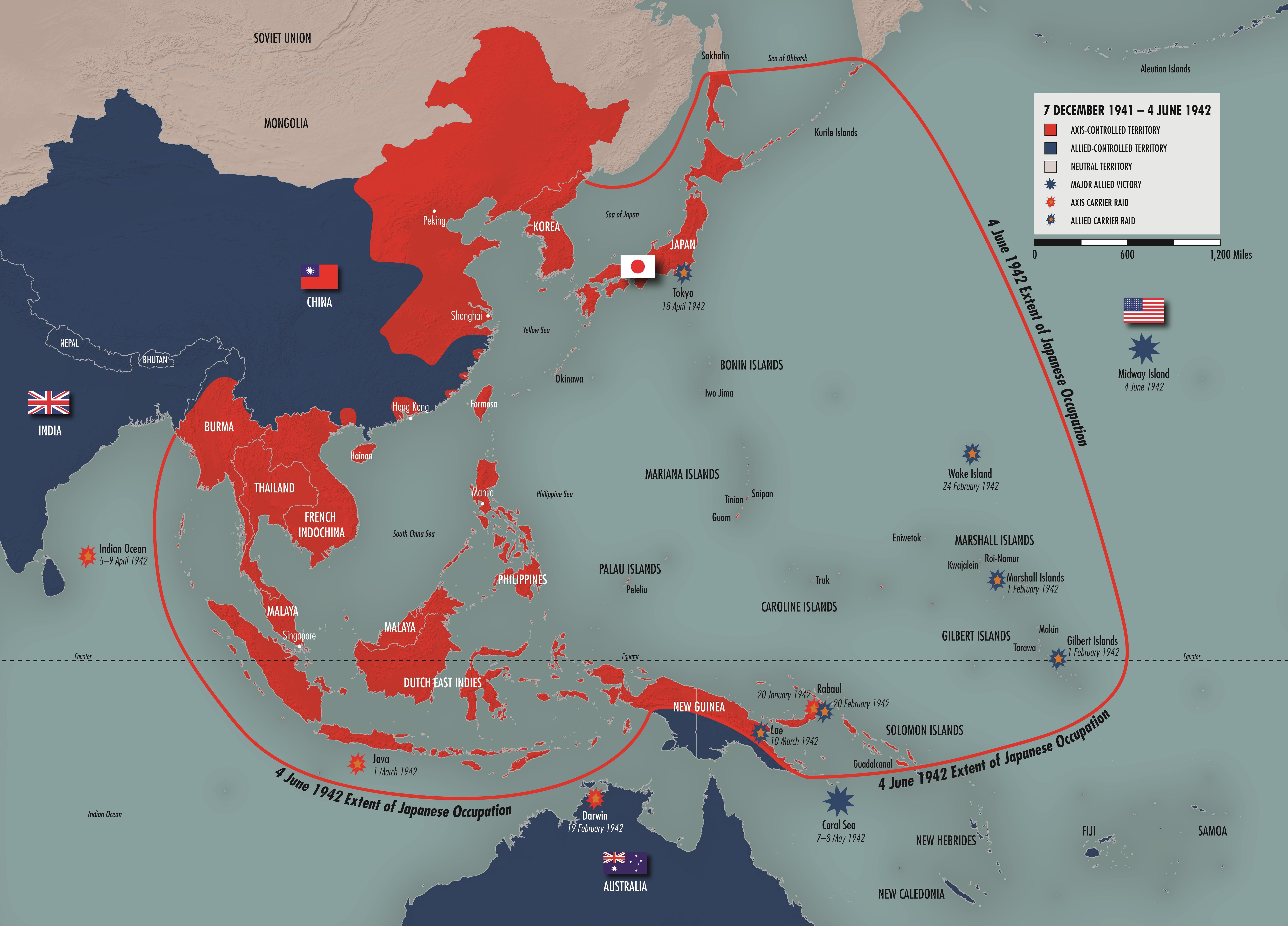
Pearl Harbor was just the beginning of a remarkable series of rapid military victories across the Central and Southwest Pacific and Southeast Asia. From the 1939 occupation of Northern French Indochina, the aim of Japan had always been focused on the oil fields of the Dutch East Indies. The July 1941 occupation of Southern French Indochina was a preparatory move towards Thailand, Burma, the Malay Peninsular, and the city of Singapore.  These were preliminary moves to the invasion of the Dutch East Indies.

The Path to the Dutch East Indies

December 8

  • Invasion of Hong Kong. This important British colony and supply route for the Chinese Army was fully captured by Christmas Day.
  • The first wave of IJN bombers attack Wake Island. The Marine Defense Force on the island with its limited air support repulses multiple attacks but finally falls on December 23rd.
  • Bombing and amphibious landings occur in the Philippines (Luzon). Manila is declared an open city and occupied by the Japanese on January 2nd. The allied forces on the Bataan Peninsula surrendered April 9th, with the last stronghold, Corregidor, falling on May 6th.
  • Japanese forces landed in northern Malay with concurrent landings in southern Thailand. The Malay peninsula was under Japanese control by January 18th leaving the Japanese army at the “gates” of Singapore.

December 10:

  • The U.S. territory of Guam in the Marianas Islands was captured in a single day operation.
  • The main British naval deterrent in the Southwest Pacific, HMS Prince of Wales and HMS Repulse, are sunk by IJN torpedo planes.

December 22: 

  • Japanese forces cross into Burma
  • By March 7, Rangoon was controlled by the IJA
  • By April 26, all of Burma was under Japanese control

February 15: British forces surrendered Singapore, the largest British military defeat in history.

Conquering the Dutch East Indies and their Oil Fields

  • December 16: Japanese troops invade Borneo with the ultimate target of the oil fields of Balikpapan. Borneo was under Japanese control by February 1
  • February 14: Sumatra was invaded with the ultimate target of the oil fields of Palembang. By March 28 the island was under Japanese control
  • February 28: Java was invaded and under Japanese control by March 14.

Strategic Situation

By late May 1942 Japan had achieved nearly all of its initial war aims:

  • Securing oil and resource regions
  • Eliminating Allied naval forces in Southeast Asia
  • Establishing a broad defensive perimeter stretching from Southeast Asia, to the Southwest Pacific, to the central Pacific, occupying all locales of significance. 

However, the rapid expansion also stretched Japanese logistics and resources. Within days of the end of May 1942 Japan would face a turning point of the Pacific War at the Battle of Midway, where this string of victories would abruptly end.


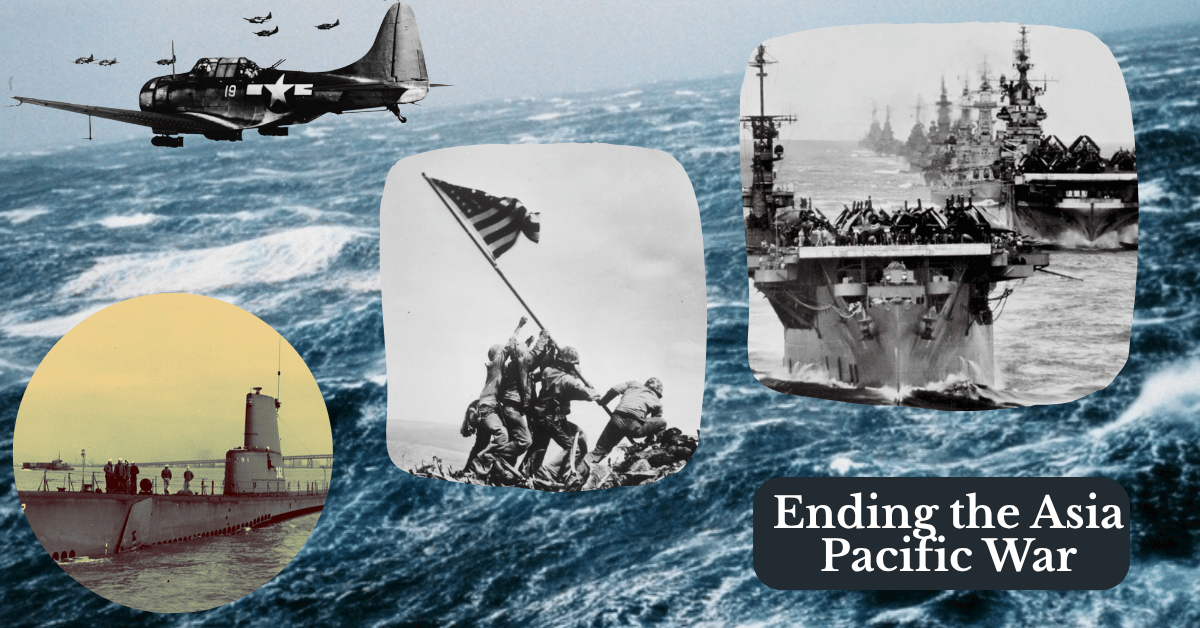
Image credit: various photographs from Naval Aviation Museum, National World War II Museum, and US Navy Archive. Map from John Parshalls.

Jesus Predicts Desertion and Promises Reunion

31 Then Jesus said to them, “This night all of you will have your faith in me shaken, for it is written: ‘I will strike the shepherd, and the sheep of the flock will be dispersed’; 32 but after I have been raised up, I shall go before you to Galilee.” 33 Peter said to him in reply, “Though all may have their faith in you shaken, mine will never be.” 34 Jesus said to him, “Amen, I say to you, this very night before the cock crows, you will deny me three times.” 35 Peter said to him, “Even though I should have to die with you, I will not deny you.” And all the disciples spoke likewise. (26:31-35) Continue reading

Jesus Institutes the Eucharist

26 While they were eating, Jesus took bread, said the blessing, broke it, and giving it to his disciples said, “Take and eat; this is my body.”  27 Then he took a cup, gave thanks, and gave it to them, saying, “Drink from it, all of you,  28 for this is my blood of the covenant, which will be shed on behalf of many for the forgiveness of sins.  29 I tell you, from now on I shall not drink this fruit of the vine until the day when I drink it with you new in the kingdom of my Father.”  30 Then, after singing a hymn, they went out to the Mount of Olives.(26:26-30) Continue reading

Jesus Predicts the Betrayal

20 When it was evening, he reclined at table with the Twelve.  21 And while they were eating, he said, “Amen, I say to you, one of you will betray me.”  22 Deeply distressed at this, they began to say to him one after another, “Surely it is not I, Lord?”  23 He said in reply, “He who has dipped his hand into the dish with me is the one who will betray me.  24 The Son of Man indeed goes, as it is written of him, but woe to that man by whom the Son of Man is betrayed. It would be better for that man if he had never been born.”  25 Then Judas, his betrayer, said in reply, “Surely it is not I, Rabbi?” He answered, “You have said so.” (26:20-25)  Continue reading