
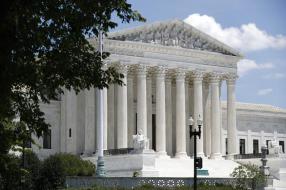
 At the start of 1973 the majority of States outlawed abortions entirely. New York , Alaska, Hawaii, and Washington (state) had already legalized abortion in nearly all cases before the fetus was viable. The following states allowed some abortions: Delaware, Maryland, Virginia, North Carolina, South Carolina, Georgia, Florida, Arkansas, Nebraska, Colorado, New Mexico, California and Oregon. Soon, the Supreme Court will hear a case from Mississippi that could undermine Roe v. Wade, the 1973 decision that established a constitutional right to abortion. The new case, concerning a state law that seeks to ban abortions after 15 weeks of pregnancy, will be reviewed by a Supreme Court holding a seeming 6-to-3 conservative majority. In the event that Roe v. Wade is overturned, it does not mean that abortions are no longer legal, it means that the policy and law decisions will return to each State for determination – at least that seems to be the views of those who write on constitutional law – both conservative and liberal. Of course the Supreme Court can render a decision that falls between letting Roe v. Wade stand and a complete overturn of the law.
Author Archives: Friar Musings

Into the World
Reply
 In our gospel for Pentecost Sunday, Jesus’ first words are “Peace be with you.” His second words are “As the Father has sent me, so I send you.” (John 20:21) That should give each one of us pause, for we too by virtue of our Baptism are sent into the world…just as the Father sent Jesus.
The Fourth Gospel speaks often of Jesus being sent into the world by the Father: to do his will (6:38–39; 8:29), to speak his words (3:34; 8:28; 12:49; 14:24; 17:8), to perform his works (4:34; 5:36; 9:4) and win salvation for all who believe (3:16–17).
Who prays for you?
 In the Confieitor, we hold up the things we have done and what we have failed to do. The first reading for today’s Mass is certainly a list of what St. Paul has done for the sake of the Gospel. He has traveled, worked, suffered, been prosecuted, imprisoned, witnessed, held nothing back, did not back down, and took every opportunity to proclaim the Good News. I have no doubt, if asked, that St. Paul could have easily listed what, in his mind, he had failed to do. Continue reading
The Peace of Christ
 On Pentecost Sunday, the gospel from John recounts the events of the evening of the Resurrection. It is the first post-resurrection appearance to the disciples huddled in the Upper Room. As the startling and disturbing events of the previous three days had unfolded, the community’s overriding response was fear. They had gathered, but had locked themselves away out of fear of what persecutions the religious authorities might bring against them. It is into this complex of uncertainty, perhaps doubt and hesitation, that Jesus appears.
A moment of trust
 This past week, the Commonwealth of Virginia announced that it would immediately implement the just announced CDC guidelines which stated that fully vaccinated individuals do not have to wear masks in outdoor or most indoor settings, except on public transit, in health care facilities, and in congregate settings. Throughout the pandemic at national, state and local levels that last phrase “congregate settings” have included churches, synagogues, mosques, and other places of worship. Following on the heels of the Commonwealth’s announcement, our local diocese announced that because of some ambiguity in the announcement, that we were to not inhibit or challenge people who wanted to not wear masks during the celebration of Mass. While we did not agree that there was ambiguity, we complied. As folks and families approached the doors of the church they were not asked if they were vaccinated, but were simply informed that “fully vaccinated people were not required to wear masks but were also free to wear them if they desired.”
Along the continuum
 Who were these 12 people that Paul encounters in today’s first reading? They were generically referred to as “disciples” in Acts 19:1. Many people assume, based on the following verses, that they were not followers of Jesus, but rather a remnant of the followers of John the Baptist. Not so. Luke is always quite specific in unmistakably identifying John the Baptist’s disciples. These folks are disciples of Jesus, but with a not-yet-complete understanding of the faith.
Pentēkostē
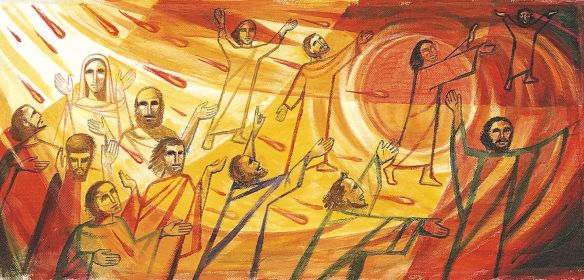 With our celebration of the Ascension complete, as a Church we look forward to the celebration of Pentecost, that great event in which the promise of Jesus begins its fulfillment in the coming of the Advocate, the Counselor, the Spirit of Truth who will lead the disciples in all things (John 16).
A moment of time
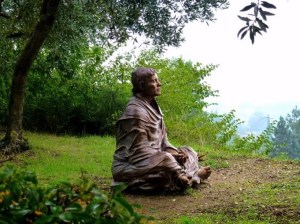 There are moments in this life when I wished I processed more insight about what was happening in the moment that is now. They are often moments caught up in the midst and whirl of things; moments when I look back and wished I had paused and considered what was stirring within. Attentive to the now.
Lent is a season when we are called to take time and pray for the wisdom to be attentive to the moments leading up to the celebration on Easter. But what about the Easter season? Those 50 days from Easter Sunday to Pentecost have come and are almost gone. There is a lot whirling around our lives that make the quiet of Lent seem long ago and far away. Continue reading
Tragedy as teacher
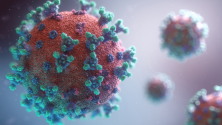 Mask, no mask. Social distancing: 3 feet, 6 feet, more? Outdoors, indoors, ventilated, air exchange, airborne transmission… and a whole range of factors to which we have become accustomed. If you are curious about the what, when, where and other interesting factors about the medical and scientific response to Covid-19, take a moment to read what I found to be a fascinating article about the evolving science behind covid-19 transmission.
Francis and the Eucharist
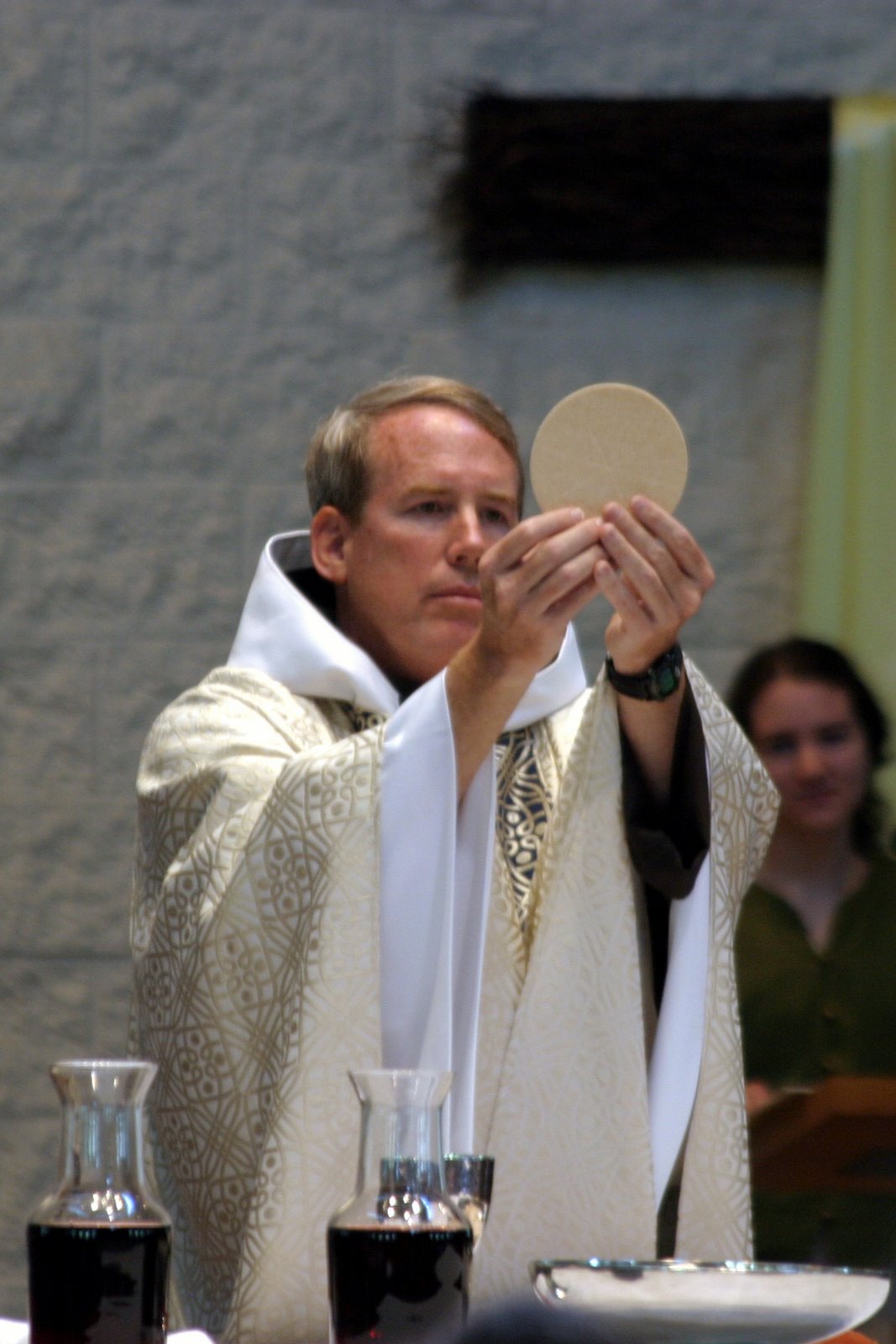
I would wager that most people would guess that in Francis’ own writings he spoke at length about poverty, his love of nature and animals, and other topics for which Francis is so well known in the modern world. Yet, in his own writings, there is perhaps no other topic that he addresses more than the Eucharist. In his Eucharistic writings, Francis expresses a deep view of the continuing Incarnation of Christ in the world, and in that vision is an entire way of life. These writings represent part of the movement of Francis’ mystical life from prayer and devotion in solitude before the cross, to a pattern of communal prayer and devotion in the Mass as well as a devotion to the Eucharist apart from Mass. Continue reading

