

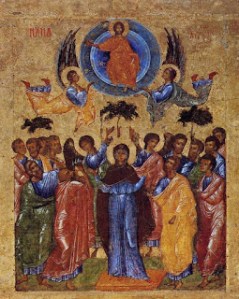
 When I was in seminary, our homiletics professor had lots of advice and pointers for the Sunday homily – I am about to ignore one of the pieces of advice. The professor was pretty adamant about not explaining theology. And I mostly agree with his point – it can make a homily really dry and fill it with language that needs its own explanation. The professor’s final point was that you are likely to give an inaccurate or heretical version of the theology in any case.
The professor in Systematic Theology would also agree. He made the point that almost every early heresy in the early Church came from people trying to explain the Incarnation, trying to explain how it is that Jesus is vere Deus, vere homo – truly God, truly human. The words in the Gospel of John seem so simple: the Word became flesh. And indeed, the heresies of the first four centuries of the Church are filled with controversies, serious in fighting, involvement of the Roman Emperors, and sometimes armies were formed, and battles fought. Explaining theology can be very dangerous stuff. Continue reading
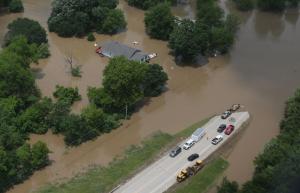 This spring has been a season of record-breaking floods across the Midwest, submerging farms, businesses and houses. The flooding this year could be worse than the historic floods of 1993, which devastated the region. In the coming days, the Illinois, Missouri, Arkansas and Mississippi Rivers are all at risk of spilling over their banks, levees, and inundating places like Sand Springs, OK, Jefferson City, MO, and a whole lot of small towns. The spillways in New Orleans are already open trying to get ahead of the coming waters. Places like Hardin, Ill., a village of about 900 people, sits in a particularly vulnerable spot on the Illinois River near where it flows into the Mississippi River. The city clerk updates river forecasts every 20 minutes to let the residents know if the village is about to become an island. It almost did on May 7th of this year. It will be a long weekend of watching and waiting.
 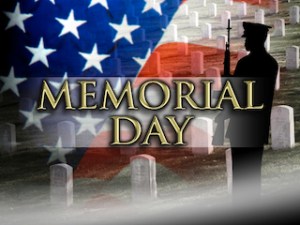 Monday, May 27 our nation will celebrate Memorial Day. Lots of people confuse it or conflate it with Veteran’s Day. It is the latter which honors all the men and women who have served our nation in the military. It is the former that remembers and honors all those who have died while serving in the United States Armed Forces.
 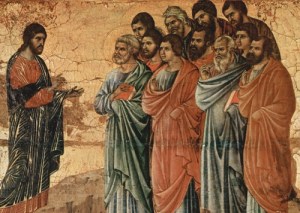 This coming Sunday marks the
  Occasionally, people will ask me “What order are you?” and other questions that eventually lead to the inquiry, “Where are y’all from?” I have noticed that people not native to the South have picked up that Southern expression. But it leaves me in a dilemma. I wonder if the one I am speaking with understands there is a difference between “y’all” and “all y’all”. So, I am not sure if they are asking where I am from (y’all having, in some cases, a singular use) or they are asking where all we friars are from (all y’all would have been clearer in use and intention). The answer to the question “Where are all y’all from?” might well be “Holy Name Province.”
  friarmusings