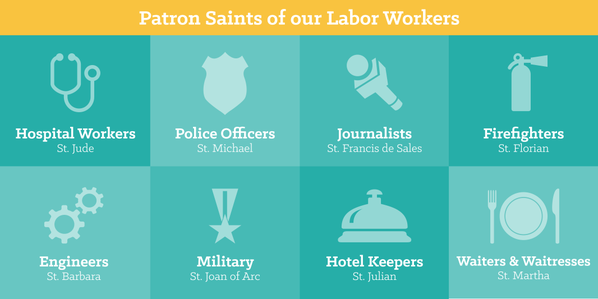
from the US Bishops’ web site


from the US Bishops’ web site
While we rest from labors, other labor for freedom
People all over the world were horrified last week when they saw the picture of a dead Syrian child, Aylan Kurdi, being picked up from the beach in Turkey. His family’s attempt to escape the brutal civil war in their country had ended in tragedy.
From Calais to Kos to Lampedusa, the blogging community has been following the refugee crisis in Europe — as well as the conflicts that feed it — as it rapidly escalated over the past two years, and especially this past summer. Here are some of the most powerful voices we’ve come across weighing in on this massive humanitarian disaster.
In a post full of tragic irony, a writer contrasts the plight of a refugee mother with the sanctimonious complaints of a mother who’s safe at home with her kids:
Dear Irresponsible Migrant Mother,
What exactly were you thinking when you…
View original post 709 more words
 31 Again he left the district of Tyre and went by way of Sidon to the Sea of Galilee, into the district of the Decapolis. 32 And people brought to him a deaf man who had a speech impediment and begged him to lay his hand on him. 33 He took him off by himself away from the crowd. He put his finger into the man’s ears and, spitting, touched his tongue; 34 then he looked up to heaven and groaned, and said to him, “Ephphatha!” (that is, “Be opened!”) 35 And (immediately) the man’s ears were opened, his speech impediment was removed, and he spoke plainly. 36 He ordered them not to tell anyone. But the more he ordered them not to, the more they proclaimed it. 37 They were exceedingly astonished and they said, “He has done all things well. He makes the deaf hear and (the) mute speak.” Continue reading
31 Again he left the district of Tyre and went by way of Sidon to the Sea of Galilee, into the district of the Decapolis. 32 And people brought to him a deaf man who had a speech impediment and begged him to lay his hand on him. 33 He took him off by himself away from the crowd. He put his finger into the man’s ears and, spitting, touched his tongue; 34 then he looked up to heaven and groaned, and said to him, “Ephphatha!” (that is, “Be opened!”) 35 And (immediately) the man’s ears were opened, his speech impediment was removed, and he spoke plainly. 36 He ordered them not to tell anyone. But the more he ordered them not to, the more they proclaimed it. 37 They were exceedingly astonished and they said, “He has done all things well. He makes the deaf hear and (the) mute speak.” (Mark 7:31-37) Continue reading
 A popular line of anti-Catholic apologetics centers on our gospel reading. The argument is this: “you Catholics have lost your way. You rely on human traditions and ignore the commandments of God.” Their usual list of Catholic errors includes the veneration of Mary, her Immaculate Conception, and her bodily Assumption into Heaven. There is also transubstantiation, praying to saints, the confessional, penance, purgatory, and more. We might take great offense at their assertions – but it is a reminder that we should always be mindful about losing our way on the journey to God. We do in fact have our Traditions and our traditions; the former is forever, the latter comes and goes. Lots of Catholics confuse the two. One can easily lose one’s way. The thing is this: you are lost well before you realize you’re lost. So it is good to be mindful about God, Tradition, and traditions. Continue reading
 Jesus Answers. 6 He responded, “Well did Isaiah prophesy about you hypocrites, as it is written: ‘This people honors me with their lips, but their hearts are far from me; 7 In vain do they worship me, teaching as doctrines human precepts.’ 8 You disregard God’s commandment but cling to human tradition.”…
One should immediately notice that Jesus does not respond to the specifics of the question posed. He responds to their intention and as well their competence for religious leadership. Jesus’ response provides reasoning for rejecting the human traditions that are imposed upon people as an authentic interpretation of the Law. Only the first part appears in the Sunday gospel reading. Jesus first challenges the “elders” with a quotation from Isaiah (vv. 6–7; Isa 29:13) that castigates the people because they substitute human teaching for true devotion to God. The quotation introduces the distinction between outward piety and devotion to God in one’s heart. What is “in the heart” forms the basis for the teaching that follows the exchange between Jesus and his enemies. Jesus substitutes a new understanding of purity. Continue reading
Tradition of the elders. 1 Now when the Pharisees with some scribes who had come from Jerusalem gathered around him, 2 they observed that some of his disciples ate their meals with unclean, that is, unwashed, hands. 3 (For the Pharisees and, in fact, all Jews, do not eat without carefully washing their hands, keeping the tradition of the elders. 4 And on coming from the marketplace they do not eat without purifying themselves. And there are many other things that they have traditionally observed, the purification of cups and jugs and kettles (and beds).)
One is quickly reminded that Mark is writing for a non-Jewish audience as he explains a detail about ritual purification that would be unneeded for a Jewish audience. It also seems clear that Mark has an outsider’s almost disdainful view of the practices (vv.3-4) but in any case there is no interest in Jewish debates on the matter. While the Pharisees with some scribes represent perhaps differing takes on the customs of purification, there is no immediate retort to the customs themselves. Instead, Jesus quickly takes up the tradition of the elders (v.3). Continue reading
 From today’s gospel: “Woe to you, scribes and Pharisees, you hypocrites. You are like whitewashed tombs, which appear beautiful on the outside, but inside are full of dead men’s bones and every kind of filth. Even so, on the outside you appear righteous, but inside you are filled with hypocrisy and evildoing.”
Hypocrite: a person who claims or pretends to have certain beliefs about what is right but who behaves in a way that disagrees with those beliefs (Merriam Webster). But then there is also the “goal” to appear beautiful on the outside and to be beautiful on the inside. The problem will always be what the eye beholds as beautiful.
A young man once came to a great rabbi and asked him to make him a rabbi.
It was wintertime then. The rabbi stood at the window looking out upon the yard while the rabbinical candidate was droning into his ears a glowing account of his piety and learning.
The young man said, “You see, Rabbi, I always go dressed in spotless white like the sages of old. I never drink any alcoholic beverages; only water ever passes my lips. Also, I live a plain and simple life. I have sharp-edged nails inside my shoes to mortify me. Even in the coldest weather, I lie naked in the snow to torment my flesh. Also daily, I receive forty lashes on my bare back to complete my perpetual penance.”
And as the young man spoke, a white horse was led into the yard and to the water trough. It drank, and then it rolled in the snow, as horses sometimes do.
“Just look!” cried the rabbi. “That animal, too, is dressed in white. It also drinks nothing but water, has nails in its shoes and rolls naked in the snow. Also, rest assured, it gets its daily ration of forty lashes on the rump from its master. Now, I ask you, is it a saint, or is it a horse!”
Mark 7:8, referring to “human traditions” is often a verse which non-Catholic folk will hold up as proof text of the manner in which the Catholic Church has gone astray, introducing all manner of non-Biblical beliefs. The usual list includes there is the veneration of Mary, her Immaculate Conception and her bodily Assumption into Heaven. There is also transubstantiation, praying to saints, the confessional, penance, purgatory, and more. There are the variety of would-be apologists that do not understand what the Church offers about these topics, but there are Protestant and Reformed apologists who are quite clear on the Church’s teaching, but hold the root error is that Catholics place Sacred Tradition on the same par as Sacred Scripture. Is there analysis true? Let’s hear from the Catechism of the Catholic Church (CCC): Continue reading
1 Now when the Pharisees with some scribes who had come from Jerusalem gathered around him, 2 they observed that some of his disciples ate their meals with unclean, that is, unwashed, hands. 3 (For the Pharisees and, in fact, all Jews, do not eat without carefully washing their hands, keeping the tradition of the elders. 4 And on coming from the marketplace they do not eat without purifying themselves. And there are many other things that they have traditionally observed, the purification of cups and jugs and kettles (and beds).) 5 So the Pharisees and scribes questioned him, “Why do your disciples not follow the tradition of the elders but instead eat a meal with unclean hands?” 6 He responded, “Well did Isaiah prophesy about you hypocrites, as it is written: ‘This people honors me with their lips, but their hearts are far from me;7 In vain do they worship me, teaching as doctrines human precepts.’ 8 You disregard God’s commandment but cling to human tradition.”… 14 He summoned the crowd again and said to them, “Hear me, all of you, and understand. 15 Nothing that enters one from outside can defile that person; but the things that come out from within are what defile.”…. 21 From within people, from their hearts, come evil thoughts, unchastity, theft, murder, 22 adultery, greed, malice, deceit, licentiousness, envy, blasphemy, arrogance, folly. 23 All these evils come from within and they defile.” (Mark 7:1-8, 14-15, 21-23) Continue reading


