Unknown's avatar

About Friar Musings

Franciscan friar and Catholic priest at St. Francis of Assisi in Triangle, VA

An Ongoing Conversation

Our gospel text for the 6th Sunday of Easter comes from a section of the “Farewell Discourse” that focuses on Jesus’ departure and discusses the disciples’ relation to Jesus and their conflict with the world. Our gospel pericope falls at the end of this section.

Our gospel drops us onto the end of an ongoing conversation. We need to “catch up” on the conversation that occurred  before the events of Jesus’ arrest in the Garden of Gethsemane. Judas the traitor has left the Last Supper, or as St. John describes it: has left the light (13:1). Jesus then turns to his closest disciples, those who have followed him for about three years. Various disciples — Peter, Thomas, Philip, Judas (not Iscariot, possibly Thaddeus) — carry the discussion forward by the questions they pose. This enables us to break down the whole conversation, hopefully to see it in content and more clearly, by dividing it according to the characters who ask the leading questions. (Neal Flannigan, John, The Collegeville Bible Commentary)

Continue reading

Setting the Context

Our gospel text for the 6th Sunday of Easter, Year C, is a portion of the much longer “Farewell Discourse” in the Gospel of John (chapters 13 thru 17).  In other words, we have but a few verses which are an integral part of a much larger passage. The setting for this gospel falls between the account of the Last Supper and the events that will unfold later resulting in the arrest of Jesus. Lets provide some context: the larger Discourse can be outlined in a number of ways, though three main parts are fairly clear:

  • The first part (13:31-14:31) focuses on Jesus’ departure and discusses the disciples’ relation to Jesus and their conflict with the world. Our gospel pericope falls at the end of this section.
  • The second part (15:1-16:33) develops these same themes, moving from the relationship of Jesus to the disciples, using the figure of the vine and the branches (15:1-17), to the conflict between the disciples and the world (15:18-16:15), and on to a promise to the disciples of joy in the future after the sorrow of this time of separation (16:16-33). 
  • In the third major part Jesus prays to his Father (17:1-26). 

Throughout, the overall theme is the Father’s presence with the disciples and the Son’s and Spirit’s roles in mediating his presence. As a way of establishing a context lets first consider a wider view of at least a portion of our passage by considering the text surrounding Jesus’ departure (13:31-14:31).


Image credit: Christ’s Final Address to the Apostles | Bona Duccio di Buoninsegna, 1380 | from the Maesta Altar | Siena, Museo dell’Opera del Duomo | PD-US

In just a few words

There was a website called “twenty-twowords.”  The original idea was an on-going challenge of expressing yourself on some topic in 22 words or less. There were different categories, like “my life so far” or “which Star Wars character are you and why.” You have to answer each one with only 22 words. One of my favorites, in the category of “describe your greatest experience,” was, “I am in a hospital. A nurse hands me a screaming baby and I sat there, looking down, and said, ‘Hello son.”

Today’s gospel carries a message of the greatest challenge. Jesus’ response runs 33 words in English, but the effect is the same. For in these 33 words he leaves his disciples and us with as clear a summary of the Christian life as one could possibly want.: “love one another. As I have loved you, so you also should love one another. This is how all will know that you are my disciples, if you have love for one another.

In his book Surprised By Joy, CS Lewis describes being at a very proper English tea, standing there with an overly filled cup, when, quite by accident, someone bumped into him, causing the jostled cup to spill some of its content out.  Later, when reflecting on that most ordinary of things, he noted that life is that a lot like that.  If we want to know that with which we have filled our life, we only need to be jostled by life to see what spills out. Would that I could tell you that every bump in the road reveals an outpouring of love from the teacup of my life.

Continue reading

Love and the Missionary Imperative

This coming Sunday is the 5th Sunday of Easter in Liturgical Year C. The gospel is taken from John 13:31-35. Previously This love command seems to focus on relations within the new community rather than toward outsiders, a focus that has led many to view John as a narrow sectarian with no concern for outsiders. Such a view, however, misses the larger picture. John is quite clear that this divine love, in which the disciples are to share, is for the whole world (3:16; 4:42; 17:9). Indeed, their love for one another is part of God’s missionary strategy, for such love is an essential part of the unity they are to share with one another and with God; it is by this oneness of the disciples in the Father and the Son that the world will believe that the Father sent the Son (17:21). Jesus’ attention here in the farewell discourse, as well as John’s attention in his epistles, is on the crucial stage of promoting the love between disciples. The community is to continue to manifest God as Jesus has done, thereby shining as a light that continues to bring salvation and condemnation (cf. chaps. 15-16). Without this love their message of what God has done in Christ would be hollow.

Continue reading

Voyager

NASA launched the Voyager 1 Spacecraft in Sept 1977. It is now 15 billion miles from Earth and still sending data. Voyager 1 owns the distinction of being the first spacecraft to travel beyond the solar system and reach interstellar space – doing so in 2012. It is currently zipping through space at around 38,000 mph (17 kilometers per second), according to NASA Jet Propulsion Laboratory. That’s Washington DC to Los Angeles in 3.6 minutes

The Voyager missions took advantage of a special alignment of the outer planets that happens just once every 176 years. This alignment allows spacecraft to gravitationally “slingshot” from one planet to the next, making the most efficient use of their limited fuel. Recognizing that the Voyagers would eventually fly to interstellar space, NASA authorized the production of two Golden Records to be placed on board the spacecraft. Sounds ranging from whale calls to the music of Chuck Berry were placed on board, as well as spoken greetings in 55 languages.

Voyager 1 was the first (there is also a Voyager 2 spacecraft) to race by Jupiter and Saturn. The images Voyager 1 sent back have been used in schoolbooks and by many media outlets for a generation. To NASA’s surprise, in March 1979 Voyager 1 spotted a thin ring circling Jupiter planet. It found two new moons as well — Thebe and Metis. Additionally, Voyager 1 sent back detailed pictures of Jupiter’s big Galilean moons (Io, Europa, Ganymede and Callisto) as well as Amalthea…. at this point you might be asking how many moons Jupiter has… 80 discovered so far.

Like the Pioneer spacecraft before it, Voyager’s look at Jupiter’s moons revealed them to be active worlds of their own. And Voyager 1 made some intriguing discoveries about these natural satellites. For example, Io’s many volcanoes and mottled yellow-brown-orange surface showed that, like planets, moons can have active interiors. Additionally, Voyager 1 sent back photos of Europa showing a relatively smooth surface broken up by lines, hinting at ice and maybe even an ocean underneath. (Subsequent observations and analyses have revealed that Europa likely harbors a huge subsurface ocean of liquid water, which may even be able to support Earth-like life.)

One of most famous images sent back by Voyager 1 is the “Pale Blue Dot” image. It is a photograph of Earth taken Feb. 14, 1990, by NASA’s Voyager 1 at a distance of 3.7 billion miles (6 billion kilometers) from the Sun. The image inspired the title of scientist Carl Sagan’s book, “Pale Blue Dot: A Vision of the Human Future in Space,” in which he wrote: “Look again at that dot. That’s here. That’s home. That’s us.”

Thought you’d like to know Voyager 1 is still “on the job.” Almost 48 years. Nice.


Sources: NASA and Space.com (Elizabeth Howell)

The Commandment to Love

This coming Sunday is the 5th Sunday of Easter in Liturgical Year C. The gospel is taken from John 13:31-35. Previously Jesus indicated that He would be with them only a short time longer.

34 I give you a new commandment: love one another. As I have loved you, so you also should love one another. 35 This is how all will know that you are my disciples, if you have love for one another.” This is the first of two instances (13:34; 15:12) in which Jesus commanded his disciples to love one another, but only on this occasion did he refer to it as a ‘new’ command. What is new about this commandment? It can refer to something that didn’t exist before. But the command to love one another is not recent. It is found in the Torah (Lev 19:18; Dt 6:4). It can refer to something that existed previously, but was not fully known or understood; e.g., a “new” understanding. I think that it is in this sense that this commandment is “new”.

Continue reading

Jesus’ Departure

This coming Sunday is the 5th Sunday of Easter in Liturgical Year C. The gospel is taken from John 13:31-35. Referring again to his imminent departure, Jesus said to his disciples, “My children, I will be with you only a little while longer You will look for me, and as I told the Jews, ‘Where I go you cannot come,’ so now I say it to you (v.33). 

“My children (teknia)…” This term of endearment expresses Jesus’ love for his disciples and is a poignant introduction to his announcement that his departure is imminent. The term a little longer (eti mikron) is imprecise (cf. 7:33), so they could not be sure how soon this separation would take place, but given the announcement of the betrayal they might suspect that it would be very soon. Jesus seems to refer not just to the time of separation between his death and resurrection, but also to the time thereafter. For he says they will look for him, which they did not do after his death, but which they did do after the resurrection. Just as the first disciples sought him out (1:38), so will they continue to seek for him after his departure. Part of the purpose of the farewell discourse is to tell them of the new ways in which they will find him in the future.

Continue reading

Pope Leo’s Dad

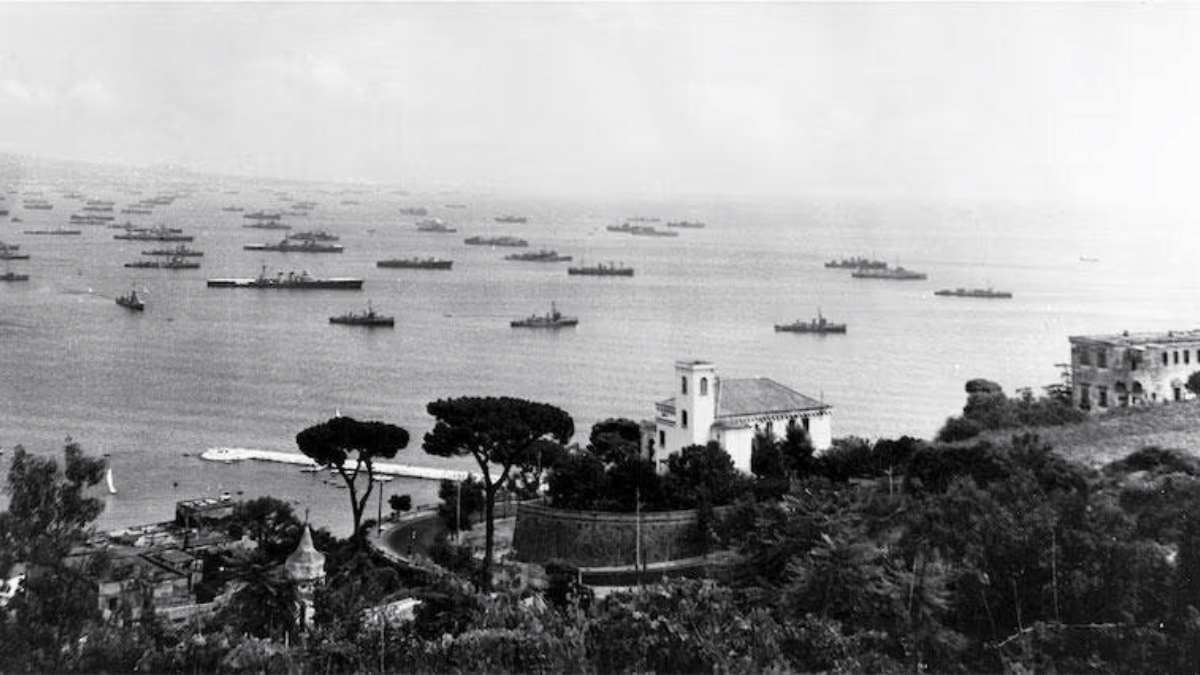
Pope Leo comes from a Navy family! Pope Leo XIV’s father, Louis Marius Prevost, served in the Navy during World War II. After graduating from college, he was commissioned in November 1943 and became the executive officer of a tank landing ship. He participated in the D-Day landings in Normandy, France, June 6, 1944, as part of Operation Overlord. He also commanded an infantry landing craft, which the Allies used to land infantry soldiers and Marines onto beaches during the war.

The Normandy coastline did not have the port capacity for the enormous number of materials needed to keep the Allied momentum going. The Navy subsequently sent Prevost and other landing ships to southern France, as part of Operation Dragoon beginning Aug. 15, 1944.

Prevost spent 15 months overseas and attained the rank of lieutenant junior grade before the war in Europe finally ended, May 8, 1945.


Credit: By David Vergun, DOD News

Remain in His Love

“As the Father loves me, so I also love you. Remain in my love.  If you keep my commandments, you will remain in my love, just as I have kept my Father’s commandments and remain in his love.” (John 15:9-10)

But have you noticed the nature of “love” that is the focus? What is absent in these verses are any words about the disciples loving Jesus or God. Although such images and words are found elsewhere in the Gospel of John. Clearly one of the great commandments is to love God.  But here in the Farewell Discourse, on the eve of Jesus’ departure from their lives in the manner in which they are accustomed, the emphasis in our text is on God’s love for them (us) and their (our) love for one another.

I like this story by Philip Yancy (What’s So Amazing about Grace? 68-69) reflecting on these verses:

Not long ago I received in the mail a postcard from a friend that had on it only six words, “I am the one Jesus loves.” I smiled when I saw the return address, for my strange friend excels at these pious slogans. When I called him, though, he told me the slogan came from the author and speaker Brennan Manning. At a seminar, Manning referred to Jesus’ closest friend on earth, the disciple named John, identified in the Gospels as “the one Jesus loved.” Manning said, “If John were to be asked, ‘What is your primary identity in life?’ he would not reply, ‘I am a disciple, an apostle, an evangelist, an author of one of the four Gospels,’ but rather, ‘I am the one Jesus loves.’“

What would it mean, I ask myself, if I too came to the place where I saw my primary identity in life as “the one Jesus loves”? How differently would I view myself at the end of a day?

Sociologists have a theory of the looking-glass self: you become what the most important person in your life (wife, father, boss, etc.) thinks you are. How would my life change if I truly believed the Bible’s astounding words about God’s love for me, if I looked in the mirror and saw what God sees?

Gail O’Day [John in the New Interpreter’s Bible, 759] remarks: “Jesus reminds the disciples (including the readers) that their place with him is the result of his initiative, not theirs; relationship with Jesus is ultimately a result of God’s grace (cf. 6:37-39, 44).” 

These verses are a reminder that in the reality of the post-Resurrection world, when secular concerns and challenges bring us to the edge of strength and perseverance, we are loved.


Image credit: Duccio di Buoninsegna (1255–1319), “Jesus taking leave of his Apostles,” ca. 1310 | Panel 4 of the Maestro, Museo dell’Opera del Duomo, Siena | Public Domain