Francis and the Crusades – Part 3

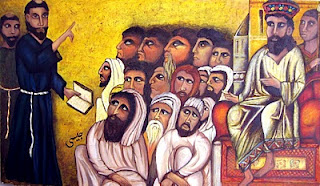
francis-sultanIt is important to recognize why Francis came to Damietta during the Fifth Crusade is just one part of his life.  How the experience of the crusade and his meeting with the Sultan of Egypt, Al-Malik al-Kamil, may have changed Francis is a different part of the saint’s life.  While the early sources about the life of Francis are uniform in Francis’ zeal for evangelization and his desire for martyrdom, many modern scholars dismiss these as hagiographic (“saint making”) embellishments.  The modern desire, especially among Franciscan scholars, seems to ensure that Francis “the peacemaker” arrives on the shore of Egypt in 1201.  When one looks outside modern Franciscan scholarship, especially to the current medieval specialist, one gains a different perspective.  André Vauchez, a French medievalist noted for his recent and thorough book on Francis, thinks that “some commentators are doubtful today [re: martyrdom], fearing to attribute to their hero a suicidal attitude or irresponsible behavior.”  Vauchez goes on to write, that “Contrary to what is sometimes affirmed, the search for martyrdom was not in contradiction with his desire to follow Christ, who died on the cross to open to humanity the way to salvation.  To face tribulations and dangers, including the loss of life, in order to spread the Christian faith was, from the beginning, a constitutive element of Franciscan sensibility.” Continue reading

Francis and the Crusades – Part 2

crusaders2The previous two articles give the background for Francis of Assisi’s mission during the time of the Fifth Crusade.  The previous article introduced two key ideas that seemed to be part of a strong spiritual movement in Francis’ time: peregrination pro Christo (“wandering for the sake of Christ”) which we would now call “pilgrimage,” and the long-established idea of Christian martyrdom.  We have already seen the friars “wandering for Christ” in their trips throughout central Italy. Continue reading

Francis of Assisi – to this point….

Some folks have asked for an updated page for all the articles on St. Francis of Assisi – so here is what we have “to this point.”

Francis of Assisi – An Introduction
Francis of Assisi – The Young Man
Francis of Assisi – Military Adventures
Francis of Assisi – Period of Crisis: San Damiano
Francis of Assisi – Period of Crisis: Leaving the World
Francis of Assisi – Period of Crisis: Embracing the Leper
Francis of Assisi – “And the Lord gave me brothers…”
Francis of Assisi – The Fraternity Grows and Someone Has to Lead
Francis of Assisi – An Exhortation to the Brothers
Francis of Assisi – The Itinerant Life of the Brothers
Francis of Assisi – The Disposal of Worldly Goods
Francis of Assisi – The Conversion of Clare
Francis of Assisi – A Reputation for Holiness and Miracles
Francis of Assisi – The Problems of New Growth
Francis of Assisi – Francis and Nature: Part I
Francis of Assisi – Francis and Nature: Part II
Francis of Assisi – A Sacramental View of Nature
Francis of Assisi – Francis and The Eucharist
Francis of Assisi – Integrating Into the Church
Francis of Assisi – The Word of God
Francis of Assisi – The First Missions
Francis of Assisi – The Crusades (Part 1)

Francis of Assisi – The First Missions

Francis-missionsAn earlier article had discussed the problems with the rapid growth of members within in the fledgling community friars.  The period from 1213 to 1216 is the most obscure period in Francis’ life and also one of the periods of explosive growth in the movement as the brotherhood spread well beyond Assisi.  How many friars joined the fraternity in those years?  It is impossible to say, but we do know this: in 1217 the annual meeting (called a “chapter”) made the decision to send out missions across the Alps into northern Europe, the Baltic states, and to the Crusader States in the eastern Mediterranean.  Within Italy, six provinces were established; outside of Italy, five provinces were established: Spain, northern and southern France, Germany, and Syria. Continue reading

Francis and the Crusades – Part 1

Crusade-battleOne of the events of Francis’ life that has received scant public attention was his meeting with the sultan of Egypt, Al-Malik al-Kamil in 1219 during the so-called “Fifth Crusade.” This meeting has loomed large in the imagination of the “Franciscan world” because of its effect on the Rule of Life and in the Franciscan charism of missions, but has only recently gained public attention because of the new era of tensions with the Islamic world.  People are surprised to learn that Francis was part of a crusade – a claim that scholars argue to no end as they argue so many other aspects of Francis’ life.  Each side has generally already taken a view of the little poor man from Assisi:  Francis the loyal churchman or Francis the radical reformer.  Those views are often revelatory of how the scholar views the Crusades.  And as with all things, history has a context.

Continue reading

…each in his own language

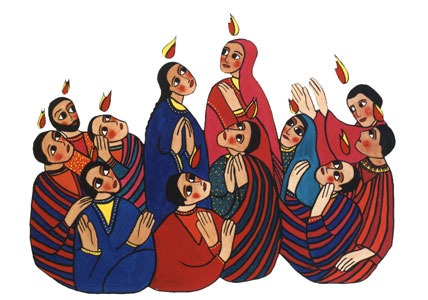
Pentecost3The description of the first Pentecost in the Acts of the Apostles tells us that when devout Jews from many different nations heard the Spirit-inspired proclamation of the gospel by the disciples, “each one heard them speaking in his own language.”  The outpouring of the Spirit of God united this very diverse group of people in a powerful moment of God’s self-revelation.  Such is the power of Spirit.

Continue reading

Francis of Assisi – Integrating into the Church

Francis finished his military adventures and time as a prisoner of war in early 1205. It was during the latter part of 1205 into 1206 that Francis chose to “leave the world.”  In subsequent years , Francis’ model of following Christ began to attract other men to join him in the emerging way of life – even as the “way of life” was being discovered by Francis himself. Francis modeled the life, prayed with the brothers, exhorted them from time to time, and slowly the life began to take shape.

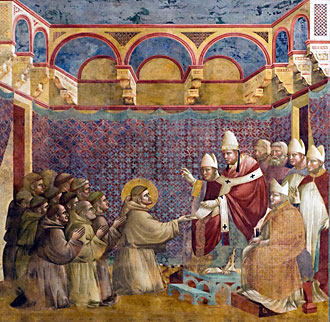
francis-innocentThe basic shape of the movement was not all that unique in Francis’ day. There were many other penitential and mendicant movements in the beginning of the 13th century in western Europe. – some scholars tallying 130 others. Interestingly, only one of them exists today: the Franciscan.  Why? Most scholars hold that it was because of Francis’ insistence on being “Catholic” and formally part of the Catholic Church.  There are several theories as to the reason for that insistence.  Like most things it is a complex reason, but likely primary among the reasons is Francis’ love of the Eucharist. But whatever the reasons, it is no surprise that in 1209 Francis and some of his brothers journeyed to Rome to seek an audience in a consistory with Pope Innocent III in order to receive formal recognition of his proposed way of life. Continue reading

The Upper Room: all kinds of doors

all-kinds-doorsThere are all kinds of doors in life.

Doors that lead to new life.  We pass through them and life is changed.  Passing through the doors of high school graduation to the new world called college.  Entering a common life through he doors of marriage – or vows as a Franciscan friar.  What was the most significant/memorable door you have passed through into a new life? I bet almost everyone’s passing through was accompanied by trepidation, uncertainty – maybe a tinge of fear – and yet we commit and we pass through to new life.

Not so with all doors  There are doors that lock us out.   Continue reading

Pope Francis: Papal Coat of Arms

Pope Francis’ Coat of Arms

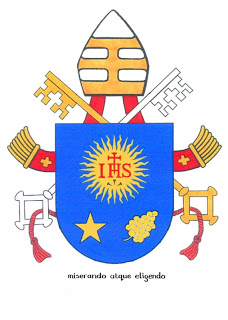
PopeFrancisCoatArmsPope Francis’ papal coat of arms are the same that he used as bishop. The shield has a bright blue background, at the center top of which is a yellow radiant sun with the IHS christogram representing Jesus (it is also the Jesuit logo). The IHS monogram, as well as a cross that pierces the “H”, are in red with three black nails directly under them. Under that, to the left, is a star representing Mary, Mother of Christ and the Church. To the right of the star is a spikenard flower representing Joseph, Patron of the Universal Church. With these symbols the Pope demonstrates his love for the Holy Family. Continue reading

Pope Francis and the Spirit of LaVerna

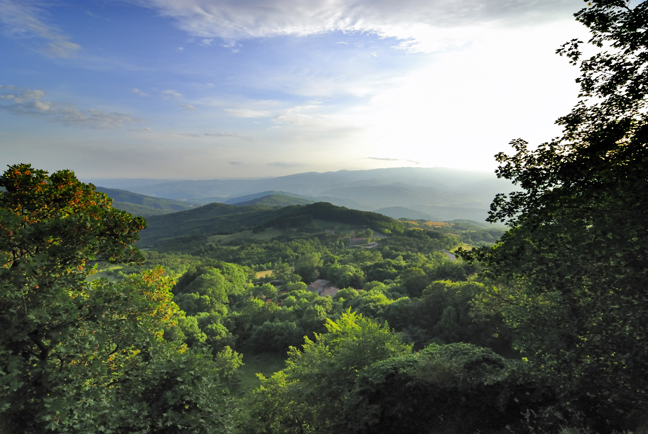
On May 8, 1213, St. Francis of Assisi was given a mountain.  Count Orlando of Chiusi gave La Verna to Francis and his friar brothers as a retreat especially for prayer and contemplation.  Five year later in 1218 Count Orlando built the friars the chapel Santa Maria degli Angeli (St Mary of the Angels).

LaVerna

In September of 1993, Pope John Paul II went to La Verna for prayer, contemplation and to meet with the bishops of Tuscany.  During lunch while John Paul II was speaking with the friar brothers and bishops, he said here at both La Verna and Assisi, Franciscanism was born and in a certain way Christianity too by rediscovering the simplicity and fervor of the beginnings.

Sunday, May 17, 2013, the the Archpriest of St. Peter’s Basilica, Cardinal Angelo Comastri, in greeting Pope Francis at the beginning of the celebration of Mass at St. Anna’s Parish, recalled the words of John Paul II – and said that is what is happening with his election.  In the taking of the name “Francis” we all reminded of the need to rediscover Christianity by rediscovering the simplicity and fervor of our faith.

There is a moment when Francis of Assisi called together his friar brothers – men who had already accomplished so much.  He told them: “Up to now we have done nothing…. Let us begin again and do what is ours to do.

May we be blessed to do what is ours to do – as we pray for Pope Francis to do what is his.