 OK, pop quiz time. Who were the “Freedom Riders?” My random (and quite small) sample yielded some interesting answers. The most common was a speculation that it was an organized motorcycle ride akin to the “Rolling Thunder” ride in Washington D.C. around Memorial Day. As it turns out the initial “Rolling Thunder” ride was officially titled “Ride for Freedom.” These rides are a way to bring full accountability for prisoners of war (POWs) and missing in action (MIA) service members of all U.S. wars. It was a good guess and in their way, the Rolling Thunder rides honor those who struggled to preserve our freedom. But they are not the “Freedom Riders.”
On the 4th of every July, as a nation, we celebrate freedom. OK…another pop quiz: what is freedom. Before reading on, pause here and give it some thought. Merriam-Webster initially defines it as “the quality or state of being free.” I don’t think that advances our understanding very much, but they do go on, offering, “the absence of necessity, coercion, or constraint in choice or action.” That is a lot closer to the understanding offered by Anselm of Canterbury some 1,000 years ago. Anselm wrote that if one’s idea of freedom is centered on choice – however true – it is an impoverished sense of freedom. Continuing on, Anselm offered that to be truly free is to be unburdened. Unburdened so that there are no obstacles, barriers, or obstructions to impede your journey to God, so that arriving before God you can experience the great paradox. To be truly free is to have no choice at all. There is only Love.
I am old enough, and having grown up in the South, still remember the water fountains in Belks and JC Penny’s labeled “Colored” and “Whites Only.” I can recall the overt and covert rules of racism in the ways in which buses were ridden, sidewalks traversed, and the one that confused me the most: calling an adult black man or woman by their first name. I never could bring myself to do that. I would at least add Mr. or Mrs. before their first name. When one tells these stories to my nieces, nephews, and their children, it is kinda’ fun to see their expression. It is a look of disbelief and “what planet did you grow up on?” And I am glad that it is that way for them.
Back to the quiz. Who were the “Freedom Riders?” The year was 1961 when a group of 13 African-American and white civil rights activists launched the Freedom Rides, a series of bus trips through the American South to protest segregation in interstate bus terminals. The Freedom Riders, who were recruited by the Congress of Racial Equality (CORE), a U.S. civil rights group, departed from Washington, D.C., and attempted to integrate facilities at bus terminals along the way into the Deep South. African-American Freedom Riders tried to use “whites-only” restrooms and lunch counters, and vice versa. The group encountered tremendous violence from white protestors along the route, but also drew international attention to their cause. Over the next few months, several hundred Freedom Riders engaged in similar actions. In September 1961, the Interstate Commerce Commission issued regulations prohibiting segregation in bus and train stations nationwide.
On Mother’s Day, May 14th , 1961, a Greyhound bus carrying Freedom Riders arrived in Anniston, Alabama. There, an angry mob of about 200 white people surrounded the bus, causing the driver to continue past the bus station. The mob followed the bus in automobiles, and when the tires on the bus blew out, someone threw a bomb into the bus. The Freedom Riders escaped the bus as it burst into flames, only to be brutally beaten by members of the surrounding mob.
In 1961, the Freedom Riders weren’t risking life and limb simply around choice, they were taking aim at the burdens carried by people of color then – and now. They were striving for freedom in the deepest sense of its meaning, to be unburdened, to turn their energies away from navigating the burdens of racism dictating where they could walk, have a drink of water, or sit. They strove to live without unneeded obstacles, barriers, or obstructions. They wanted to live free.
We often reflect on the great price our military men and women have paid in order that we live as free people, enjoying the freedoms of life in this country, where we enjoy freedom of speech, freedom of religion, and so many other freedoms enshrined in our Constitution. And we should reflect upon and be grateful for their service and their lives given for our freedom.
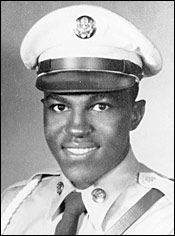 Let us also then remember Corporal Roman Ducksworth Jr., US Army, a military police officer stationed in Maryland, on leave to visit his sick wife when he was ordered off a bus by a police officer in Taylorsville, Mississippi and shot dead on April 9, 1962. The police officer thought Ducksworth was a “Freedom Rider.”
Let us not forget freedom’s price, its history, and that when together we are unburdened from our presumptions, fears, and prejudices, then, and only then, can we be truly free. There will be no choice; only Love.

 You can often read or hear that the Pharisees and their predecessors surrounded the 10 Commandments with 613 other laws – laws which strike us as odd when we encounter stories of Jesus healing on the Sabbath and the authorities respond quite negatively, challenging Jesus to keep holy the Sabbath. In our modern and Christian sensibilities, we cheer Jesus on as he “battles” for the Law of Love expressed in today’s Gospel. Continue reading






 friarmusings