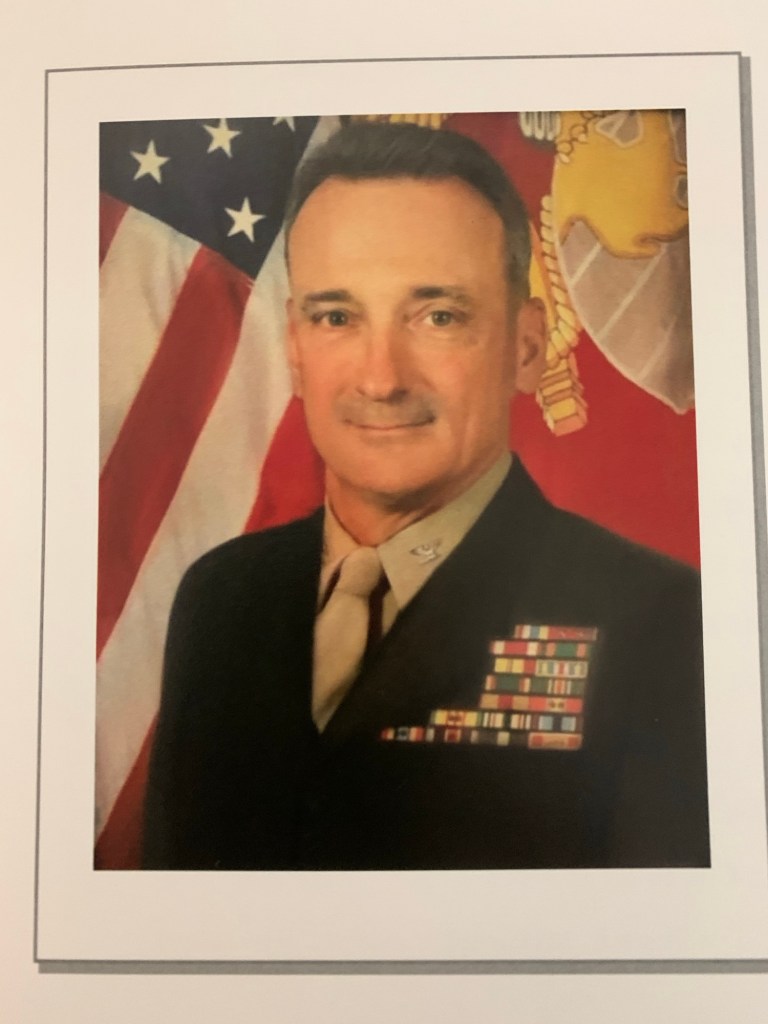
Patriot

From the good folks at Merriam-Webster: To be called a patriot is today considered an honor, but it wasn’t always this way. For much of the 17th century, to be deemed a “good patriot” was to be a lover of one’s country who agreed on political and/or religious matters with whoever was doing the deeming. British loyalists applied the word like a badge to supporters of the ruling monarchy, but then the word took on negative connotations as it was applied first to hypocritical patriots—those who espoused loyalty to the Crown but whose actions said otherwise, and then to outright anti-royalists. But in the 18th century, American writers, including Benjamin Franklin, embraced patriot to refer to colonists who took action against British control. After the American Revolutionary War, patriot settled back into more neutral use, but to this day writers of all and various political stripes grapple over who is deserving of the word.

Perseverance and Freedom

When the Fourth of July comes around each year it is quite common to hear quotes, passages, and speeches that invoke the name of Thomas Jefferson the American statesman, diplomat, lawyer, architect, philosopher, and Founding Father who helped draft the Declaration of Independence and later served as the 3rd president of the United States. He wrote a plethora of letters, essays, and more over the course of his life. As you might expect he is a quotable person. Continue reading

The Voice that Disturbs

If you lived in the northern part of Israel some 750 years before Jesus, you were living during the reign of King Jeroboam II. The economy is good, the neighboring countries are envious of your peace and prosperity – life is good. There is only one problem: the rabble rouser Amos. Have you heard his doom and gloom so-called prophecy? You’d think the enemies were at the gate and the dreaded day of the Lord would be turned upon Israel instead of our enemies. Not sure what he thinks he accomplishes other than to disturb my peace. Continue reading

The Power

Today is the Solemnity of the Nativity of John the Baptist. The gospel reading is taken from Luke and describes the scene when the child is born and, against the custom of the day, receives not his father’s name, but the name “John” as earlier commanded by the angel Gabriel in Luke 1:13. Scripture is clear that John was to be the herald of Messiah. The angel Gabriel also announced to Zechariah that his son, “…will go before him in the spirit and power of Elijah to turn the hearts of fathers toward children and the disobedient to the understanding of the righteous, to prepare a people fit for the Lord.Continue reading

The correct answer

The question: at what temperature does water freeze? Today the outside temperature is in the mid-90s (degrees F) and so naturally one might begin to think about an ice-cooled drink. Which leads one to think about ice. If you don’t have an ice maker in your refrigerator and someone forgot to refill the ice cube tray (or even worse, returned it empty to the freezer), perhaps you wonder how long it will take until ice cubes are ready. Perhaps you are overly anxious about it and when you check the cubes are part solid-ice, part water, and part a thin layer of almost-ice crusting the top of the tray. What can you do to speed up the process…. apart from shut the freezer door and be patient? This is where it pays to be curious. Continue reading

The Star and Leviathan

Years ago, I read a science fiction short story by Arthur C. Clark, “The Star.” I read it in a collection of short stories by Clark. “The Star” appeared in the inaugural issue of Infinity Magazine. The story is about a group of space explorers from Earth returning from an expedition to a remote star system, where they discovered the remnants of an advanced civilization destroyed when its star went supernova. The destroyed planet’s culture was very similar to Earth’s. Recognizing several generations in advance that their star would soon explode, and with no means of interstellar travel to save themselves, the doomed people spent their final years building a vault on the outermost planet in their solar system, whose Pluto-like orbit was distant enough to survive the supernova. Continue reading

Ten Dollars

An old farmer and his wife always went to the county fair. And, every year they saw the same pilot offering to take people up for a spin in his airplane for $10.00 a ride. Every year, the old farmer asked his wife to give him $10.00 so he could go up. Every year, the wife responded by getting very mad at him and saying that ten dollars was ten dollars and they couldn’t afford to be so frivolous with what little money they had. He told her that he was now 80 years old and if he didn’t go up this year, he never would. In a very angry voice, she repeated that ten dollars was ten dollars. At this point they got into an argument about it. Continue reading

Righteous Deeds

I have always wondered about the practice of nonprofit fundraising and especially large capital campaigns that offer naming opportunities to attract seven-, eight-, and nine-figure donations from high-net-worth individuals. As far back as the first century CE, Roman general Marcus Agrippa had his name inscribed on the Pantheon temple. The practice continues today as expressions of civic responsibility, prestige, and power. Continue reading

Perfection

There is a picture in my office that I have had since last century. It is a picture of Jeff Pierce. You probably have never heard of Jeff. He was a professional bicycle racer. He rode for the 7-Eleven team back in the late 1980s when they were the first American team to race in Europe. In the 1987 Tour de France, Jeff was a domestique, a rider whose principle task was to be a support for the team leaders: carry water bottles, protect the top riders from the ravages of wind, and at the end of the day to struggle across the finish line well after the leaders. Against all odds Jeff won the grand finale, the last stage in Paris on the Champs Elysees. A gendarme in the background of the photograph stares in disbelief. Jeff is alone. Crossing the finish line, arms raised in unbelieving triumph. He won against the greatest riders of his day. An American in Paris.  I look at that picture and know that perfect moments are possible. Continue reading