 12 When he heard that John had been arrested, he withdrew to Galilee. 13 He left Nazareth and went to live in Capernaum by the sea, in the region of Zebulun and Naphtali, 14 that what had been said through Isaiah the prophet might be fulfilled: 15 “Land of Zebulun and land of Naphtali, the way to the sea, beyond the Jordan, Galilee of the Gentiles, 16 the people who sit in darkness have seen a great light, on those dwelling in a land overshadowed by death light has arisen.” 17 From that time on, Jesus began to preach and say, “Repent, for the kingdom of heaven is at hand.” 18 As he was walking by the Sea of Galilee, he saw two brothers, Simon who is called Peter, and his brother Andrew, casting a net into the sea; they were fishermen. 19 He said to them, “Come after me, and I will make you fishers of men.” 20 At once they left their nets and followed him. 21 He walked along from there and saw two other brothers, James, the son of Zebedee, and his brother John. They were in a boat, with their father Zebedee, mending their nets. He called them, 22 and immediately they left their boat and their father and followed him. 23 He went around all of Galilee, teaching in their synagogues, proclaiming the gospel of the kingdom, and curing every disease and illness among the people. Continue reading →

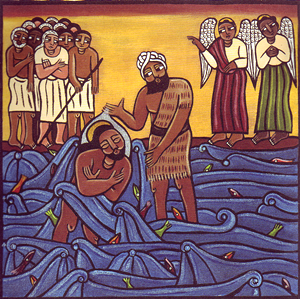 29 The next day he saw Jesus coming toward him and said, “Behold, the Lamb of God, who takes away the sin of the world. 30 He is the one of whom I said, ‘A man is coming after me who ranks ahead of me because he existed before me.’ 31 I did not know him, but the reason why I came baptizing with water was that he might be made known to Israel.” 32 John testified further, saying, “I saw the Spirit come down like a dove from the sky and remain upon him. 33 I did not know him, but the one who sent me to baptize with water told me, ‘On whomever you see the Spirit come down and remain, he is the one who will baptize with the holy Spirit.’ 34 Now I have seen and testified that he is the Son of God.”
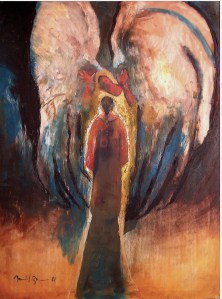 God’s Plan. Joseph’s plans are interrupted in vv.20–23 by the appearance of a messenger from God in a dream — a device familiar from the Old Testament account of the birth of Samson (Judges 13). The first words uttered are “do not be afraid to take Mary your wife into your home.” The angel gives an explanation for Mary’s pregnancy, announcing the divine plan is already in motion. The angel also informs Joseph of his part in the divine plan: “you are to name him Jesus.” As explained above, this simple directive makes clear to Joseph that he is to claim Jesus as his own. As the legal son of Joseph, Jesus will be a “Son of David” (v. 20).
