

It is a probing, provocative, and pointed question. Yet, it is a deceivingly simple nine words and a question mark. St. Paul in his letter to the Romans, our second reading, asks: What will separate us from the love of Christ? (Rom 8:35).
St. Paul answers: “Will anguish, or distress, or persecution, or famine, or nakedness, or peril, or the sword? (Romans 8:35) No, in all these things we conquer overwhelmingly through him who loved us. (Rom 8:37). How can we not be swept up in St. Paul’s fervor, his energy, his hope, his faith, and his conviction. For I am convinced that neither death, nor life, nor angels, nor principalities, nor present things, nor future things, nor powers, nor height, nor depth, nor any other creature will be able to separate us from the love of God in Christ Jesus our Lord. Continue reading
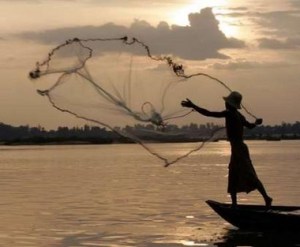 Deacon Ray is preaching this weekend at the Mass I am celebrating, so here is one from a past 17th Sunday, Year A.
 It’s your first baby. It has been great. Sure, it has been hard work, but what a bundle of joy. And tomorrow is the last day of maternity leave. You have a great job and love the people you work with. Maybe you should stay home longer? Maybe the family can get by on one salary? But there is a great day care center near work. Maybe we could nanny-share with a neighbor? But the big project that you really want to be part of is coming up…. Such is the circumstance of ambivalence.
  Over the years while leading Bible studies, participating in RCIA to help folks fully enter the Catholic Church, or just in the odd discussion, I try to make a point about the most basic purpose of Sacred Scripture. It is simply this: for God to reveal God’s self to us – an invitation to a personal and communal covenant relationship. God tells us about God’s self through stories, the people’s experience of God in the history of Israel, and most especially in his only begotten Son, Jesus Christ. Think about the stories of our ancestors in faith. Basically, they all begin with an invitation to begin, follow, and slowly learn about God. My reading of the stories of Abraham and Sarah, Moses, King David, the prophets, and more all began with an invitation. Their encounter with God led them to a journey of an ever-deepening relationship with God. Along the way there are plenty of questions – some as simple as Moses’ inquiry about the name of God: “if I go to the Israelites and say to them, ‘The God of your ancestors has sent me to you,’ and they ask me, ‘What is his name?’ what do I tell them?” (Ex 3:13) The same pattern is played out in Jesus’ calling the apostles from their fishing boats, tax collection stations, and other endeavors. Calling them to leave all behind and journey with him for three years: from Galilee to Calvary.
  I used to camp and backpack in the wilds of Virginia and West Virginia. Generally, it was just for a weekend – maybe two or three days – along with a group of friends. We would carry everything in/out. I remember having fun, enjoying it all, but I always felt like I needed a day to recover. Perhaps it was the infrequency of carrying a load, the hiking, and all that goes with the adventure, but come Monday, there was always a stiffness about my neck, arms, shoulders, upper back and all the rest that is connected to those parts. I could still feel the aftereffects of the pack’s burden. “Come to me, all you who labor and are burdened, and I will give you rest.” It sounded like the perfect scripture for the post-camping Monday mornings.
  The readings from daily Mass this week past should have been labeled “King and Prophet week.” Every day the first readings was a narrative about one of the Kings of Israel or Judah, a summary of their reign, and the proclamation of the prophets which came before them with the living Word of God. Prophets like Amos, Isaiah, and Jeremiah; as well as prophets whose names are unfamiliar to us; and prophets whose names were not recorded in Sacred Scripture. Kings that might not be familiar to you, but are a cast of the Good, the Bad, and the Ugly. Two of the best were part of the narrative: Hezekiah and Josiah – kings held in almost the same esteem as King David – godly men who understood their role as leader – to lead the people of God more deeply into the covenant life and promises of God. Two of the worst were recounted: Hoshea the last of the northern kings and Zedekiah, the last of the Kings of Judah. They ruled with iniquity as had most of their predecessors. When they disappeared into exile, the time of Kings passed and all of Israel and Judah followed int exile, the promised land lost.
 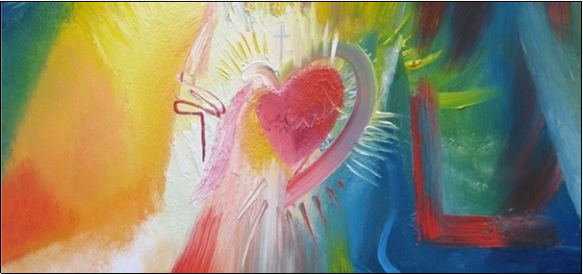 Today we celebrate the Solemnity of the Sacred Heart, our parish namesake. We celebrate what St. Bonaventure identified as the source of the fountain fullness of love poured into our hearts. Our hearts, in Latin the word is “cor” from which is derived the English word, “core” as in the core, the center of being, the center of prayer and hope, the center of our moral compass, and center of the stories that matter to us.
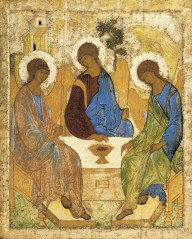 Holy Trinity Sunday. On Trinity Sunday, we are called to reflect with joy and thanksgiving what the Father, Son and Holy Spirit have done to bring about redemption and the possibility of salvation for all. We celebrate to respond to the love God has shown for us, praising Him, and giving Him glory. We that we were created in the image of God, saved by God despite our sins, and our journey in this life is accompanied by God at each moment. It is a celebration and invitation to share the inner life of the Trinity.
 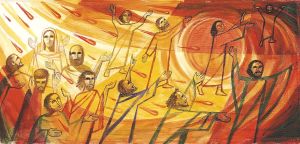 Note: This Sunday marks our first Sunday public Mass since the beginning of the pandemic closures. It has been a busy week getting ready, planning, re-planning, and making sure our staff and volunteers are ready. Deacon Ray is taking on the homily responsibilities at the Mass I will celebrate. But in case, you might be interested, here is my homily from 2017.
 friarmusings