
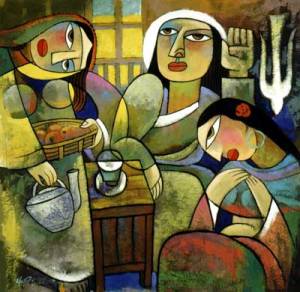
 In one episode of the “Brady Bunch,” middle sister Jan gets fed up with center-of-attention oldest sister Marsha. “Marsha, Marsha, Marsha!” Jan cries in irritation. I can’t remember the problem or how it was resolved, but I do remember Jan’s tone: total exasperation. And thanks to the similarity in the sound of the names (Marsha and Martha), for years this same exasperation echoed through my mind every time I read the story of Mary and Martha in the gospel. It is as though Martha comes out of the kitchen and with the same exasperation says (in so many words): Mary, Mary, Mary. And then finds herself on the carpet, so-to-speak, in front of Jesus and whole room. Continue reading
Choosing well
1
 I am away from the parish celebrating the baptism of a college classmate’s first grandchild. I thought it good to leave you with some words from another time reflecting on our Sunday readings.
 I have been teaching bible studies for 33 years now. I have learned some things, forgotten some things, but I have come to appreciate the life-long project that slowly builds up a deeper appreciation of what God desires for us, God’s love for us, and the symphony of God’s efforts to lead us to salvation for the great homecoming of homecomings.
  These days, there are four words that are a sure way to get a reaction: “make America great again.” What kind of reaction? The “whys” “whats” and “wherefores” of the reaction, well, that is for another time and place. Like many slogans it is meant to point to some narrative beyond itself, to a larger story, to provide meaning, purpose, and destiny to this life.
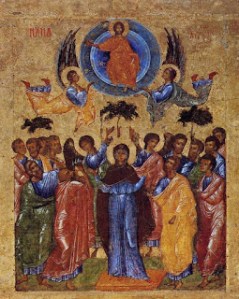
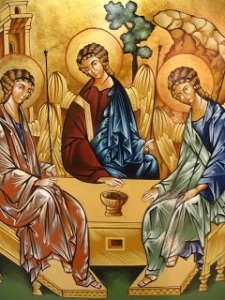 We have all kinds of solemnities, feast days, and other special days in the church year. We commemorate happenings in the life of Christ: Mary’s visit from Gabriel, the birth of Jesus, the arrival of the maji, the Baptism of our Lord, the Transfiguration when the glory of Christ is revealed, Palm Sunday, the empty tomb and Resurrection of Easter, the glorious Ascension, the explosive coming of God’s spirit to the church at Pentecost … and then we have Holy Trinity Sunday. And suddenly it is like we have moved from these great events in the life of Christ, and now…. tadah!! We are celebrating… well… what are you celebrating this Sunday? Take a moment and make a list of the possibilities… (for my own part I am waiting… are you making the list or did you keep reading?)
 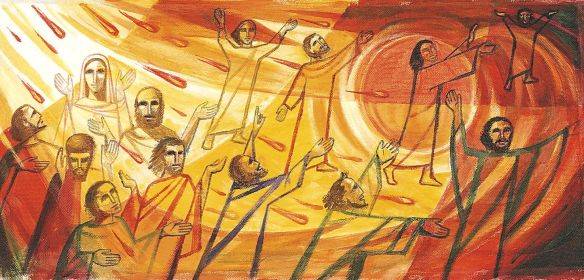 “And they were all filled with the holy Spirit and began to speak in different tongues, as the Spirit enabled them to proclaim… At this sound, they gathered in a large crowd, but they were confused because each one heard them speaking in his own language… They were all astounded and bewildered, and said to one another, “What does this mean?” But others said, scoffing, “They have had too much new wine.”
  When I was in seminary, our homiletics professor had lots of advice and pointers for the Sunday homily – I am about to ignore one of the pieces of advice. The professor was pretty adamant about not explaining theology. And I mostly agree with his point – it can make a homily really dry and fill it with language that needs its own explanation. The professor’s final point was that you are likely to give an inaccurate or heretical version of the theology in any case.
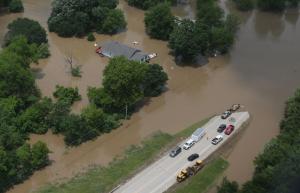 This spring has been a season of record-breaking floods across the Midwest, submerging farms, businesses and houses. The flooding this year could be worse than the historic floods of 1993, which devastated the region. In the coming days, the Illinois, Missouri, Arkansas and Mississippi Rivers are all at risk of spilling over their banks, levees, and inundating places like Sand Springs, OK, Jefferson City, MO, and a whole lot of small towns. The spillways in New Orleans are already open trying to get ahead of the coming waters. Places like Hardin, Ill., a village of about 900 people, sits in a particularly vulnerable spot on the Illinois River near where it flows into the Mississippi River. The city clerk updates river forecasts every 20 minutes to let the residents know if the village is about to become an island. It almost did on May 7th of this year. It will be a long weekend of watching and waiting.
 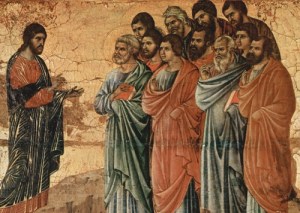 If you knew this was your last week, your last day on earth, what would you tell the people you love? Would it be advice? Your hopes for them? Would it be the dreams you have? Perhaps, the gratitude and love in your heart? What would be your last words to the ones you love? Beyond the fact we’d really not like to think about it, even if we were ready to do so, this is something difficult, daunting, and delicate.
 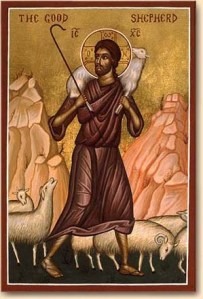 “My sheep hear my voice; I know them, and they follow me. (John 10:27)
 friarmusings