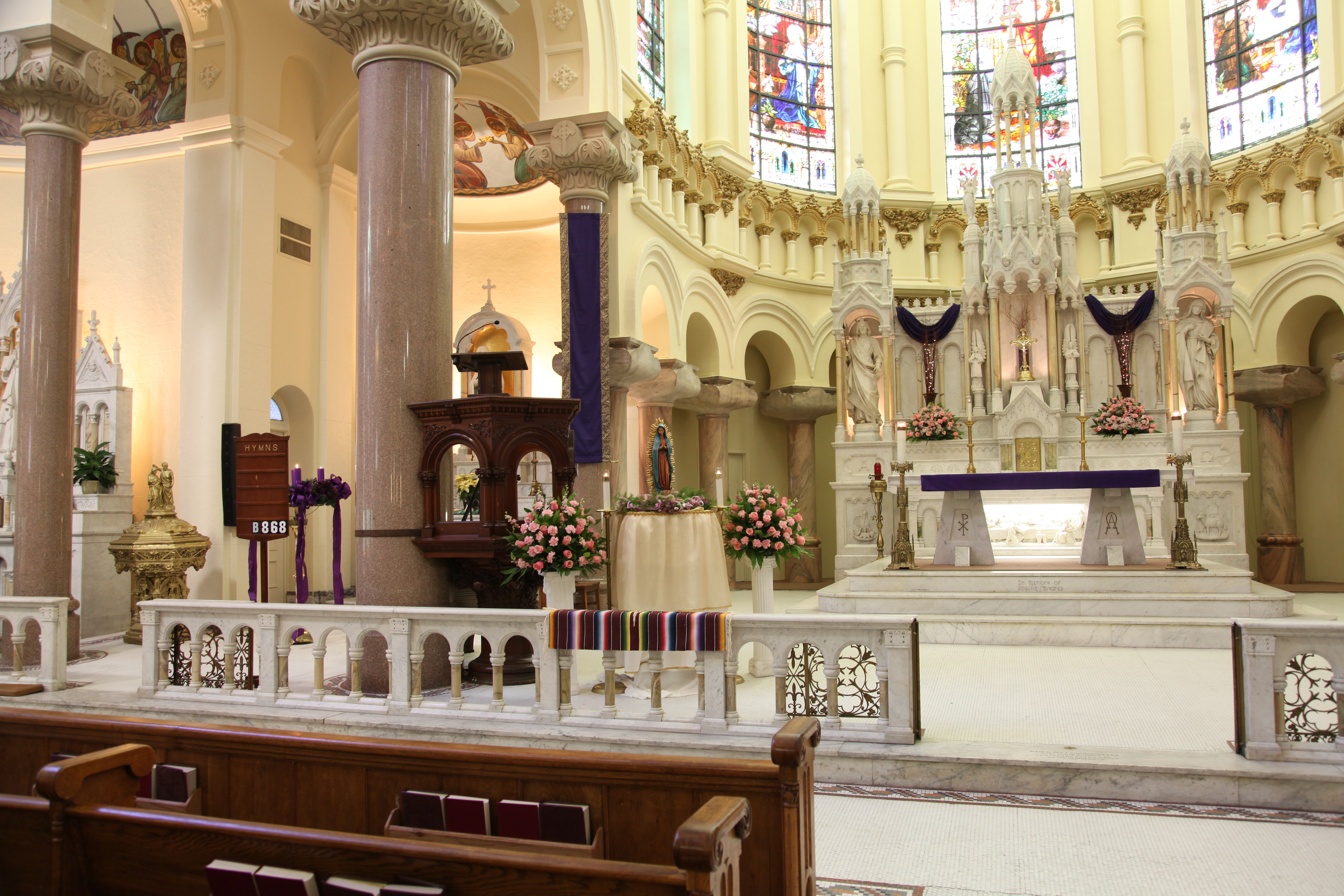
Church architecture is always a tough project – there are so many different ideas about what makes for a beautiful worship space. A couple of time in the last two weeks people have asked me if I agree with them that isn’t it a shame that churches have become so “modern” – or some other description – all the while complementing our church and wishing that all Catholic churches could be similar. Continue reading
Category Archives: Sunday Morning
Promised
When I was missioned in Kenya, one my principal responsibilities was ministering to the Rwandan refugees who lived in our parish. There were about 1,000 children, women and men. It seemed to me the majority of them were children. So many. And too many of them were orphans having lost parents, aunts and uncles, grandparents, cousins, and more in the genocidal killing in their homeland located 750 miles away and a lifetime ago. It was a time Death seemed to hold such a firm grip in our part of the world. Continue reading
Build with Living Stones
This church of ours has seen a city grow and change. Our parish has been here since 1860 with this church structure our home for worship since 1905. The church has been it fair share of the change. The street out front once had hitching posts; now there are parking spaces. The Hillsborough Hotel and its grandeur marked the property across Florida Ave.; now it is a parking lot. Next door we are watching the federal courthouse become Le Meridien, an exclusive hotel. All the while our church has stood like a silent sentinel and a place of prayer. Continue reading
Lord of All
Last week I wrote that if Lent was about making “room for God” – and that is a good start – then the Easter season and beyond should be about coming to realize that God is the entire room! “God should be not merely the reference point but the whole context out of which we operate. God is not merely the source of our existence, he is the substance of our existence, the very life we have, and without God we would be lifeless, even if we are alive. Put another way, if Jesus is not Lord of all, he is not Lord at all.”
I think St. Francis understood that God is not just the philosophical construct as the “ground of being,” but the One who gives us life every day, is the reason we get up in the morning, and is the focus of our praise. God is both our creator and our redeemer. Both our raison d’etre and the reason why we do what we do. God is both the source of love and the sort of love we should have and express. God is the overwhelming, awesome, all-loving being that can sweep our lives into wholeness, completeness, and rest. He is Lord of all. Continue reading
The story we tell
Easter is one of those days in church we are filled with parishioners, regular and perhaps a bit less-so. Folks that are here just to please a mother or grandmother – which is itself a good thing. There are visitors passing through town, the last wave of folks here before heading back north for the summer, other people who just want to celebrate in the prettiest church in these parts, people that are curious, folks that sense that things are different with Pope Francis, folks who are suffering, folks are bit lost and searching, and all kind and manner of people. All are welcomed. Welcomed on this greatest of solemnities of the Christian faith. Someone said to be that this is like a second Christmas. Really? Maybe Christmas is a second Easter (…and I would have to give that one some thought.) Easter is the celebration – when we proclaim that, just as He said, Jesus was raised from the dead. Resurrection. It is amazing that God showed His love for us by coming to pitch his tent among us, but raised from the dead… that takes the Divine Love to a new depth, breadth, and mystery. Continue reading
Urbi et Orbi
The 2014 Easter Message of Pope Francis
Dear Brothers and Sisters, a Happy and Holy Easter!
The Church throughout the world echoes the angel’s message to the women: “Do not be afraid! I know that you are looking for Jesus who was crucified. He is not here; for he has been raised… Come, see the place where he lay” ( Mt 28:5-6).
This is the culmination of the Gospel, it is the Good News par excellence: Jesus, who was crucified, is risen! This event is the basis of our faith and our hope. If Christ were not raised, Christianity would lose its very meaning; the whole mission of the Church would lose its impulse, for this is the point from which it first set out and continues to set out ever anew. The message which Christians bring to the world is this: Jesus, Love incarnate, died on the cross for our sins, but God the Father raised him and made him the Lord of life and death. In Jesus, love has triumphed over hatred, mercy over sinfulness, goodness over evil, truth over falsehood, life over death. Continue reading
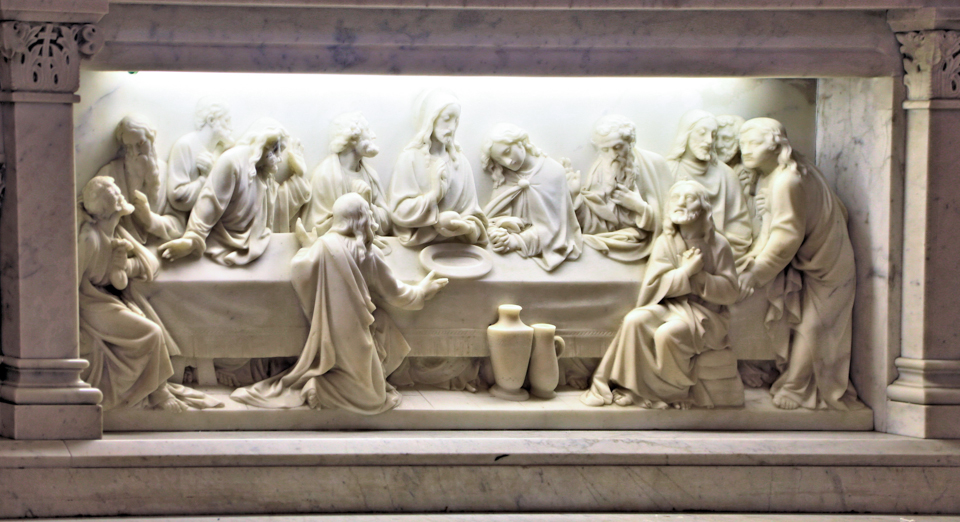
Passion Sunday: A last meal
The Gospel reading for Palm Sunday of the Lord’s Passion is quite lengthy and so will not be included here. It can be found at the USCCB website:
Jesus Inaugurates the Eucharist (26:26-30a) As Joachim Jeremias and other scholars have shown in looking at all the received Eucharistic traditions (Paul in 1 Corinthians and the synoptic gospel writers), Jesus follows the form and outline of the Passover Seder. The thanksgiving over the bread and the cup recorded in vv. 26 and 27 will therefore be a regular part of the main section of the Passover meal (making this the third of the four cups of the Passover), and we may reasonably assume that Jesus used the traditional words of thanksgiving. But it worthwhile to point out that said the blessing refers to blessing God, not blessing the bread. Continue reading
The Sign
There are no miracles in the Gospel of John. Well, at least he does not call them as such. John seems to assiduously avoid calling them miracles, preferring to call them “signs.” In fact the first part of the Gospel of John is called the “Book of Signs” – and there are seven.
- Changing water into wine in John 2:1-11
- Healing the royal official’s son in Capernaum in John 4:46-54
- Healing the paralytic at Bethesda in John 5:1-18
- Feeding the 5000 in John 6:5-14
- Jesus’ walk on water in John 6:16-24
- Healing the man born blind in John 9:1-7
- Raising of Lazarus in John 11:1-45
Each sign is meant, not only to grab your attention, but to serve as a pointer, not that which has just transpired, but to the person of Jesus. The signs also serve to point to a choice.
That has been the motif in the Gospel of John all along. At the end of the first sign, the words of the Blessed Virgin Mother in the story from Cana make it evident. Her last words in the Gospel of John are the clearest and most poignant sign: “This is my son, do what he tells you.” She points to the person of Jesus and points to the choice each will have to make: do what he tells you. Every disciples, every reader, each one who hears this Book of Signs is brought to that moment where choices are made to follow, or not, the one who is the Living Word of God made flesh, Jesus Christ. Continue reading
Oh my gosh….did you know?
When I became pastor, Fr. Andrew told me that this column space was a task that was unrelenting. It does keep coming around. I would love to tell you there is a grand vision in the background that connects the dots from week to week, but there isn’t. Sometimes it is driven by the liturgical season, things at the parish, events on the national scene, one of many other items important to the parish, or once in a while, something I have just been musing about. Like last week it was gossip. Continue reading
The history we write – the lives we lead
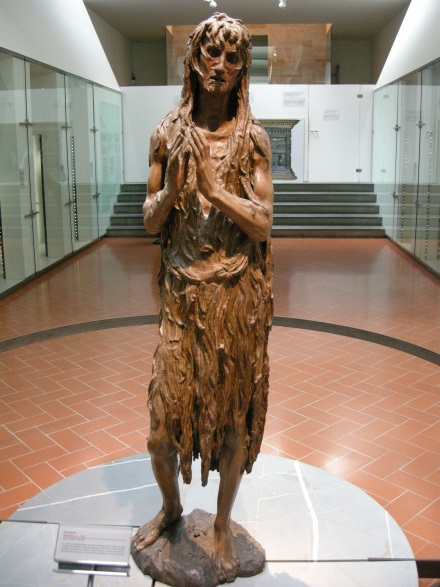
Most people still think of Mary Magdalene as the unnamed sinner (possibly a prostitute) in Luke 7:36-50. Of course we think of her as “the repentant prostitute” because she turns her life around because of the encounter with Jesus. The problem is that for the first 300+ years of the Church, she was only seen as the first witness to the Resurrection. Did you know that Mary Magdalene is mentioned 12 times in the gospels, more than most of the Apostles? She was present at the crucifixion and was the first witness to the Resurrection (John 20 and Mark 16:9). She was the “Apostle to the Apostles,” an honorific that St. Augustine bestowed upon her in the fourth century, and possibly he was but repeating a moniker already in use. Continue reading