
Japan and the Soviets Before the War

The Japanese-Soviet story is more detailed than discussed in this series to this point. It is important to understand the “history” between these two Asiatic imperial powers. In the series to date, we picked up the “story” when the Soviets announced that they would not renew the neutrality pact with Japan in April 1945, giving the required one year notice that by April 1946 the pact would lapse. As previously noted, the Soviets were already transferring soldiers, transportation, armaments and ammunition to their “Eastern Front” – meaning Mongolia and Siberia. This was in accord with the February 1945 promises made to the Allies at the Yalta Conference when they promised to declare war on Japan within 3 months of Nazi Germany’s surrender. And all the while Japan was attempting to recruit the Soviets to represent Japan and broker an end to the war (detailed in Japanese-Soviet Diplomacy).

But why did Japan enter into a neutrality pact with the Soviets in the first place? Weren’t the Soviets part of the Allied war effort against the Tripartite Pact of Germany-Italy-Japan? Yes, but conflict with Japan and Russia (and then later the Soviet Union) had history in each country’s expansionist interests. Those interests included Korea, Manchuria, and Inner Mongolia. 

An Imperial Collision in Asia

The Russian Tsars always held a vision of a “Greater Russia” that extended from west to east. With the completion of the Trans-Siberian Railway in the late 19th century, Russia sought economic and strategic footholds in Manchuria and Korea. This meant they needed ice-free ports on the Pacific (Port Arthur, later Dalny) to replace Vladivostok, which freezes in winter. At the same time, they saw the decline of the Qing dynasty and unrest in China as an opportunity to expand influence.

After the Meiji Restoration (1868), Japan rapidly modernized and adopted imperial strategies modeled on Western powers. For Japan the interest was raw materials, food imports to the home islands, and “room to grow” for the Japanese people. Japan needed to secure resources and strategic depth for its new industrial power. Korea was vital to its national security—“a dagger pointed at the heart of Japan” (per a common Meiji slogan) but strategic depth and raw materials widened the ambitions to Manchuria and beyond.

In 1895, Russia, Germany, and France forced Japan to return the Liaodong Peninsula to China after the Sino-Japanese War (a peninsula to the west of the Korean peninsula containing Port Arthur). For Japan this was a humiliation with its victory over China nullified by European imperial powers, especially Russia. The dagger was “twisted” in the wound three years later when Russia leased the returned territory from China in 1898, establishing Port Arthur as a naval base. To make matters worse during the Boxer Rebellion (1900), under the pretext of restoring order, Russia occupied Manchuria and was slow to withdraw. At the same time Russia began asserting control over northern Korea, despite earlier informal understandings that Korea would remain in Japan’s sphere.
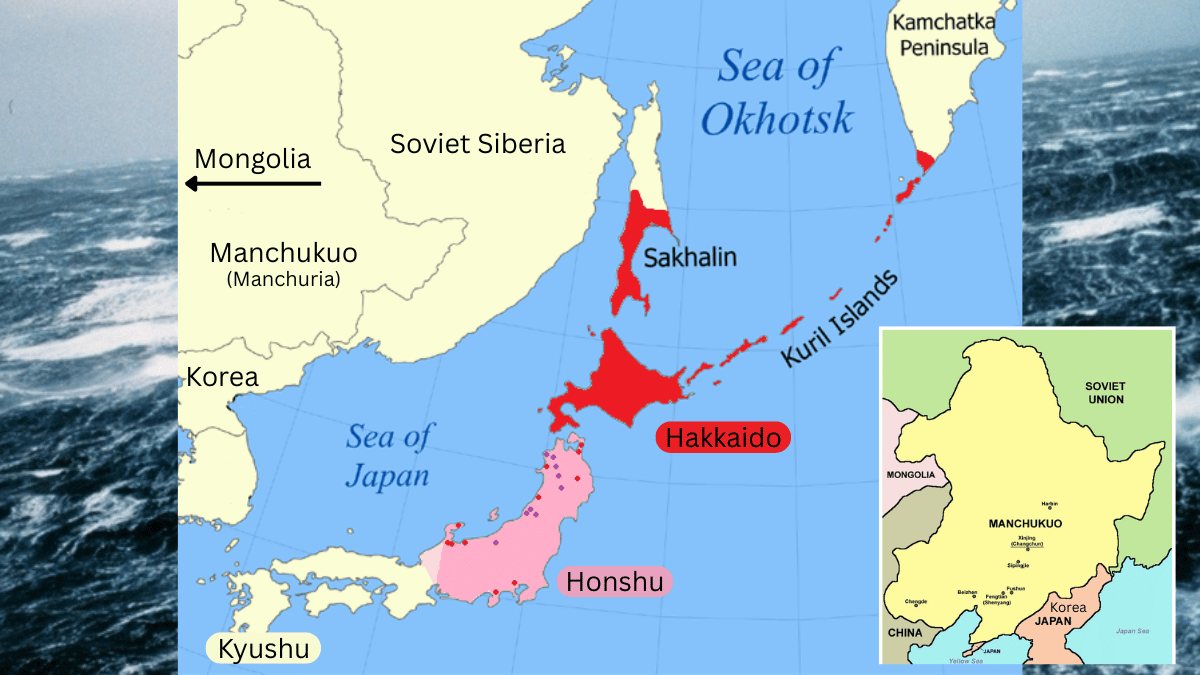
Over the next several years tensions rose between the two nations, diplomacy started, stopped, stalled and fueled the rising tensions. Of primary importance to Japan was the formal recognition of its national interests and its preeminent role in the Asian world with an equal footing to European colonial powers. Japan proposed recognition of Russia’s dominance in Manchuria in exchange for recognition of Japan’s dominance in Korea. Russia refused, offering instead to make Korea a neutral buffer and demanding Japan stay north of the 39th parallel which allowed Russian continuing control over Port Arthur.

Russian diplomacy stalled negotiations while the Russians expanded troop presence in Manchuria. Japan interpreted this as an attempt to exclude it entirely from the Asian mainland. After months of fruitless negotiation, Japan broke off talks. Without a declaration of war, the Japanese Navy launched a surprise attack on Port Arthur (Feb. 8, 1904). Japanese victory at the  naval battle of Tsushima in 1905 ended the war. In the subsequent treaty Japan gained recognition of their special interests in Korea (which they annexed in 1910), southern Sakhalin Island, and lease rights to Port Arthur and the South Manchurian Railway. This was the first time an Asian nation defeated a European one in modern warfare. It changed the hierarchy of imperial power in the Asia Pacific region, established the Japanese military as the embodiment of the Japanese ideals and virtue, and fed the view of Japan’s destiny as leader, not just of the Asia Pacific but of the “eight corners of the world.”

Japanese-Soviet Conflict in the 1930s

By 1931 Japan sought to expand its dominance in Manchuria and northern China for economic and strategic security. Japan’s Kwantung Army seized Manchuria and established the puppet state Manchukuo. The Soviets, weakened by internal purges and economic strain, avoided open conflict but reinforced defenses in the Far East in order to preserve its influence in Mongolia. Both sides increased military presence along the Manchurian–Mongolian frontier. Another imperial collision was inevitable – only the scale of the collision was in question.

By 1935 small scale conflicts and cross border actions ratcheted up tensions in the region, so much so that by 1936 Japan signed the Anti-Comintern Pact with Nazi Germany identifying the Soviet Union as a common ideological enemy. In 1937 the Second Sino-Japanese War was fully underway. While the Soviets were not actors in the conflict, they were essential suppliers of arms, ammunition and airplanes to the Chinese forces – both Nationalists and Communists.

In 1938 there were growing border conflicts that led to a large-scale battle along the Manchukuo border with Mongolia. The action was initiated by the Japanese but Soviet–Mongolian forces decisively defeated the Japanese Sixth Army. This was a key moment in the years before the attack on Pearl Harbor. The Japanese Army recognized the limits of land war against the Soviets and as a strategic consequence the Army (Kwantung faction) was humiliated allowing the Navy to gain influence. 

The Strategic Fallout

The result was a Japanese strategy focused on expansion toward Southeast Asia and the Pacific instead of northern expansion into Siberia. As for the Soviets, they undertook a “wait and see” attitude as the rise of Nazi Germany complicated their western borders. In August 1939 the Soviets agreed to the Molotov-Ribbentrop Pact with Nazi Germany. This pact guaranteed that neither country would attack the other, and for the Soviets was a strategic piece to avoid a two-front war. This was followed by the Soviet–Japanese Neutrality Pact (April 13, 1941) in which both sides pledged mutual neutrality and respect for territorial integrity of Mongolia and Manchukuo – the other piece the Soviets needed to avoid a two front war. But it also served the same purpose for Japan as it pursued its plans to expand into Southeast Asia and the Pacific.  

Four Years Later – August 1945

With Nazi Germany defeated, the Soviets were not at war. All was quiet of their Western front facing Europe – the first Berlin crisis was almost 3 years away. All was busy on their Eastern front facing Japanese occupied Manchuria and Korea as Soviet troops, tanks, artillery, and supplies amassed opposite the Japanese Kwantang Army – once the pride of the Imperial Japanese Army, but not a shell of its former self with its resources transferred to fighting the allied advance in the Central and Southwest Pacific.

The Soviet’s imperial aspirations in the East had not changed since the 19th century – their 1945 entry into war against Japan was the fulfillment of a promise to the U.S. and Britain and a reason to do what they always intended to do: occupy Manchuria and Korea. In history, they took advantage of the bombing of Hiroshima and formally declared war just hours before Nagasaki. Historians seem united in their view that it was a rushed decision as regards timing because they wanted to declare war before Japan surrendered. Otherwise, their August Storm plan was pointed at the last week in August.

As mentioned in a previous post the outcome in Manchuria was not in question. The odds and manpower were overwhelmingly in the Soviet’s favor. The Soviets captured about 2.7 million Japanese nationals with 1/3rd of them civilian. The dead and permanently missing numbered ~470,000.

Beginning immediately after the surrender, the NKVD (Soviet secret police) organized the mass transfer of Japanese POWs to labor camps across the USSR. Between 500,000 and 600,000 Japanese soldiers and officers were deported to Siberia, the Urals, Kazakhstan, and other regions as slave labor. The Soviet reasoning for the internment was framed as legitimate war reparations—compensation for Japanese aggression in 1904–1905 and in the 1930s.  While in the gulag-like conditions, between 50,000 and 100,000 died from conditions of forced labor, poor nutrition, disease, and other causes. Repatriation of soldiers began in late 1946 with the release of 400,000 POWs and continued off and on until the mid-1950s. In the end, tens of thousands were never accounted for.

Around 1.5 million civilians were stranded in Manchuria. Thousands were killed in the chaos following Japan’s surrender due to Chinese revenge attacks, bandit raids, and Soviet troop abuses (looting, executions, and rape, particularly in the first weeks). Women and children were especially vulnerable. There are remembrances and contemporary Japanese accounts that speak of mass assaults and suicides. Repatriation of civilians began in late 1946 and continued until the mid-1950s. 

These numbers are the history and most view that our counter-factual history would have turned out the same way. The primary question that is unanswerable is whether the Japanese would have invaded Hokkaido – would the allies let them? – and would the Soviets have advanced to northern Honshu? It is clear that the Soviets did not have amphibious capability to sustain an invasion.

That being said, it is hard to know the effect of the Soviet declaration in our scenario. There are historians such as Tsuyoshi Hasegawa’s [Racing the Enemy: Stalin, Truman, and the Surrender of Japan (2005)] that hold, absent atomic weapons, the Soviet invasion into Manchuria would have galvanized the Imperial Japanese Army to overthrow the home government, declared martial law, and continued the war – not only waiting for the invasion of Kyushu but unleashing widespread warfare in part of Southeast Asia where their armies still maintained control. There is no feasible way to estimate the increase in civilian deaths except to note that the already horrific numbers of lost non-Japanese Asian lives (and Japanese lives) would only become horrific at a new level.


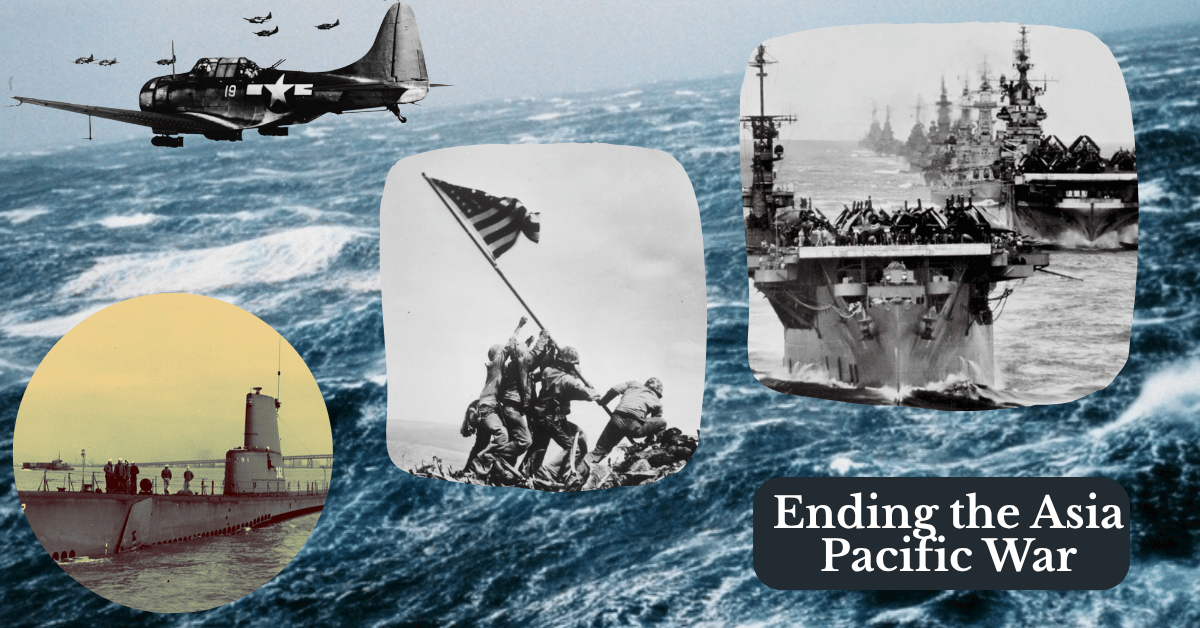
Image credit: Image credit: various photographs from Naval Aviation Museum, National World War II Museum, and US Navy Archives. 

July 1945

July 1945, in some ways was like the lull before the storm. I remember my first experience of the eye of a hurricane passing over my home town. I was a small child and my parents told me about what would happen. Sure enough in just a moment we went from hurricane winds and lashing rains to an amazing stillness. We wandered outside just to feel the stillness and utter silence. In time and slowly, the winds picked back up to the full whip of hurricane winds. July 1945 is like the passing of the eye of a hurricane. The winds of Okinawa have quieted, the “divine winds” of the kamikaze are still … for the moment. And the world waits to see if the winds of the Asia-Pacific war will roar back with the advent of Operation Olympic, the invasion of Kyushu.

Analogical imagining aside, there were key events that continued to play out in the month of July, both on the battlefield and behind the curtains in the halls of allied and Japanese governance.

Continue reading

Task Group 30.8

Many years ago I prepared a couple for Sacramental Marriage. He was an Army Officer assigned to a local joint operations base and had primarily served in the Quartermaster Corp (Supply). He had written a history of Army Logistics in World War II. He gave me a copy and it was very interesting. My take away from the book was that perhaps the German generals and divisions were better than the Allied counterparts, but integrated allied logistics won the war in Europe. He certainly made a case. One of the examples he used in his book was the Battle of Anzio in Italy, especially during the major German counter attack against the Anzio beachhead. It was a detailed explanation of the same observation Rick Atkinson makes in his The Liberation Trilogy, the second book, The Day Of Battle. In short, the ability of the allied forces to deliver a massive tonnage of munitions (air, shore bombardment, artillery, etc) across the entire front of the German advance turned the battle.  

This post is my homage to the logistics forces of the war in the Pacific.

Continue reading

Japan prepares for Invasion

The sooner the Americans come, the better… One hundred million die proudly” 

Such was the Japanese wartime propaganda campaign in 1945 as part of the Ketsu-Go defense plan against the inevitable invasion of the home islands by Allied forces. The slogan urged a total commitment, even unto death, to protect Japan. If necessary, Japanese civilians were to fight to the death to defend the homeland.  Along with military operations, the goal was to inflict unacceptable casualties on the enemy and force a negotiated peace. 

Japan had a standing army of 4 million men, but more than half were spread out across the Asia Pacific region with a large part garrisoned in China and Manchuria but unable to cross the Sea of Japan to reach the home islands because of the naval blockade, submarine operations, and mining of the sea lanes by allied bombers operating from Saipan. Thus the call for the people to come to the aid of their homes and nation.

For more than 2,000 years, Japan had never been successfully invaded. The most serious threat had come from two attempted Mongol invasions in the 13th century, both of which were thwarted by typhoons that caused massive losses of ships, sailors and soldiers. Although the story of the “Divine Wind” (Kamikaze) “grabbed the headlines” in both invasions, the on-shore Japanese resistance was epic. It is estimated that the Mongol losses approached 100,000 with survivors becoming enslaved. The foundational story became the intervention of the divine and total commitment of the people.

Continue reading

The Collapse of Civil Order

As the summer progressed, the emperor and other key members of the inner leadership grew concerned and anxious that the civil order of Japan was threatened. In the breakdown of civil order, there was fear that the Japanese people would be ripe for a revolutionary moment. The root cause of growing dissatisfaction was the slow realization that the reports of Japanese victories were simply wrong. They had daily evidence that allied bombers controlled the skies and were unhindered in their devastating fire-bombing attacks on cities. The vaunted Japanese military could not protect them. 

Food Crisis and the “domestic situation”

At the same time it was clear that the food situation was becoming increasingly dire. For too long Japan had relied on food from Korea, Taiwan, Manchuria, and occupied territories. U.S. naval blockade had cut off imports, and domestic stockpiles were being depleted. Japan did not have a developed roadway system and so internal distribution of food and supplies were dependent upon rail and coastal transport. US bombers targeted train tunnels in the mountainous and hilly regions. At the same time, B-29 continued the mining of the coastal waterways, dramatically reducing the capacity of that transportation system.

Prior to 1941, 40% of Japan’s rice was imported, primarily from Korea and China. By the summer of 1945 those imports fell to virtually zero. The Japanese government instituted food stuffs to replace rice: soybean, sweet potatoes, wheat, barley, millet and a variety of greens. The problem was that these substitutes did not provide the caloric intake needed. But even more, rice was not just a staple but a cultural cornerstone. Its scarcity created a deep psychological blow as it “whisphered” wartime defeat. The food problems led to malnutrition, absenteeism from work, and other social problems. “The domestic situation” became the euphemism describing the building dynamic. They projected the real crisis would come in the fall, particularly when the rice crop was due. The 1945 rice harvest was expected to be only 50% of the normal harvest.

Continue reading

Japanese-Soviet Diplomacy

Many commentaries, focused on the use of atomic weapons, suggest that use of such weapons of mass destruction was not necessary given that Japan was attempting to open peace negotiations via the Soviets as intermediaries. As noted in earlier posts, if one wishes to assert that peace negotiations via the Soviets was a viable pathway, one needs to account for the history of Japanese-Soviet relations which in general had always been contentious. Military actions include the 1903-1905 Japanese-Soviet war which concluded with a resounding Japanese victory at the naval battle of Tsushima, the 1939 Japanese invasion (unsuccessful) of Soviet-held Mongolia, and a long history of border conflict in northern Manchuria and Siberia.

The 1939 German–Soviet Non-Aggression Pact surprised Japan. Berlin, its nominal Axis partner, had essentially made peace with Moscow just as Japan had been fighting the Soviets. This left Tokyo diplomatically exposed. With tensions high, both Japan and the USSR had reasons to avoid a two-front war. The Soviets feared German aggression. By securing peace with Japan in the east, he could concentrate forces in the west. A neutrality pact would allow Japan to focus on expansion southward (toward Indochina, the Dutch East Indies, the Philippines) without worrying about Siberia. The pact was signed on April 13, 1941. Both sides pledged to respect each other’s territorial integrity and neutrality if either was attacked by a third power. On April 5, 1945 the Soviets informed Japan that they would not renew the pact in April 1946. But on the same day, the Soviets began deploying approximately 1 million soldiers to the Far East in fulfillment of a 1943 pledge to the Allies to enter the Asia-Pacific war within 3 months of the surrender of Germany. 

Continue reading

What is Necessary?

Much of the Just War Theory conversations (apart from what I have called narrow consequentialism) centers on the deaths of civilian populations. Broadly reading the available literature there seems to be a rating of moral importance in which the moral weight is given to civilians over drafted military over volunteer military. In part, it is the theorist’s way to nuance out the factors involved in thinking through jus bello decisions. For example, if the only way to save 100,000 of our civilians’ lives from terrorist attacks is by bombing another country’s cities and intentionally killing 10,000 of its citizens – would it be an action jus bello? Or, what if some enemy civilians place themselves as voluntary shields around a military target, hoping to deter attacks on it. Have they become combatants? What if they are not voluntary but are being forced into that role as happened in the Battle of Manila? What if citizens, dressed as citizens, are part of a military charge against defended positions such as happened on Saipan? What if citizens have workshops, critical to war production, adjacent to their house as was common in Tokyo and other major industrial cities of Japan? What if only 20% of the homes in a neighborhood have such workshops but the majority of other residents work in the larger factory where home workshop items are assembled into war materials and weapons? 

And if the larger goal is to end the Asia Pacific war to stop the mass deaths of non-Japanese citizens in Japanese-occupied territories, is it proportional and necessary to not intend, but to know that it is inevitable that Japanese civilians will die because of allied military actions that are scaled up to a national level? What if the action is not direct attack by armed forces and weapons, but simply the blockade of the aggressor nation that will result in increasing civilian deaths by starvation until the nations, already militarily defeated, finally politically surrenders?

Continue reading

Japanese “Diplomacy”

When one talks about Japan’s efforts to end the war, there are those who claim there were numerous attempts, all of which were ignored by the Allies. There were indeed several and they were, for the most part, simply “noted.” The Allies then waited to see what might become of the Japanese inquiry.

What one must keep in mind is that diplomats, intermediaries, and private citizens can all be in conversation with important, well-placed individuals of other governments. Those individuals might informally pass along information, but there will be no substantive conversations that have a hope of going anywhere unless the government knows the inquiry was authorized by the Japanese government – not just the Foreign Minister, but the Supreme Council and Emperor – and there is some kind of “term sheet” outlining “this is what we want to talk about” and here is “the opening position.” Otherwise, it is just talk.

Continue reading

While We Weren’t Paying Attention

One of the things that surprised me about publishing (news, magazine articles, books, etc.) is how little control the author has over the title. That is the domain of the publisher and editors. The title is meant to hook you, to raise your curiosity and interest in the created content by the author. Several years ago I ran across a book with the following title “An Economist Walks Into a Brothel.” The publisher accomplished their mission; I bought the book. It is a book about risk – the ways we assess it and manage it. The first chapter was very interesting … and then it becomes less so. I probably need a publisher’s touch for the title of this post. I wonder how many times I will have changed it before I finally post it.

There is a lot of good information, scholarly articles, theological reflections, and more on just war theory. Some of it focuses on historical development. Some attempts to reinterpret the theory to fit modern context. Since the end of WW II that nature of war has changed whether we were paying attention or not. While always a threat, the likelihood of a “world war” is not (hopefully) on the horizon.  Since the end of World War II the conflicts have been geographically limited – the interested parties might well be many – but the breadth of the conflict is limited to a region or even a single country. Theorists speak in terms of warfare as

  • Intranational
  • Cross border
  • Revolutionary overthrow energized by political systems
  • Etc.

The war in Vietnam in the 60s and 70s was intranational (North v. South Vietnam), was also cross border and revolutionary (Viet Cong), but was not international in scope. The same or similar can be said of other conflicts in the last 80 years. But in the first quarter of this century, conflicts are increasingly urban warfare where proportionality and necessity vs. military advantage are increasingly difficult despite a focus on “rules of engagement” (ROE) for combat missions. The recent experiences of Iraq and Afghanistan are replete with examples.

Consider how different the Asia Pacific War is compared to the conflicts in Korea, Vietnam, Serbia-Croatia, Kuwait, Iraq, Afghanistan, and Syria. These were just the wars involving the United States and don’t address the series of Pakistan-India wars (both of whom possess nuclear weapons) or the varied Israeli-Arab wars. The insurgencies are too many to list here.

In addition, armed combat increasingly involves people who do not have a view of Western just war theory. While some might point to the Geneva Convention as the international law equivalent thereof, such things can simply be ignored and withdrawn from.  Japan withdrew from the League of Nations and the Washington Naval Treaty when it suited their needs. Cross border and internal revolutionary forces are not signatories to any convention and have often demonstrated a pattern (e.g. people traditionally seen as non-combatants acting as suicide bombers, lookouts, scouts, being used as shields, etc.) whose immediate effect is to place the moral burden squarely on the shoulders of the warfighter.


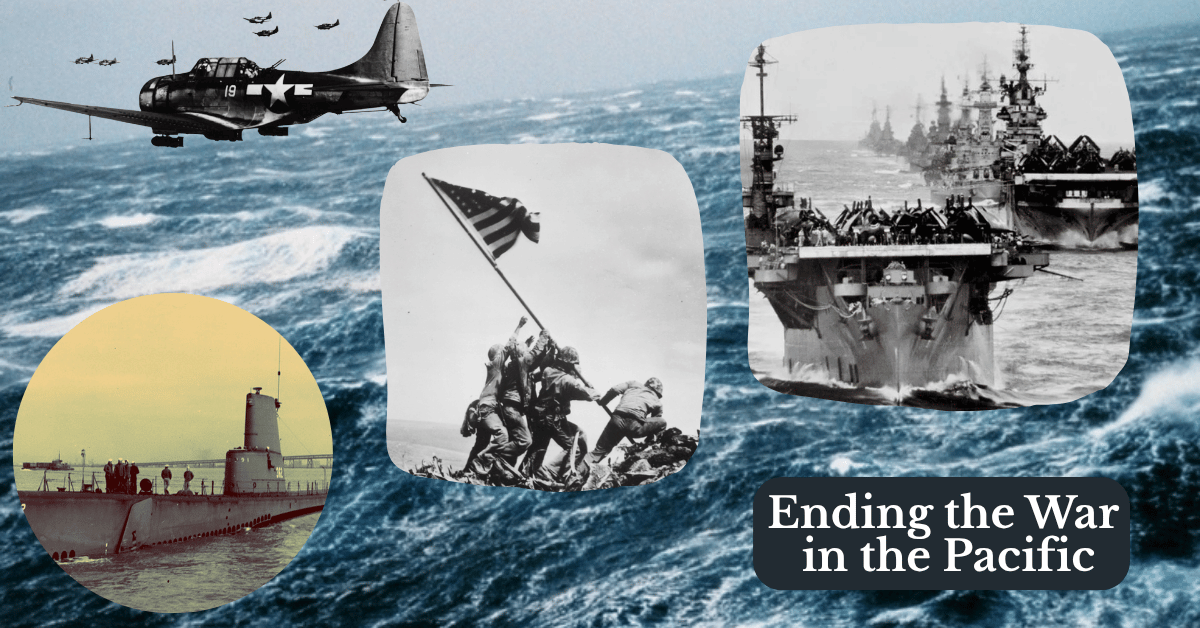
Image credit: various photographs from Naval Aviation Museum, National World War II Museum, and US Navy Archives.
Authorizing Operation Olympic

Truman’s questions and comments during the meeting reflected his own continuing unease over the level of US casualties. The President also expressed concern that an invasion of the homeland by Americans could carry a racial connotation in the minds of the Japanese that would unite them for a fight to the finish. Stimson said there was every indication that this would be the case. At the meeting’s end, Truman said he agreed that the plan presented by the Chiefs was the best choice under the circumstances, but he added that he “had hoped there was a possibility of preventing an Okinawa from one end of Japan to the other.”

Truman gave the go-ahead to continue preparations for the Kyushu operation; he said the decision on a follow-on invasion of Honshu could be made later. The minutes of the meeting indicate that an explicit rationale for this postponement was to enable the President and his advisers to take into account the impact of the Kyushu campaign and the anticipated Soviet entry into the war. 

Continue reading