The Parable

This coming Sunday our gospel is the well known story called the Good Samaritan (Luke 10:25-37). In yesterday’s post the questions from the scholar continue, moving on to an inquiry about who is (or is not) a neighbor whom one is to love. It is at this point that the parable begins. Culpepper [229] identified the central character as being noticeably undefined. He is not characterized by race, religion, region, or trade. He is merely “a certain man” who by implication could be any one of Jesus’ hearers. The phrase “a certain man” (anthrōpos tis), however, will become a common feature of the Lukan parables (12:16; 14:2, 16; 15:11; 16:1, 19; 19:12; 20:9). Jesus’ audience no doubt imagined the man to be Jewish, but Luke’s audience may have assumed he was a Gentile. The point is that he is identified only by what happened to him. Continue reading

Neighbors

This coming Sunday our gospel is the well known story called the Good Samaritan (Luke 10:25-37). In yesterday’s post Jesus’ dialogue with the scholar goes well. Jesus accepts the scholar’s answer: “You have answered correctly; do this and you will live.” But there are more questions: But because he wished to justify himself… And who is my neighbor?” One wonders why the scholar did not “quit while he was ahead?” Continue reading

The Trombone

On July 4th I attended a neighborhood house party in Leesburg, Va. It was a festive gathering made even more festive by the presence of the Jefferson Street Strutters, an ensemble of folks who play New Orleans jazz in the style of the 1910s-1930s. While listening I began to wonder how a slide trombone works. Mobile phone in hand my question was quickly answered with a search. Later on, chatting with the trombone player, I got an even more detailed answer. Along the way, my etymological interests were also entertained. The word “trombone” comes to us via the Italian: trumpa – trumpet and one – large. Basically it means a large trumpet. It is good that our word comes from the Italian and not the middle English. Until the early 18th century, the English word for trombone was “sackbut.” It has its own linguistic evolution from the French, but it is just an unfortunate rendering in English.

A Question About Eternal Life

This coming Sunday our gospel is the well known story called the Good Samaritan (Luke 10:25-37). In yesterday’s post we placed the gospel in the context of the ongoing mission of the disciples that was highlighted in the previous Sunday’s gospel. The parable begins with a question: There was a scholar of the law who stood up to test him and said, “Teacher, what must I do to inherit eternal life?”  Continue reading

Fourth of July – Leesburg VA

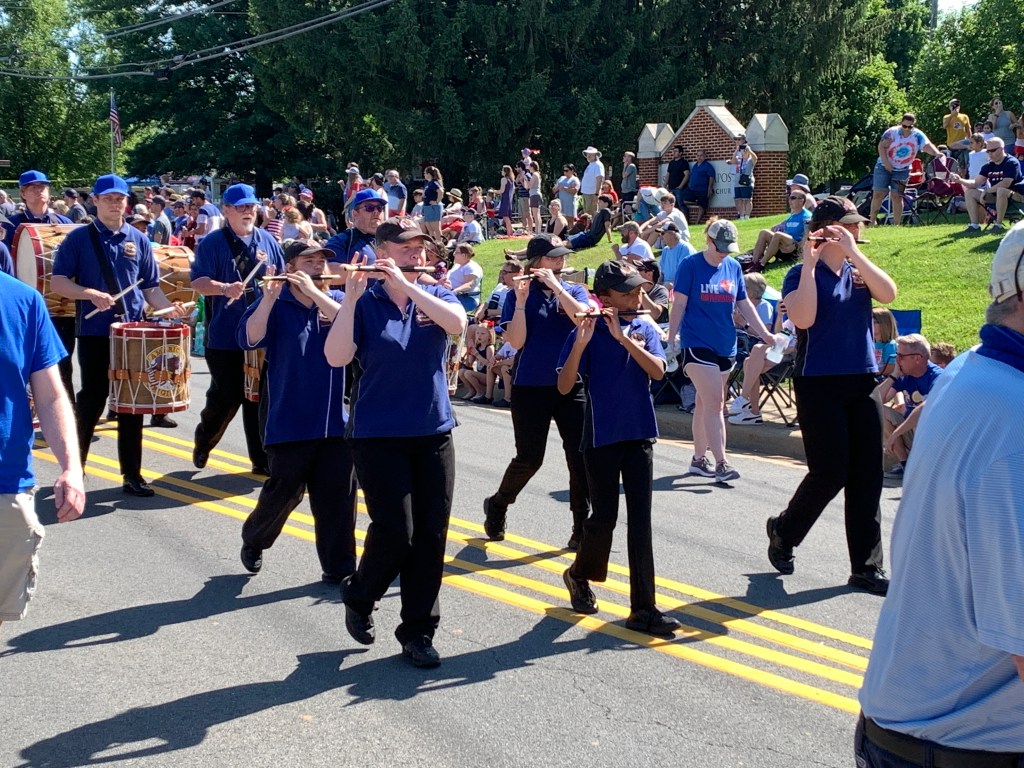
Spent the 4th of July weekend with long-time friends Rebecca and Doug Lynes who reside in Leesburg, VA. This morning we enjoyed the town 4th of July Parade. Complete with floats, fire trucks, tractors, classic cars, fife & drum corp, and lots of politicians running for office. The most unique group? The Roller Derby Ladies of Loudoun.  Very fun morning. Just s few of the many pictures taken. Enjoy.

Seeing

This coming Sunday is the 15th Sunday in Ordinary Time. Our gospel is the well known story called the Good Samaritan (Luke 10:25-37). In the flow of Luke’s gospel, just before the telling of this parable, Jesus had commissioned 72 disciples and sent them out of mission. In Luke 10:17 the disciples return with reports of great things being accomplished in the name and power of God. Jesus responds to their reports Continue reading

Condemnation or Lamentation?

This coming Sunday is the 14th Sunday in Ordinary Time. In yesterday’s post we encountered the possibility that some towns would not receive the good news of the Kingdom of God at hand. You may have noticed that there is a “gap” in the Sunday gospel. Quite noticeably, the Sunday gospel passes over vv.13-16, sayings that are difficult in themselves, and certainly present larger homiletic challenges for a Sunday morning: 13 “Woe to you, Chorazin! Woe to you, Bethsaida! For if the mighty deeds done in your midst had been done in Tyre and Sidon, they would long ago have repented, sitting in sackcloth and ashes. 14 But it will be more tolerable for Tyre and Sidon at the judgment than for you. 15 And as for you, Capernaum, ‘Will you be exalted to heaven? You will go down to the netherworld.’” 16 Whoever listens to you listens to me. Whoever rejects you rejects me. And whoever rejects me rejects the one who sent me.” Continue reading

“Peace to this household…”

This coming Sunday is the 14th Sunday in Ordinary Time. In yesterday’s post the disciples received their “marching orders.” In today’s post they receive instructions on how to conduct themselves while on the mission. The instructions for how the disciples should receive hospitality are expanded from 9:4, which simply commanded that they stay wherever they were received. Here the instruction has two parts, with commentary on each: (1) say, “Peace to this house,” and (2) remain in the house where you are received.

Continue reading

Saints Together

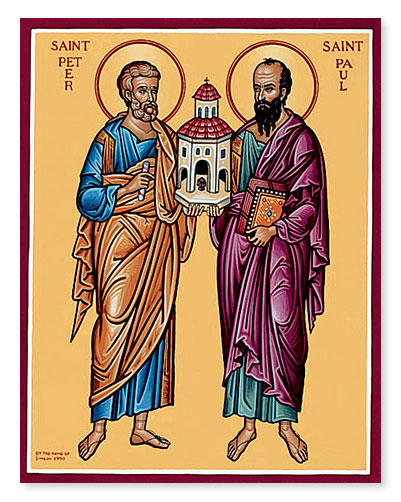
sts-peter-and-paul-1Most of the apostles and lots of saints have their own feast day, but how about the two most famous saints of the early church? There is February 22nd in which the Church celebrates the “Chair of Peter” the sign that Peter was the first among the apostles and the one designated to lead the early Church after Jesus’ Resurrection and Ascension. But there is no “Feast of St. Peter.”

St. Paul, although not one of the Twelve, was an Apostle commissioned by Jesus. There is the January 25th celebration of “The Conversion of St. Paul” which commemorates the Damascus Road episode described in Acts of the Apostles: 9:1-31, 22:1-22, and 26:9-24. It is the scene made famous by the “Conversion on the Way to Damascus” painting by Caravaggio. But there is no “Feast of St. Paul.” Continue reading