This coming Sunday is the 14th Sunday in Lectionary Cycle C. Our gospel reading follows immediately on the heels of Jesus moving from Galilee with the intention of reaching Jerusalem (Luke 9:53). He is rejected in the towns of Samaria (vv.51-56) and he challenges the would-be disciples to follow (vv. 57-62). Occurring so quickly after the Transfiguration and prediction of his own passion, death, and resurrection, these scenes, taken together, all point to the coming dangers for aspiring disciples. Each scene brings the disciples’ understandings and expectations into contrast with Jesus’ own mission for the disciples. Discipleship is radical, calling for the unconditional commitment to the redemptive working of God, and to understand that God’s Kingdom has the highest priority and largest claim on one’s life. It is at this point that the 72 disciples are commissioned. Continue reading
The Mantle
These days there is no shortage of devices to take photographs and videos. We have albums upon albums of memories: a newborn, the baptism, the first bicycle ride without training wheels, pictures of the school years, dropping that young adult at college, the wedding, and the pictures of the newborn. We record the person growing into an independent life. It is a visual record of a mantle being passed on as the child takes on the mantle of an adult. Continue reading
There is no place like home
Yesterday I posted an article on Margaret Hamilton, the actress who played the Wicked Witch of the West in the movie classic, The Wizard of Oz.”
Maybe seven years ago, William J. O’Malley wrote about “taking the long way home.” It was a wonderful “musing” on the classic movie, “The Wizard of Oz.” We were reminded about the archetypal scene when Dorothy’s house lands on the Wicked Witch and then Glinda, the good witch, shows up and magically transfers the ruby slippers to Dorothy. As the ending of the movie makes clear, all Dorothy had to do was click her heels and proclaim, “There’s no place like home. There’s no place like home.”
Why didn’t Glinda tell Dorothy that at the very beginning? Continue reading
The 3rd Person: but first….
In this coming 13th Sunday of Ordinary time, the gospel is taken from Luke. In yesterday’s post we considered two encounters along the way. Today we consider the third: 61 And another said, “I will follow you, Lord, but first let me say farewell to my family at home.” 62 (To him) Jesus said, “No one who sets a hand to the plow and looks to what was left behind is fit for the kingdom of God.”
The third person, like the first, says that he will follow Jesus. Like the second person, he asks for permission (epitrepo — “let” in vv. 59 and 61) to do something first. In some ways these two would-be followers want to place conditions on their following. “I will follow you, but first….” This third person is asking no more than what Elisha asked of Elijah (1 K 19:20). Jesus demands more of his followers than Elijah did. Jesus points out that the kingdom has no room for those who look back when they are called to go forward. Continue reading
Like it was yesterday.
An interesting article popped up on my feed this day. It was about Margaret Hamilton, an actor on stage and in film. Not familiar with her name? She had one of the most iconic lines in all film history: “I’ll get you, my pretty, and your little dog too!” That right, the Wicked Witch of the West, whose cackle this day, still sends shivers through me. In the entire movie she was on screen for only 12 minutes, including the memorable melting scene at the movie’s end.
In what I think is a twist of fate, laced with irony…can you guess what he chosen profession was before she began acting? She was a kindergarten teacher and described by all as a gentle and loving teacher. Which I am sure is true…but it is tough for me to get past the cackle. I remember it like it was yesterday.
Mystic of the Sacred Heart
Saint Marguerite Marie Alacoque was a French Roman Catholic Visitation nun and mystic, who promoted devotion to the Sacred Heart of Jesus in its modern form. Today is her feast day
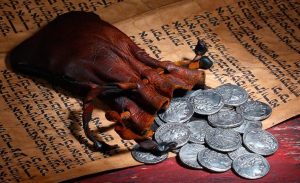
In 1905, at the dedication of our current church, our parish was renamed “Sacred Heart” and consecrated to the Sacred Heart of Jesus. The Sacred Heart of Jesus is a devotional with long and historic provenance within Christianity, and in modern times has been established as a Solemnity for the universal Church.
The Solemnity of the Most Sacred Heart of Jesus is a celebration that falls 19 days after Pentecost, on a Friday. The liturgical feast was first celebrated in Rennes, France. The liturgy was approved by the local bishop at the behest of St. John Eudes, who celebrated the Mass at the major seminary in Rennes on August 31, 1670. You’ll notice that the first celebration was not situated in the days following Pentecost. St. John Eudes composed a Mass and a set of prayers for outside the Mass (referred to as an “Office”) that were quickly adopted in other places in France. Continue reading
Following
In this coming 13th Sunday of Ordinary time, the gospel is taken from Luke. In yesterday’s post we considered the rejection by one Samaritan village. Today, we encounter individuals who announced their readiness to follow him. They were clearly well-intentioned, but had not realized the nature of the demands the kingdom makes.
As they were proceeding on their journey someone said to him, “I will follow you wherever you go.” 58 Jesus answered him, “Foxes have dens and birds of the sky have nests, but the Son of Man has nowhere to rest his head.” 59 And to another he said, “Follow me.” But he replied,”(Lord,) let me go first and bury my father.” 60 But he answered him, “Let the dead bury their dead. But you, go and proclaim the kingdom of God.”
The rejection in Samaria
In this coming 13th Sunday of Ordinary time, the gospel is taken from Luke. In yesterday’s post we looked at the consistent use of travel language by St. Luke. Today we look at one event along the way:On the way they entered a Samaritan village to prepare for his reception there, 53 but they would not welcome him because the destination of his journey was Jerusalem. Continue reading
A call to action
In the first reading for today we encountered one of the passages that, the first time I read it, I had to blink, shake my head to remove possible cobwebs, and then re-read. Did they just find “the book of the law” (2 Kings 22:8)? Were the first five books of the Old Testament, the Pentateuch, unknown to them? The books that are the most fundamental to letting Israel know who and whose they are; “the words of the book of the covenant that had been found in the house of the LORD”; all were a revelation to the young King Josiah. Continue reading
The Iniquity of Sin
When was the last time you used the word “iniquity?” Admittedly, it is not one of those words that leaps to one’s mind. It sounds somewhat archaic and perhaps reserved to a fire-and-brimstone preacher. Iniquity is not exactly the same as sin. Iniquity describes something as being wicked or immoral in nature or character. It is not an action like sin, but rather the character of the action”. We have a hint of that in the phrase “the iniquity of my sin” (Psalms 32:5). Iniquity can be described as the essence of wrongdoing or evil. Continue reading