
 Ross Douthat, NY Times columnist and a committed Catholic, writes some interesting op-ed pieces – but are often religious essays about faith’s intersection with life lived in an ever secularizing world. In his Sunday essay, he writes:
The resilience of religious theories is matched by the resilience of religious experience. The disenchantment of the modern world is a myth of the intelligentsia: In reality it never happened. Instead, through the whole multicentury process of secularization, the decline of religion’s political power and cultural prestige, people kept right on having near-death experiences and demonic visitations and wild divine encounters. They just lost the religious structures through which those experiences used to be interpreted.
It is a long read, but completely worth your investment of time and thought.
 In the well known parable of
 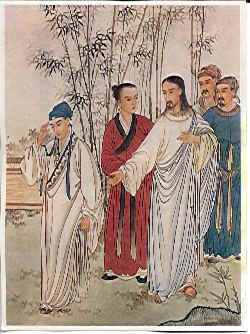 In today’s
  Today’s
 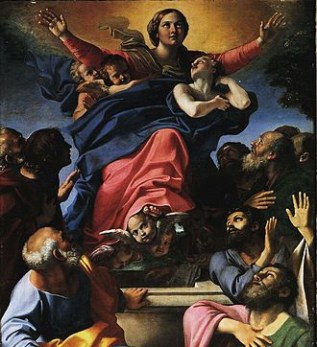 Much of our religious consciousness is affected by art; we have inherited specific images that are more artistic than biblical. For example, we always imagine St. Paul being knocked from a horse on the Damascus Road. There is no mention of the horse in scripture. Is that a big deal? Perhaps not. But when Caravaggio placed Paul on the horse, a sign of royalty, he removed Paul from the midst of Corinth, the hard-scrabbled seaport town, from among the drunks, slackards, ne’er-do-wells, and people who sorely needed salvation.
 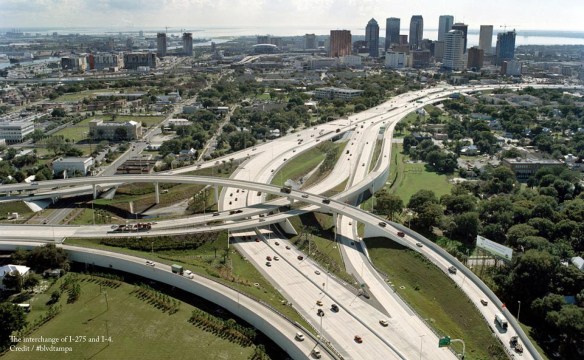 There are a couple of “feeds” that come across my computer, email, mobile, etc. Some are more interesting than others. Some I read “religiously” others I will take a peek if the title is interesting. Some are topically interesting all by themselves. It is an eclectic sets of “feeds.” One came across this morning that my niece Julie would be interested in. She graduated from Georgia Tech in urban planning and did Master’s level work at UNC Chapel Hill. She has continued her career and works out west in urban traffic planning. So, because it is off interest to my niece and my own lifetime experience of interstates/freeways/etc., when “
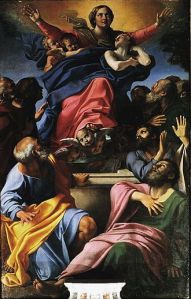 The Assumption was defined as dogma only in the 1950. In our Catholic Church ‘dogma” is defined as a truth revealed by God, which the magisterium of the Church declared as binding upon all Catholics. The term Dogma Catholicum was first used by Vincent of Lérins (450), referring to “what all, everywhere and always believed” – with the emphasis on katholica meaning universal. The term dogma derived from the Greek dogma (δόγμα) meaning literally “that which one thinks is true” and the verb dokein, “to seem good.”
 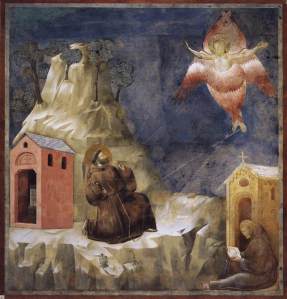 After Francis’ withdrawal from active ministerial leadership of the friars, he witnessed an inevitable evolution of the religious order, which had grown to over 5,000 brothers in 1223 from the humble beginnings in 1209 of Francis and four companions. The evolution of the Order, necessary on a number of levels, also began to change the life of the fraternity. Francis worried that the Spirit of prayer was being compromised and that the necessities of ministry were leading the brothers to increasing ties to material possessions. He lived and suffered in a “Time of Doubt,” as described in the previous article.
 Each Sunday at Mass, we profess our faith. We proclaim what we believe via the Creed. A creed is a brief statement of faith used to list important truths, to clarify doctrinal points and to distinguish truth from error. The word creed comes from the Latin word credo, meaning, “I believe.” The Bible contains a number of creed-like passages. The Jews still recite a creed known as the Shema that comes from
 friarmusings