
If you are like most folks, St. Polycarp is not so familiar to you; probably unknown. But he is one of the prominent people in the generation of the apostles and early disciples. Polycarp was a disciple of St. John the Apostle and Evangelist, who was ordained to serve the Church of Smyrna (a city in western Turkey on the Mediterranean).
According to Irenaeus, Polycarp was a companion of Papias, another disciple of St. John and a correspondent of Ignatius of Antioch. Ignatius addressed a letter to him and mentions him in many of his other letters. Irenaeus notes that Polycarp was converted to Christianity by apostles, was consecrated a presbyter by an apostle, and communicated with many who had seen Jesus.
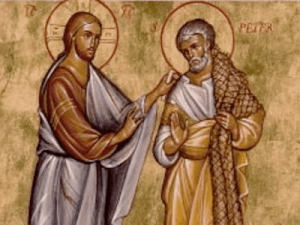 Most of the apostles and lots of saints have their own feast day, but there is no “Feast of St. Peter.” Today (February 22) the Church celebrates the “Chair of Peter” the sign that Peter was the first among the apostles and the one designated to lead the early Church after Jesus’ Resurrection and Ascension. For the record, Peter is not alone. St. Paul does not have a “Feast of St. Paul.” We celebrate these great saints together in a single celebration, the
  This is the word of the LORD that came to Jonah, son of Amittai” (Jonah 1:1)
 I suspect many readers will not recognize the name in the title. She passed away at age 62 on Friday. She was an Ursuline Sister, born in Colorado, raised in New Mexico, vowed in Kentucky, and served the Ursuline Sisters in Guatemala’s western highland during the years of that country’s civil war. She was an elementary school teacher. Please take a moment to read her
  There are three events that seem to highlight the “period of crisis” in Francis life during the period from late 1205 until the summer of 1206:
 There are several historical references that one encounters while reading the Book of Jonah. Rather than include this detail in later posts when the references appear, I thought it good to provide some details early on. The setting of the book is a period of Israel’s history when there is a lot going on – inside and outside the traditional boundaries of the Promised Land. The Kingdom of David had split into the Northern Kingdom (confusingly called Israel and consisting of 10 tribes) and the Southern Kingdom (called Judah consisting of two tribes) still loyal to the throne of David and centered in Jerusalem. Beyond the borders was the ever-looming threat of the Assyrian Empire whose capita city was Nineveh. It was located in the area of modern-day Mosul in Northern Iraq. Compared to Israel, it is to the northeast at some distance.
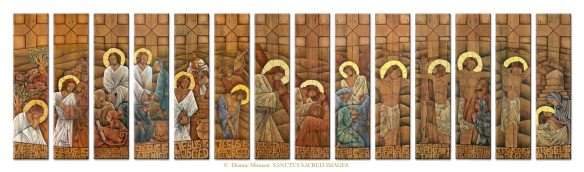 When Holy Land pilgrims returned home, they often brought back a bit of Palestine. In addition to relics, the pilgrims also brought back the desire to re-create scenes from the Holy Land in order to share their experiences with those unable to visit the holy places firsthand. When the Holy Land was closed to western visitors, European replicas of the sacred sites became increasingly popular. Outside of Jerusalem, the tradition of walking the via sacra in commemoration of Christ’s passion, death, and burial with “stations” is mentioned as early as the twelfth century and all of the references point to an outdoor celebration. There was no standard celebration of the via sacra. Depending on the location there were as few as seven and as many as 42 stations. Interestingly, in the beginning, the customary route apparently was the reverse of ours, starting with Calvary and ending at Pilate’s house – and included many other stops that are no longer considered part of the Via Dolorosa (“Sorrowful Way”).
 friarmusings