
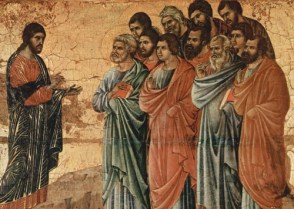
 There has always been research, commentary, etc. on what Jesus looked like. From the inheritance of Christian art in the West, we often see/imagine a man with long hair parted in the middle and a long beard – often with fair skin, light brown hair and blue eyes. It is historically far more likely that he looked like a typical Galilean of his time. But that is another topic. How about what did Jesus wear? Were we subject to the same “branding and imagery” on long robes and the like? One link to another which led me to a website with which I was not familiar: The Conversation. It is described as a network of not-for-profit media outlets that publish news stories on the Internet that are written by academics and researchers. Its funded comes from its university members, government and other grant awarding bodies, corporate partners, and reader donations. I can’t tell you a lot more than that, but I did run across and interesting article: What Did Jesus Wear? I found it interesting, so enjoy. Continue reading
What did Jesus wear?
Reply
 “The Kingdom of heaven is like a mustard seed…The Kingdom of heaven is like yeast..” (Mt 13). There is much debate over the meaning of these
  24 When the crowd saw that neither Jesus nor his disciples were there, they themselves got into boats and came to Capernaum looking for Jesus. 25 And when they found him across the sea they said to him, “Rabbi, when did you get here?” 26 Jesus answered them and said, “Amen, amen, I say to you, you are looking for me not because you saw signs but because you ate the loaves and were filled. 27 Do not work for food that perishes but for the food that endures for eternal life, which the Son of Man will give you. For on him the Father, God, has set his seal.” 28 So they said to him, “What can we do to accomplish the works of God?” 29 Jesus answered and said to them, “This is the work of God, that you believe in the one he sent.” 30 So they said to him, “What sign can you do, that we may see and believe in you? What can you do? 31 Our ancestors ate manna in the desert, as it is written: ‘He gave them bread from heaven to eat.’” 32 So Jesus said to them, “Amen, amen, I say to you, it was not Moses who gave the bread from heaven; my Father gives you the true bread from heaven. 33 For the bread of God is that which comes down from heaven and gives life to the world.” 34 So they said to him, “Sir, give us this bread always.” 35 Jesus said to them, “I am the bread of life; whoever comes to me will never hunger, and whoever believes in me will never thirst. (John 6:24-35)
  Back in the day, the 1980s to be exact, there was a year in which my job required me to spend a lot of time as a road warrior in support of our clients. There are approximately 250 working days in a year. I spent about 200 of them in a hotel. At first it was kinda’ fun. There was someone who cleaned your room every day, you got to eat out at the restaurant of your choice, you could drop your laundry off at the front desk and it would show up in your room at the end of the day. What’s not to like, right? By the second week, the thrill was gone and now all that was left was HBO. Remember this was 40 years ago, a hotel that had HBO had a serious leg up on the competition. But here’s the thing. HBO did not have a lot of choices that interested me. And now we are at week three.
  The year is 1220 and Francis has just announced his decision to step down as “leader” of the Franciscan brothers. In last week’s installment, I described Francis’ reason for stepping down. Francis had already seen the effects of a vacuum in spiritual authority brought about by his year-long absence while in the Middle East. It is in leaving to his “vicar” and to the Roman Church the care of making decisions of a normative or disciplinary type that he could hope to preserve a superior authority, of a spiritual type, that would only have been diminished in the heat of daily administration.
  This coming Sunday is the
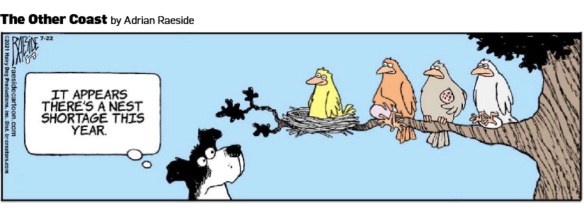 Hardly a day goes by that one cannot hear the phrase “supply chain problems.” There are lots of industry-specific reasons unique to their particular sector but a common contribution seems to be the uptick in demand coming quicker and at higher-than-expected levels – just not enough supply. One hears a lot about the supply chain within the auto industry which affects new car and rental car availability. Here is about as concise an explanation as possible:
  The Book of Esther is from the Old Testament and not a book that often appears in the lectionary cycle for Sunday readings. “The Book of Esther tells a story of the deliverance of the Jewish people. We are shown a Persian emperor, Ahasuerus (loosely based on Xerxes, 485–464 B.C.), who makes momentous decisions for trivial reasons, and his wicked minister, Haman, who takes advantage of the king’s compliance to pursue a personal vendetta against the Jews by having a royal decree issued ordering their destruction. The threat is averted by two Jews, Esther and Mordecai. Their influence and intervention allow the Jews to turn the tables on their enemies and rout their attackers. This deliverance is commemorated by the inauguration of the Jewish festival of Purim on the fourteenth and fifteenth of Adar (mid-February through mid-March). The book confronts the modern reader with important themes, the evils of genocide and racism.” (
