The small band of brothers living at Rivo Torto and later at the Porziuncula, were drawing others to their way of following Christ in the world. And if they expected to find a uniform dress code, posted rules, a great deal of organization, a formation program, or even someone to sit them down and explain what was expected – they were in for a surprise. Francis assumed that his followers would learn by imitation. Giving them rules or structures to follow was not merely difficult for him, it went against the grain of the meaning of minority – to be the lesser brother. The new arrivals simply did what Francis did: daily prayer, work at a local leprosarium, go to local churches to participate in Eucharist, eat, pray again, witness to the local Umbrian people near Assisi, and live a life in community. The brothers had to watch Francis closely and do their best to understand. Continue reading →
I subscribe/follow several sources of news and information on thing tech. More big picture than detailed technical. This week the CEOs of Airbnb and Facebook offered their insights about the post-pandemic future. It has been my experience the press release/announcement is splashy event with all the rest playing itself out over time. But in the interim their pronouncements about the future are increasingly red-carpet events and there is a tendency to opine about things not exactly “in their wheelhouse.” [Note: idiomatic use of “wheelhouse” – the field in which a person excels; one’s strongest interest or ability; Oxford English Dictionary … in case you were wondering.]
The Book of Judges, the seventh book of the Old Testament, is a narrative that covers the time between the death of Joshua who lead the Hebrews to settle the Promised Land, and establishing the age of King as described in the Books of Samuel, the last of the Judges. In the in-between times God raised up Judges to serve as temporary leaders of the 12 Tribes of Israel.
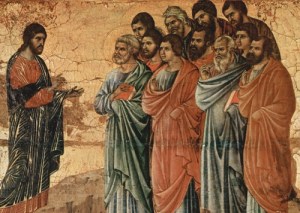
In today’s readings we encounter a familiar passage. One of the scribes came to Jesus and asked him, “Which is the first of all the commandments?” Jesus replied, “The first is this: Hear, O Israel! The Lord our God is Lord alone! You shall love the Lord your God with all your heart, with all your soul, with all your mind, and with all your strength. The second is this: You shall love your neighbor as yourself. There is no other commandment greater than these.” (Mark 12:28-31)
One of the great leaders of Judaism was the sage and scholar, Rabbi Hillel. He was also the president of the Sanhedrin and the highest authority among the Pharisees in Jerusalem during the reigns of King Herod and the Roman Emperor Augustus. Rabbi Hillel is thought to have died during the time Jesus was a youth. Possibly he heard Hillel teach as a young boy (Lk 2:41-51); certainly, Jesus would be familiar with Hillel’s teachings as he began his public ministry.
The expression “a preferential option for the poor” or “option for the poor and vulnerable” is a basic tenet of Catholic Social Teaching, a body of papal encyclicals from the late 19th century up through today. It consists of seven basic themes of which the US Bishops have nice introduction here. One of those themes is “Option for the Poor and Vulnerable.” This theme says that a basic moral test is how our most vulnerable members are faring. In a society marred by deepening divisions between rich and poor, our tradition recalls the story of the Last Judgment (Mt 25:31-46) and instructs us to put the needs of the poor and vulnerable first. Many times we read the Matthean passage and feel the call to individual acts of compassion and justice, but the US Bishops also direct our attention to more systemic issues of economic justice and domestic poverty. Lots of links and lots to consider! And you might be asking “what does this have to do with Psalm 8?”
You might know that Pope Francis daily celebrates Mass at the chapel where he lives, Santa Marta. He reflections on the daily readings are available on the Vatican News website’s page, Word of the Day. As an ever work-in-progress homilist, I greatly appreciate his insights and the clarity (and brevity) of his homily. From Pope Francis:
Vigilance! But, three criteria, eh! Do not confuse the truth. Jesus fights the devil: first criterion. Second criterion: the one who is not with Jesus is against Jesus. There is no middle ground. Third criterion: vigilance over our heart because the devil is clever. He is never cast out forever! That will happen only on the last day.” (Homily, Santa Marta, 11 October 2013)
The synoptic gospels (Mark, Mathew and Luke) recount the story of Jesus being accused of working for the powers of darkness: ““By the power of Beelzebul, the prince of demons, he drives out demons.” I can remember as a young person being frightened to know the devil was so familiar to the world that he/she had a name: Beelzebul. One of my vivid memories was as child hearing a fiery sermon by a preacher at the Pine Street Pentecostal Church. It was a Sunday night and we were outside listening. Again and again the preacher hoisted up and dropped upon the congregation the name of Beelzebul, the prince of darkness who leered, lingered, and lured the unwary soul onto perdition’s ways.
While reading the Old Testament, you probably noticed there are moments of violence in which the role of the antagonist is played by the Hebrew people. The Book of Joshua, following on the heels of the Moses and the time in the wilderness, presents a narrative of the way Israel took possession of the land of Canaan, making it the land of Israel – by conquest.
The Book of Joshua is not a newspaper report or a historical reporting – most scholars hold that it was not composed at the time of Israel’s entry in the Promised Land, but is a later composition that preserves older oral narratives of Israel’s settlement of the land – especially the division of the land among the 12 tribes of Israel. If the people entered the land of Canaan circa. 1200 BCE, the initial composition is thought to be sometime between the fall of the 10 northern tribes (722 BCE) and the fall of Jerusalem (587 BCE) – some 500+ years later. The Book of Joshua should be read not so much as imparting information about how Israel took over the land of Canaan as teaching a lesson about how Israel is to avoid losing the land. It should be remembered that by the time the book was written, the Canaanites were long gone.
A comparison of Joshua with the account of Israel’s early history found in the first chapter of the Book of Judges shows that Israel’s emergence as the dominant presence in the land was a slow and piecemeal affair, not achieved at one stroke and with great ease: the Book of Joshua, with its highly idealized depiction of the “conquest,” is a cautionary tale about what the people are to do and not do in order to avoid the fate of the Northern Kingdom in losing the land.
The folks at the Bible Project have produced a nice video overview of the Book of Joshua and offers insight as to the violence described in the book.
As always, I encourage you to support the not-for-profit work of The Bible Project.
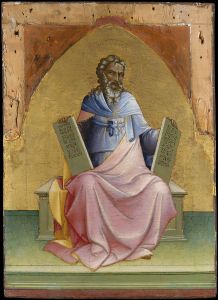
“…whoever obeys and teaches these commandments will be called greatest in the Kingdom of heaven.” (Mt 5:19)
About twenty years ago now, the US Supreme Court directed Judge Roy Moore, the Chief Justice of the Alabama State Supreme Court, to remove a Ten Commandments monument from the rotunda of the state courthouse that he had ordered placed there. Judge Moore refused, his view being that to remove the monument was unconscionable because it would be to refuse to acknowledge God as the source of all justice and law. The monument was removed, Judge Moore, too.
Forgiveness is one of those fundamental lessons we try to teach our kids from an early age: when siblings bicker or hurt each other, or if friends break a toy. And at the same time, we should ever be aware that we have not exactly mastered the art of forgiveness. The ability to forgive is a learning experience that often takes a lifetime. It’s not easy, but perhaps it’s not meant to be easy. Showing compassion and understanding in a world through which we cautiously pass takes an open heart instead of the guarded one we often carry. Continue reading →

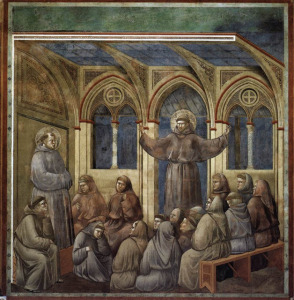 The small band of brothers living at Rivo Torto and later at the Porziuncula, were drawing others to their way of following Christ in the world. And if they expected to find a uniform dress code, posted rules, a great deal of organization, a formation program, or even someone to sit them down and explain what was expected – they were in for a surprise. Francis assumed that his followers would learn by imitation. Giving them rules or structures to follow was not merely difficult for him, it went against the grain of the meaning of minority – to be the lesser brother. The new arrivals simply did what Francis did: daily prayer, work at a local leprosarium, go to local churches to participate in Eucharist, eat, pray again, witness to the local Umbrian people near Assisi, and live a life in community. The brothers had to watch Francis closely and do their best to understand. Continue reading
  I subscribe/follow several sources of news and information on thing tech. More big picture than detailed technical. This week the CEOs of Airbnb and Facebook offered their insights about the post-pandemic future. It has been my experience the press release/announcement is splashy event with all the rest playing itself out over time. But in the interim their pronouncements about the future are increasingly red-carpet events and there is a tendency to opine about things not exactly “in their wheelhouse.” [Note: idiomatic use of “wheelhouse” – the field in which a person excels; one’s strongest interest or ability; Oxford English Dictionary … in case you were wondering.]
 The Book of Judges, the seventh book of the Old Testament, is a narrative that covers the time between the
  In
In  You might know that Pope Francis daily celebrates Mass at the chapel where he lives, Santa Marta. He reflections on the daily readings are available on the Vatican News website’s page,
  The synoptic gospels (Mark, Mathew and Luke) recount the story of Jesus being accused of working for the powers of darkness: ““By the power of Beelzebul, the prince of demons, he drives out demons.” I can remember as a young person being frightened to know the devil was so familiar to the world that he/she had a name: Beelzebul. One of my vivid memories was as child hearing a fiery sermon by a preacher at the Pine Street Pentecostal Church. It was a Sunday night and we were outside listening. Again and again the preacher hoisted up and dropped upon the congregation the name of Beelzebul, the prince of darkness who leered, lingered, and lured the unwary soul onto perdition’s ways.
 While reading the Old Testament, you probably noticed there are moments of violence in which the role of the antagonist is played by the Hebrew people. The Book of Joshua, following on the heels of the Moses and the time in the wilderness, presents a narrative of the way Israel took possession of the land of Canaan, making it the land of Israel – by conquest.
 “…whoever obeys and teaches these commandments will be called greatest in the Kingdom of heaven.” (Mt 5:19)
 Forgiveness is one of those fundamental lessons we try to teach our kids from an early age: when siblings bicker or hurt each other, or if friends break a toy. And at the same time, we should ever be aware that we have not exactly mastered the art of forgiveness. The ability to forgive is a learning experience that often takes a lifetime. It’s not easy, but perhaps it’s not meant to be easy. Showing compassion and understanding in a world through which we cautiously pass takes an open heart instead of the guarded one we often carry.
  friarmusings