
 53 Jesus said to them, “Amen, amen, I say to you, unless you eat the flesh of the Son of Man and drink his blood, you do not have life within you. 54 Whoever eats my flesh and drinks my blood has eternal life, and I will raise him on the last day.
The language is graphic and direct, including images and actions that would have been abhorrent to faithful Jews: eating flesh and drinking blood (Gen 9:4). But is the language meant to be realistic or one of metaphor. Morris’ approach [335] to this question seems fairly standard among those who do not hold to the sacramental, Eucharistic understanding of this text. “Both ‘eat’ and ‘drink’ are aorists, denoting once-for-all action, not a repeated eating and drinking, such as would be appropriate to the sacrament. And this eating and drinking are absolutely necessary for eternal life. Those who do not eat and drink in the way Jesus says have no life. Eating and drinking Christ’s flesh and blood thus appears to be a very graphic way of saying that people must take Christ into their innermost being.” I would suggest that it is hard to make this argument and at the same time demand also other biblical sources inform the understanding. Continue reading
 Writing in 1380 to Pope Urban VI, St. Catherine of Siena said: “You cannot with a single stroke wipe out all of the sins people in general are committing within the Christian religion, especially within the clerical order, over whom you should be even more watchful. But you certainly can and are obligated to do it, and if you don’t, you would have it on your conscience. At least do what you can. You must cleanse the Church’s womb — that is, see to it that those who surround you closely are wiped clean of filth, and put people there who are attentive to God’s honor and your welfare and the good of holy Church. …” And she warns: “Do you know what will happen to you if you don’t set things right by doing what you can? God wants you to reform his bride completely; he doesn’t want her to be leprous any longer. If your holiness does not do all you can about this — because God has appointed you and given you such dignity for no other purposes — God will do it himself by using all sorts of troubles.”
 I am sometimes given to modifying a homily after having already given it during Mass. Sometimes the genesis is a connected thought, sometimes a comment from a parishioner, and sometimes it is just the Holy Spirit… Here was one of today’s diversions from the original homily –
 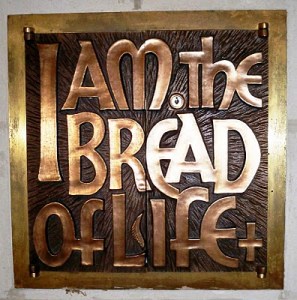 The good news is that during this summer we are graced to hear the Gospel of John, chapter 6 – the “Bread of Life Discourse.” It is a wonderfully-told narrative, it is theologically rich, it is incredibly human, and above all it is profoundly Eucharistic. The bad news is that is divided over five weeks of Gospels, breaking up the narrative and challenging our understanding in continuity as we hear what was always meant to be one cohesive gospel. This is week three of five… hmmm? So, let me do this – I will give you a brief summary of my homilies from the last two weeks (or you can read them here: (“
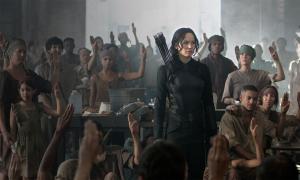 Every year there are many apocalyptic, post-apocalyptic, dystopian movies that make the big screen — and a whole lot more that make Netflix, Amazon Prime, and all the other outlets for cinematic entertainment. These are just a few I thought of over the last several years: “The Hunger Games,” “The Matrix,” “Serenity,” “Blade Runner,” “The Book of Eli,” “Children of Men,” “Divergent,” “Maze Runner,” “The Postman,” “Terminator” — and you will note several of these were series of multiple movies.
  August 11th, is the feast of St. Clare of Assisi. Clare was born July 16, 1194 as Chiara Offreduccio the eldest daughter of Favorino Scifi, Count of Sasso-Rosso and his wife Ortolana. There are many legends of how Clare and Francis met, but it is clear that Clare would have know about Francis and his movement of brothers seeking to embrace Holy Poverty.
 friarmusings