
 July is the traditional time for vacations, holidays, and trips as families and households visit relatives, relax, and take in different parts of our great nation. Normally I am around the whole summer, preferring to take time off in the autumn when temperatures are more moderate, but this year I had an opportunity to travel to the Holy Land with friends. I had never been and so it seemed an opportune moment that might never come around again. And so, on July 6th off I went, landing in Tel Aviv some 26 hours later. Continue reading
A Pastor’s Holiday
1


 If you have been following the last several pastor’s columns, you might have thought “this seems to be a series!” And you would not be wrong. The series is not headed where I first thought, but such is the nature of creative writing. Two weeks ago, I wrote about “change.” There is perhaps nothing more intrinsic to Christian life than change. In spiritual circles we use the term metanoia, a Greek work taken directly into English: a transformative change of heart; especially a spiritual conversion (Merriam-Webster). If you think about the full Sermon on the Mount, there is a basic theme of change evident when Jesus says, “You have heard it said, but I say to you…” This is repeated several times as He explains that what you thought you knew about the 10 Commandments and the Law, is not what God intended. And then Jesus explains how God intended it to be. In that moment, Jesus offers a moment of metanoia, of change. Change can be challenging. But the Christian life is meant to be one of change, ever drawing closer to God in holiness, in wholeness, in teleois.
 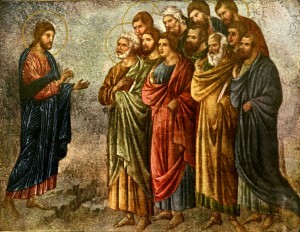 The Message. 12 So they went off and preached repentance. 13 They drove out many demons, and they anointed with oil many who were sick and cured them.
 friarmusings