
 1After this, Jesus went across the Sea of Galilee (of Tiberias). 2 A large crowd followed him, because they saw the signs he was performing on the sick. 3 Jesus went up on the mountain, and there he sat down with his disciples. 4 The Jewish feast of Passover was near. 5 When Jesus raised his eyes and saw that a large crowd was coming to him, he said to Philip, “Where can we buy enough food for them to eat?” 6 He said this to test him, because he himself knew what he was going to do. 7 Philip answered him, “Two hundred days’ wages worth of food would not be enough for each of them to have a little (bit).” 8 One of his disciples, Andrew, the brother of Simon Peter, said to him, 9 “There is a boy here who has five barley loaves and two fish; but what good are these for so many?” 10 Jesus said, “Have the people recline.” Now there was a great deal of grass in that place. So the men reclined, about five thousand in number. 11 Then Jesus took the loaves, gave thanks, and distributed them to those who were reclining, and also as much of the fish as they wanted. 12 When they had had their fill, he said to his disciples, “Gather the fragments left over, so that nothing will be wasted.” 13 So they collected them, and filled twelve wicker baskets with fragments from the five barley loaves that had been more than they could eat. 14 When the people saw the sign he had done, they said, “This is truly the Prophet, the one who is to come into the world.” 15 Since Jesus knew that they were going to come and carry him off to make him king, he withdrew again to the mountain alone. Continue reading
Know Jesus: context
Reply
 “Come away by yourselves to a deserted place and rest a while.”
 A panorama of the gorge at Petra – on the way to the Treasury
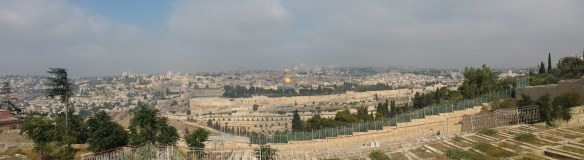 July is the traditional time for vacations, holidays, and trips as families and households visit relatives, relax, and take in different parts of our great nation. Normally I am around the whole summer, preferring to take time off in the autumn when temperatures are more moderate, but this year I had an opportunity to travel to the Holy Land with friends. I had never been and so it seemed an opportune moment that might never come around again. And so, on July 6th off I went, landing in Tel Aviv some 26 hours later.

 friarmusings