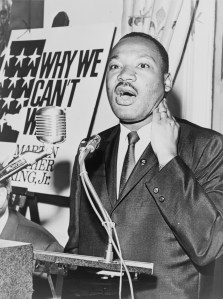
 Today someone asked me, referring to the recent events of Charlottesville and the WH response, “How long will this last?” It is a question that continues.
On March 25, 1965, the Rev. Martin Luther King Jr. and a crowd of 25,000 marched from Selma to Montgomery, Alabama, in support of voting rights for African-Americans. At the conclusion of the march, King delivered this speech, familiarly referred to as “How Long, Not Long.” The speech was defiant at times, referencing the violence that beset the movement at the time. In fact, a previous march on March 7 was met with a violent response from state troopers who beat and gassed marchers on the Edmund Pettus Bridge in Selma. King’s speech makes it clear that the movement cannot be dissuaded after coming so far, encouraging the people to keep up the struggle. Continue reading →

 There are weeks that are so marvelous that you want to relive them, hold them and keep them ever safe. I hope your summer had one of those weeks. A family reunion, a vacation, a solar eclipse in totality, evenings at the coast watching sunsets, the week when the all-grown-up kids were home, time with the grandchildren – a week that was by any measure, “a keeper.” Continue reading
 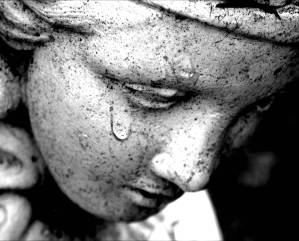 Last week, it seemed that daily we were updating the Prayers of the Faithful for our weekend Masses as each day brought news which called out for prayer. It was the last change that was, for me, the most heart wrenching. It was a call from a close friend, struggling through the tears to tell me that her teenage daughter had unexpectedly passed away. I had known the young woman since grade-school age. She was bright, beautiful, and beyond charming. I was devastated – and so I cannot begin to imagine what her parents and sister are experiencing.
  “You will be my people and I will be your God” Those are the words of a covenant, an oath, forever binding God and the descendants of Abraham, binding all who would believe. It is a covenant renewed some 400 years later under the leadership of Moses. It is the covenant that prophet Isaiah speaks about in the first reading – only it’s now another 700 years passed. For more than 1,000 years the people of Israel had understood that they, and they alone, were qahal Yahweh, the people of God. Understood that they, and they alone, were the inheritors of salvation and God’s justice. They were the people of the divine manifest destiny, privileged, and the chosen people.
  It was a simple email. The writer said that she was committed to reading and studying the Bible. For her first time through, she wanted to accomplish it in a two-year period. She had already researched the internet for Bible study plans and discovered there are tons of plans, lots of perspectives, and advice a plenty. So much so, it was hard to sort through it all. And such was the genesis of the email asking for advice on “the plan.”

 friarmusings