
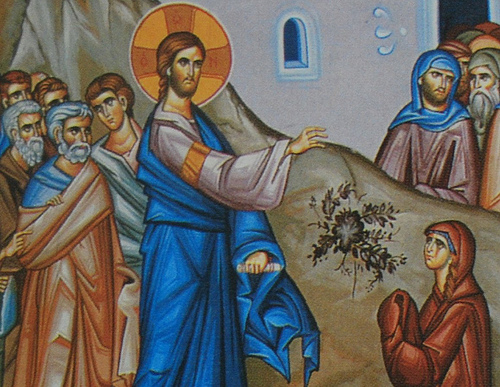
 As we start another week, there is a lot going on that will bring us face-to-face with the choice between hope and despair. This past weekend’s events in Charlottesville only highlights an encounter with another choice. Despair by far is the easiest choice. A little over 150 years ago, a civil war ended in our nation, and the hope was that we would be a nation dedicated to the self-evident proposition and truth “that all men are created equal, that they are endowed by their Creator with certain unalienable Rights, that among these are Life, Liberty and the pursuit of Happiness.” A little over 70 year ago, men and women of the “greatest generation” arose from the ashes of a world-wide depression, went to work and war, to defeat the Nazi regime that was dedicated to their proposition that not all are created equal, not all are entitles to life, liberty or happiness. Continue reading
Choosing Hope
1
 In general, I enjoy the process of preparing a homily. I love Scripture and a large part of the preparation has to be to, again, dive into the text to connect it to the lives of those who will hear it. As “Fulfilled in Your Hearing” (US Bishops) notes: the purpose of a homily is the shine the light of the Gospel into the lives of the hearers. It is a noble purpose, but, alas, a human endeavor.
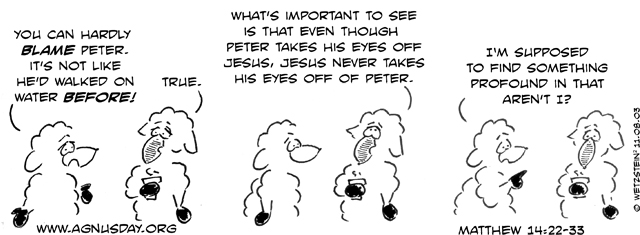
 This gospel is pretty well-known. Here at Sacred Heart we have an entire stained-glass window depicting the scene. Every children’s bible story book seems to have the story with all manner of illustrations. There is a lot you can do with this simple gospel account. In my day, I have heard sermons that encourage us to “go outside the box” by asking us to be like Peter and be bold enough to “get out of the boat.” The message was to take risks as individuals of faith or perhaps as a parish. Other sermons have told us to “keep our eyes on Jesus” in all that we do – good advice – with the message often an invitation to a particular piety and devotion – also good advice. And there is something to said about the boat itself. It is a place of relative calm among the waves. It is the place where Jesus leads Peter. It is the place where the community, as the gospel says, “did him homage, saying, ‘Truly, you are the Son of God.’” There is a lot you can preach about, inspired by this gospel.
  From time to time people tell me that “this year I am going to get into the Bible!” Music to my ears! Their declaration is quickly followed by something akin to “So, what should I do?” Maybe next week I will take a shot at answering that question, but for now let me tell how not to read the Bible!

 friarmusings