
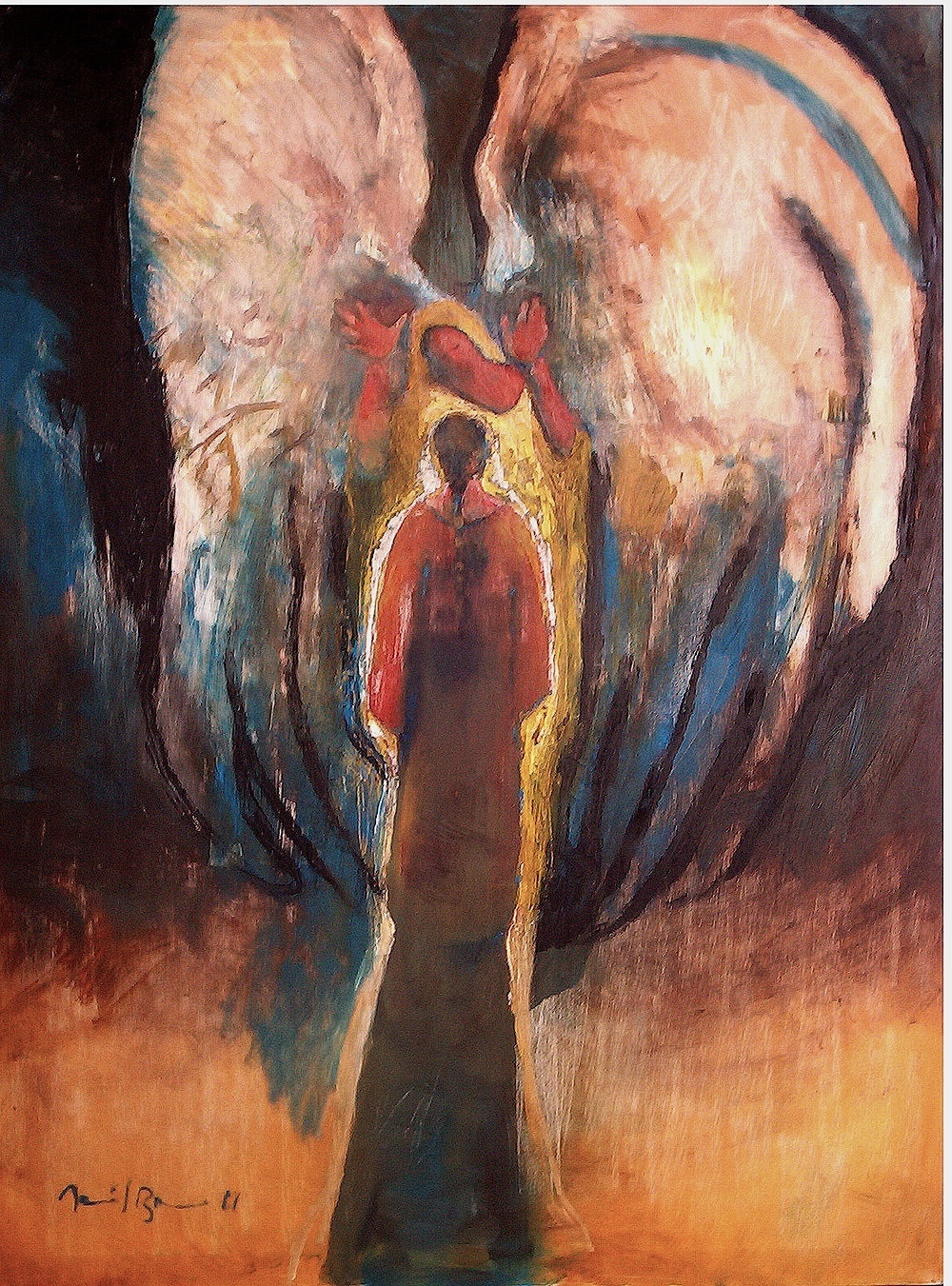
 In response to this angelic announcement, Mary asks a question reminiscent of Zechariah’s query, “How can this be?” She had not had sexual relations with a man. Ultimately, the purpose of Mary’s question (v.34)—which leads to Gabriel’s answer (v.35) and the giving of a sign (v.36) and word of reassurance (v.37)—is to emphasize that all of this is God’s doing.
Gabriel’s response emphasizes that the baby would be born by the power of God. Like the presence of God in the cloud at the transfiguration (9:34), the Holy Spirit would come upon her and overshadow her. The child, therefore, would be God’s child, and he would be called the Son of God. As with all the annunciations in Scripture and in ancient biographical accounts, the purpose of the annunciation is to declare something vital about the identity of the child. The Lukan account repeatedly affirms that Mary’s son would be called “Son of the Most High” (v. 32a), son of David (v. 32b), and finally the title by which he would be most widely recognized, “Son of God” (v. 35). Continue reading
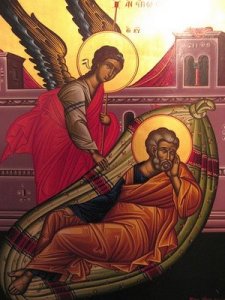 “…Mary was betrothed to Joseph, but before they lived together, she was found with child through the Holy Spirit.” (Matthew 1:18) And of course, we know the rest of the story… the angel comes and tells Joseph what is expected of him – to take Mary and the child into his home – to be husband and father. “When Joseph awoke, he did as the angel of the Lord had commanded him” (Matthew 1:24). Great! Problem solved and now we can turn the page to Matthew 2 because in that chapter Jesus is born, the magi visit and we are all set for Christmas.
  Stores, offices, and all kinds of places are filled with the sound of familiar and heartening Christmas carols. Some local radio stations are all Christmas music all the time with classic and modern renditions of the secular and religious carols and songs – sometimes as recorded by singing chipmunks. It becomes part of the ambiance of our Advent season; part of what readies us for the celebration of Christmas.
  God’s Plan. Joseph’s plans are interrupted in vv.20–23 by the appearance of a messenger from God in a dream — a device familiar from the Old Testament account of the birth of Samson (Judges 13). The first words uttered are “do not be afraid to take Mary your wife into your home.” The angel gives an explanation for Mary’s pregnancy, announcing the divine plan is already in motion. The angel also informs Joseph of his part in the divine plan: “you are to name him Jesus.” As explained above, this simple directive makes clear to Joseph that he is to claim Jesus as his own. As the legal son of Joseph, Jesus will be a “Son of David” (v. 20).
  friarmusings