
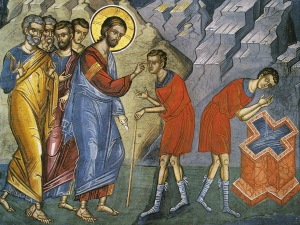
 Sin in the Gospel according to John. John seems to understand sin in a way that accents a singular aspect in a way that deserves mention. Words for “sin” occur often in our text: hamartano = “to sin” (9:2, 3; elsewhere in John: 5:14 & 8:11); hamartia = “sin” (9:34, 41); hamartolos = “sinner” (9:16, 24, 25, 31 — all the occurrences in John). The question is does John’s discussion match the discussion of hamartia in the other gospels?
In our passage, the concept of sin will be quickly introduced via the disciples’ question in v.2 : “Rabbi, who sinned, this man or his parents, that he was born blind?” This reflects traditional Jewish speculation on the relationship of illness and sin (cf. 5:14). In 1st century Palestine, people commonly assumed that disease and disorders on both the personal and national level were due to sin, as summarized in the rabbinic saying from around 300 CE that “there is no death without sin and there is no suffering without iniquity” (b. shabbat 55a). Continue reading
 friarmusings