Fulfilling the Law: Jesus, Law and Prophets

beatitudes1Commentary. The opening passage of this Gospel is controversial.  Is it a general statement of Jesus’ attitude to the Old Testament, especially in its legal provisions, designed to introduce the detailed examples of Jesus’ teaching in relation to the Old Testament law in vv. 21–48 and other points throughout the Gospel? Do Jesus’ words affirm the permanent validity of the details of the Old Testament law as regulations, or do they express more generally the God-given authority of the Old Testament without specifying just how it is applicable in the new situation introduced by the coming of Jesus? Continue reading
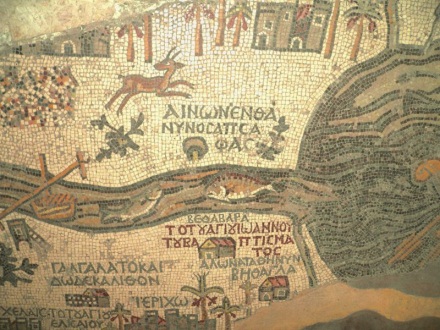
The Baptism of Jesus – Why?

Part of the ancient Madaba Map showing two possible locations of Jesus’ baptism

Part of the ancient Madaba Map showing two possible locations of Jesus’ baptism

Did you ever wonder why Jesus was baptized? This event is recorded in the Canonical Gospels of Matthew, Mark, and Luke. In John 1:29-33, rather than a direct narrative, John the Baptist bears witness to the episode. Here is a part of the Lucan narrative (Luke 3:21–22):21 After all the people had been baptized and Jesus also had been baptized and was praying, heaven was opened 22 and the Holy Spirit descended upon him in bodily form like a dove. And a voice came from heaven, “You are my beloved Son; with you I am well pleased.”

Continue reading

Baptism of the Lord: meaning

English: Baptism of JesusMatthew 3: 13 Then Jesus came from Galilee to John at the Jordan to be baptized by him. 14 John tried to prevent him, saying, “I need to be baptized by you, and yet you are coming to me?” 15 Jesus said to him in reply, “Allow it now, for thus it is fitting for us to fulfill all righteousness.” Then he allowed him. 16 After Jesus was baptized, he came up from the water and behold, the heavens were opened (for him), and he saw the Spirit of God descending like a dove (and) coming upon him. 17 And a voice came from the heavens, saying, “This is my beloved Son, with whom I am well pleased.”

The First Temptation of Christ. Brian Stoffregen has an interesting insight about righteousness as “do, perform” what God requires of us.

John, by trying to prevent the baptism, tempts Jesus not to do all that God requires of him. He tempts Jesus to assume his proper position now: to be the more powerful one; to baptize with the judgmental Holy Spirit and fire; to meet John’s need. I don’t think that these are too dissimilar to the devil’s temptations that occur immediately after the baptism (4:1-11) — temptations for Jesus to use his power now, for his own glory; and avoid his emptying and eventually the pain and suffering of the cross.

Continue reading

Baptism of the Lord: fulfillment

Baptism of Christ. Jesus is baptized in the Jo...Matthew 3: 13 Then Jesus came from Galilee to John at the Jordan to be baptized by him. 14 John tried to prevent him, saying, “I need to be baptized by you, and yet you are coming to me?” 15 Jesus said to him in reply, “Allow it now, for thus it is fitting for us to fulfill all righteousness.” Then he allowed him. 16 After Jesus was baptized, he came up from the water and behold, the heavens were opened (for him), and he saw the Spirit of God descending like a dove (and) coming upon him. 17 And a voice came from the heavens, saying, “This is my beloved Son, with whom I am well pleased.”

John and Jesus in Dialogue.  As John the Baptist mysteriously appeared in the wilderness, so too Jesus. John appeared proclaiming: “Repent, for the kingdom of heaven is at hand” (3:2).  It was a very public appeal to which people responded: “Jerusalem, all Judea, and the whole region around the Jordan were going out to him and were being baptized by him in the Jordan River as they acknowledged their sins” (3:5–6.) Jesus appears on the scene and Matthew makes it clear that Jesus’ purpose is to be baptized by John (v.13). Continue reading

Baptism of the Lord: context

The baptism of Jesus by John the baptist, as i...Matthew 3: 13 Then Jesus came from Galilee to John at the Jordan to be baptized by him. 14 John tried to prevent him, saying, “I need to be baptized by you, and yet you are coming to me?” 15 Jesus said to him in reply, “Allow it now, for thus it is fitting for us to fulfill all righteousness.” Then he allowed him. 16 After Jesus was baptized, he came up from the water and behold, the heavens were opened (for him), and he saw the Spirit of God descending like a dove (and) coming upon him. 17 And a voice came from the heavens, saying, “This is my beloved Son, with whom I am well pleased.”

Context. The story of Jesus in Matthew 3:1–4:16 is bracketed by John the Baptist’s ministry.

  • In those days John the Baptist appeared, preaching in the desert of Judea (and) saying, “Repent, for the kingdom of heaven is at hand!” (3:1-2).
  • From that time on, Jesus began to preach and say, “Repent, for the kingdom of heaven is at hand.” (4:17)

John prepared the way for Jesus and his ministry. Where John’s proclamation is that the kingdom is “right around the corner,” Jesus announces that the kingdom is here in the person of the Messiah, the Son of God.  The “inauguration” of the in-breaking of the kingdom (kairos) into Time (chromos) occurs at the baptism of Jesus which serves as the occasion for the coming of the Spirit and the Father’s approval of his beloved son. Continue reading

Holy Family – a commentary

Russian icon of the Flight into Egypt; the bot...The Flight into Egypt. 13 When they had departed, behold, the angel of the Lord appeared to Joseph in a dream and said, “Rise, take the child and his mother, flee to Egypt, and stay there until I tell you. Herod is going to search for the child to destroy him.” 14 Joseph rose and took the child and his mother by night and departed for Egypt. 15 He stayed there until the death of Herod, that what the Lord had said through the prophet might be fulfilled, “Out of Egypt I called my son.”

Overall, the passage serves to establish the key themes mentioned previously as it points to the larger events playing out even as God’s plan unfolds out of site in a faraway land. Having already alerted readers to the nefarious plans of Herod, we are not surprised when again (v.13) the angel appears to Joseph in a dream telling him to take the child Jesus to safety. The very similar wording to that in Mt 1:20 (the dream to Joseph to take Mary into his home) indicates that all continues in God’s careful direction of events by supernatural revelations; the parallel revelation in a dream to the magi (v. 12) has secured time for the family’s escape. The angel’s message begins with exactly the same words as in v.20, “Rise, take the child and his mother …”  Joseph’s action exactly matches the angelic instruction, while his setting off at night underlines the urgency of the situation (traveling by night was exceptional and potentially more dangerous). It also demonstrates Joseph’s exemplary obedience, which did not allow him even to delay until daylight. Continue reading

Holy Family – a context

Russian icon of the Flight into Egypt; the bot...Matthew 2:13-23. The Flight into Egypt 13 When they had departed, behold, the angel of the Lord appeared to Joseph in a dream and said, “Rise, take the child and his mother, flee to Egypt, and stay there until I tell you. Herod is going to search for the child to destroy him.” 14 Joseph rose and took the child and his mother by night and departed for Egypt. 15 He stayed there until the death of Herod, that what the Lord had said through the prophet might be fulfilled, “Out of Egypt I called my son.” 16 When Herod realized that he had been deceived by the magi, he became furious. He ordered the massacre of all the boys in Bethlehem and its vicinity two years old and under, in accordance with the time he had ascertained from the magi. 17 Then was fulfilled what had been said through Jeremiah the prophet:

18 “A voice was heard in Ramah,
sobbing and loud lamentation;
Rachel weeping for her children,
and she would not be consoled,
since they were no more.”

19 When Herod had died, behold, the angel of the Lord appeared in a dream to Joseph in Egypt 20 and said, “Rise, take the child and his mother and go to the land of Israel, for those who sought the child’s life are dead.” 21 He rose, took the child and his mother, and went to the land of Israel. 22 But when he heard that Archelaus was ruling over Judea in place of his father Herod, he was afraid to go back there. And because he had been warned in a dream, he departed for the region of Galilee. 23 He went and dwelt in a town called Nazareth, so that what had been spoken through the prophets might be fulfilled, “He shall be called a Nazorean.”

Context.  The material in chapter 2 is unique to Matthew. It can be divided into four parts with each of them containing an OT quote, probably added by Matthew into traditional oral narrative material:

  • vv. 1-12 – The Visit of the Magi – with a quote from Micah 5:2
  • vv. 13-15 – The Escape to Egypt – with a quote from Hosea 11:1
  • vv. 16-18 – The Killing of the Children – with a quote from Jeremiah 31:15
  • vv. 19-23 – The Return from Egypt – with a quote from the prophets echoing Hos 11:1; it should be notes that “He shall be called a Nazorean” does not in fact occur anywhere in the OT, nor, as far as we know, in any other contemporary literature.   Continue reading

God Is With Us: commentary

First page of the Gospel of Mark, by Sargis Pi...

Matthew 1:18-24. 18 Now this is how the birth of Jesus Christ came about. When his mother Mary was betrothed to Joseph, but before they lived together, she was found with child through the holy Spirit. 19 Joseph her husband, since he was a righteous man,  yet unwilling to expose her to shame, decided to divorce her quietly. 20 Such was his intention when, behold, the angel of the Lord appeared to him in a dream and said, “Joseph, son of David, do not be afraid to take Mary your wife into your home. For it is through the holy Spirit that this child has been conceived in her. 21 She will bear a son and you are to name him Jesus,  because he will save his people from their sins.” 22 All this took place to fulfill what the Lord had said through the prophet: 23 “Behold, the virgin shall be with child and bear a son, and they shall name him Emmanuel,” which means “God is with us.” 24 When Joseph awoke, he did as the angel of the Lord had commanded him and took his wife into his home. 25 He had no relations with her until she bore a son,  and he named him Jesus.

Commentary – Joseph and Jesus. Matthew’s gospel does not describe the birth of Jesus, but explains his origin (the virgin conception) and his name in relation to a specific Old Testament prophecy. The passage concentrates entirely on the experiences of Joseph rather than those of Mary. Even the miraculous conception of Jesus is related only as its discovery affected Joseph. This remarkable concentration, compared with the complete silence on Joseph elsewhere, indicates Matthew’s concern to establish Jesus’ legal lineage through Joseph, i.e. to explain how the preceding genealogy applies to Jesus the son of Mary.

Continue reading

God Is With Us: a context

English: Antiphon of Advent Français : Antienn...

Matthew 1:18-24. 18 Now this is how the birth of Jesus Christ came about. When his mother Mary was betrothed to Joseph, but before they lived together, she was found with child through the holy Spirit. 19 Joseph her husband, since he was a righteous man,  yet unwilling to expose her to shame, decided to divorce her quietly. 20 Such was his intention when, behold, the angel of the Lord appeared to him in a dream and said, “Joseph, son of David, do not be afraid to take Mary your wife into your home. For it is through the holy Spirit that this child has been conceived in her. 21 She will bear a son and you are to name him Jesus,  because he will save his people from their sins.” 22 All this took place to fulfill what the Lord had said through the prophet: 23 “Behold, the virgin shall be with child and bear a son, and they shall name him Emmanuel,” which means “God is with us.” 24 When Joseph awoke, he did as the angel of the Lord had commanded him and took his wife into his home. 25 He had no relations with her until she bore a son,  and he named him Jesus.

Context. Our gospel is the traditional reading for the 4th Sunday of Advent (year A) and thus, in addition to its biblical context, this reading also carries a seasonal meaning.

A Seasonal Context. The Fourth Sunday of Advent always tells part of the story that just precedes the birth of Christ. These familiar episodes set the stage for one of the Bible’s best-known passages, the story of Christmas. This reading, as well as the gospels for the 4th Sunday in Advent in the other years, aligns well with the readings of the seven days of Advent that immediately precede Christmas.  Not only do the readings for the daily Masses just before Christmas include the beginnings of the Gospel infancy narratives (Matthew 1 on Dec. 17-18; Luke 1 on Dec. 19-24), but we again get to hear the traditional “O Antiphons,” at Mass. Continue reading

Where is the Joy?

counting joy

It is Gaudete Sunday. The name comes from wording in Philippians 4:4 – Rejoice in the Lord always. I shall say it again: rejoice! While there is evident joy in the first readings and the Psalm, and a call for patience in the second reading, the gospel is not one that I would immediately connect with joy.  It seems to me this is a Sunday whose very name asks us, “What gives you joy?  What is the source of joy in your life?”  A good question. Continue reading
