
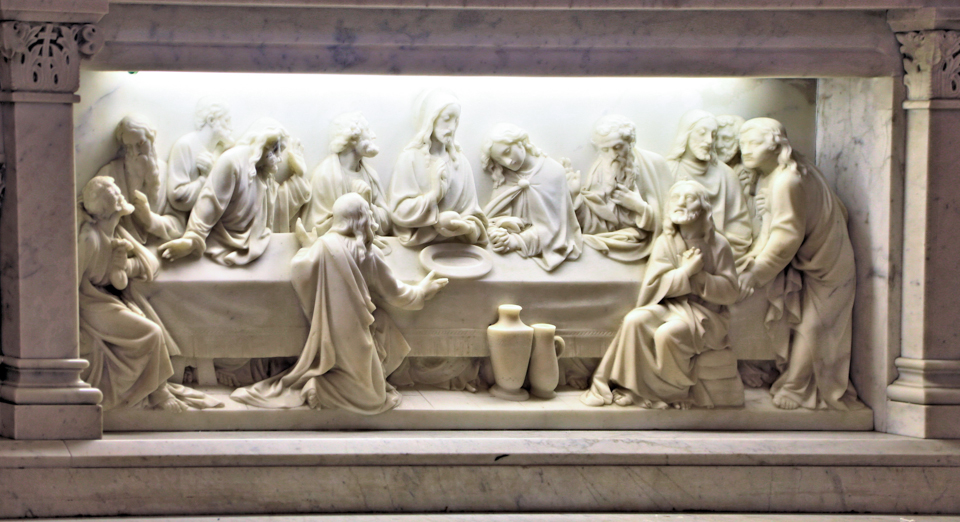
Passion Sunday: A last meal

Altar-1The Gospel reading for Palm Sunday of the Lord’s Passion is quite lengthy and so will not be included here. It can be found at the USCCB website:

Jesus Inaugurates the Eucharist (26:26-30a) As Joachim Jeremias and other scholars have shown in looking at all the received Eucharistic traditions (Paul in 1 Corinthians and the synoptic gospel writers), Jesus follows the form and outline of the Passover Seder. The thanksgiving over the bread and the cup recorded in vv. 26 and 27 will therefore be a regular part of the main section of the Passover meal (making this the third of the four cups of the Passover), and we may reasonably assume that Jesus used the traditional words of thanksgiving. But it worthwhile to point out that said the blessing refers to blessing God, not blessing the bread. Continue reading
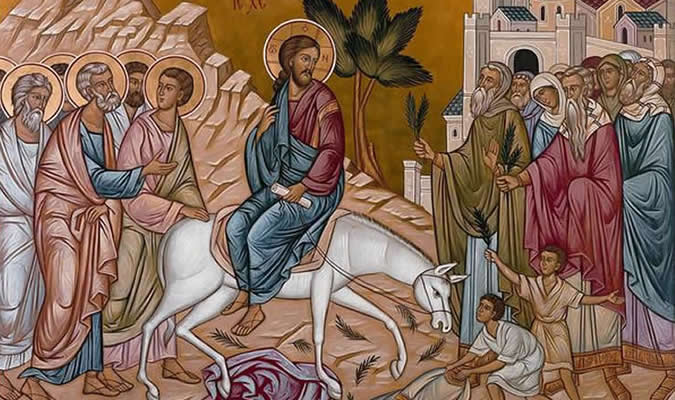
Passion Sunday: betrayer and betrayed

Entry_Into_Jerusalem1The Gospel reading for Palm Sunday of the Lord’s Passion is quite lengthy and so will not be included here. It can be found at the USCCB website:

Commentary. This very long narrative will be broken into small passages that may help the reader to focus and reflect on specific sections. The general outline listed in the previous post is provided for you to locate these smaller passages within the larger framework. The narrow framework is taken from Boring’s outline of the Matthean Passion narrative. Continue reading

Passion Sunday: context

Entry_Into_Jerusalem1Context. The climactic events that have been repeatedly predicted since the Galilean ministry are now about to unfold (12:38–40; 16:4, 21; 17:12, 22–23; 20:17–19; 21:38–39; 23:32). Jesus was aware of the forces arrayed against him (26:2), yet he did not resist doing the will of the Father despite the suffering that would be involved (26:36–46). Ironically, the very religious leaders who opposed and sought to destroy Jesus were the unwitting instruments God used to fulfill his plan to exalt Jesus. Continue reading