
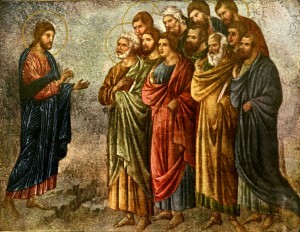
Throughout the Easter Season, our first reading if from The Acts of the Apostles. This is the second volume of Luke’s two-volume work, continues Luke’s presentation of biblical history, describing how the salvation promised to Israel in the Old Testament and accomplished by Jesus has now under the guidance of the holy Spirit been extended to the Gentiles. This was accomplished through the divinely chosen representatives whom Jesus prepared during his historical ministry and commissioned after his resurrection as witnesses to all that he taught. Luke’s preoccupation with the Christian community as the Spirit-guided bearer of the word of salvation rules out of his book detailed histories of the activity of most of the preachers.
 Adam is created as God’s first-born son. He’s also conceived as a priest. In
 Many folks I know have committed to read the entire Bible – an ambitious plan, but one I highly commend and recommend. For some, their plan was to begin at the beginning with Genesis and read straight through to Revelation. That would never be my recommendation. The Bible is not a novel that moves seamlessly from book to book. Rather it is a collection of books. The Genesis-to-Revelation plan has been written about in
  In
In  This week’s video and Scripture readings focus on the Gospel of the Kingdom. Sunday, April 5, is Palm Sunday, when we commemorate Jesus’ arrival in Jerusalem that kick-starts the series of events leading to his death and resurrection. The sham trial of Jesus and his unjust execution seemed like a tragedy to his friends and family. Yet for Jesus, his death was an expression of the love of God as he entered into our suffering so that he could overcome it. In the story of Jesus, we are invited to see that even the most unwelcome and tragic events cannot thwart God’s plan to restore our world. It seemed a particularly good study for the days of “safer-at-home.”
  friarmusings