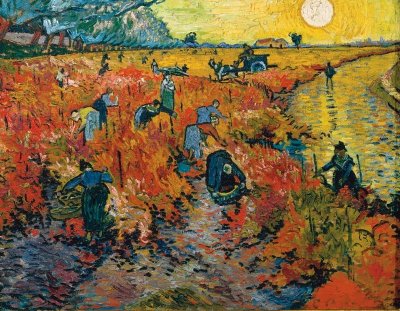
Commentary. This parable begins much like Isaiah 5:1-2 (the reading from the OT accompanying our gospel). It is the third parable in Matthew with a vineyard setting (20:1-16, the workers in the vineyard; 21:28-32, the two sons). What does the vineyard represent? In Isaiah it represents Israel and many have assumed that is its meaning in the parable, e.g., the vineyard = Israel; the tenants = religious leaders; landowner’s slaves = prophets whom they rejected. With this interpretation, we note that the vineyard is not destroyed, but turned over to new tenants. To use another biblical metaphor, the unfaithful, greedy shepherds are removed (Mt 9:36; Ezekiel 34) and new shepherds are installed to care for the sheep. Continue reading
Monthly Archives: September 2014
The Vineyard: context
Matthew 21:33–43 33 “Hear another parable. There was a landowner who planted a vineyard, put a hedge around it, dug a wine press in it, and built a tower. Then he leased it to tenants and went on a journey. 34 When vintage time drew near, he sent his servants to the tenants to obtain his produce. 35 But the tenants seized the servants and one they beat, another they killed, and a third they stoned. 36 Again he sent other servants, more numerous than the first ones, but they treated them in the same way. 37 Finally, he sent his son to them, thinking, ‘They will respect my son.’ 38 But when the tenants saw the son, they said to one another, ‘This is the heir. Come, let us kill him and acquire his inheritance.’ 39 They seized him, threw him out of the vineyard, and killed him. 40 What will the owner of the vineyard do to those tenants when he comes?” 41 They answered him, “He will put those wretched men to a wretched death and lease his vineyard to other tenants who will give him the produce at the proper times.” 42 Jesus said to them, “Did you never read in the scriptures: ‘The stone that the builders rejected has become the cornerstone; by the Lord has this been done, and it is wonderful in our eyes’? 43 Therefore, I say to you, the kingdom of God will be taken away from you and given to a people that will produce its fruit. Continue reading
Pilgrimage
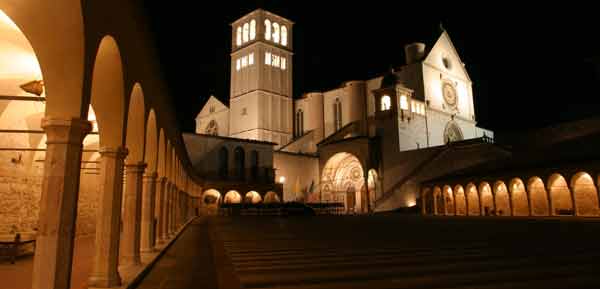
This week beginning Sunday, September 28th, a number of parishioners and I will start our perigrinatio por Christo – our wandering for Christ – into the heart of Franciscan Italy. It is not a tour, but rather a pilgrimage. Of course we will tour many places, but what is it that makes a tour a pilgrimage? Continue reading
Doing the father’s will: their answer
Their Answer. The question that Jesus posed is now filled out: the chief priests and elders are required to adjudicate between the two brothers. For “doing the will of” God distinguishes mere profession from active compliance, and so here it suitably distinguishes between the attitudes of the two sons. Jesus’ question thus allows only one reasonable answer, which the Jewish leaders duly provide, but, like David in his response to Nathan’s parable (2 Sam 12:5–7), in so doing they provide Jesus with the ammunition he needs to mount an attack in v. 32 on their own inconsistency. First, however, he spells out its consequences. Continue reading
Doing the father’s will: change
When Jesus asks, “What do you think?” (21:28) one has to hear the question in the context of their previous refusal to answer a question about the person and ministry of John the Baptist. Jesus does not allow the Jerusalem leadership’s previous strategic silence to pass into obscurity. Since the new question is about characters in a story, it is indirect, and the leaders cannot avoid answering it. Their own answer will likely expose the weakness of their human authority. Continue reading
Parable of Two Sons: authority
Commentary. Jesus had left Jerusalem for a brief stay in Bethany. He has now returned to the Temple area where, when he left the day before, the chief priests and scribes were angry with him (cleansing of the Temple, vv.12-17.) Given the deeds of the previous day, it seems only natural that the chief priests and the elders would ask about his credentials and question his authority. Continue reading
Parable of Two Sons: context
Matthew 21:28–32 28 “What is your opinion? A man had two sons. He came to the first and said, ‘Son, go out and work in the vineyard today.’ 29 He said in reply, ‘I will not,’ but afterwards he changed his mind and went. 30 The man came to the other son and gave the same order. He said in reply, ‘Yes, sir,’ but did not go. 31 Which of the two did his father’s will?” They answered, “The first.” Jesus said to them, “Amen, I say to you, tax collectors and prostitutes are entering the kingdom of God before you. 32 When John came to you in the way of righteousness, you did not believe him; but tax collectors and prostitutes did. Yet even when you saw that, you did not later change your minds and believe him. Continue reading
Standing Idle
Certainly, this parable is about the generosity of God and a good preacher would do well to develop that thought. Me? I’ll do something else. I was captured by the scene when the landowner goes into the marketplace and finds people there and asks them: “Why do you stand here idle all day?” Too often we assume they got up late or were not industrious enough, or did not want it bad enough. Certainly our recent and current financial times can help us re-imagine the scene. We all know friends, family members and associated who are “idle all day,” unemployed or underemployed, unable to use their gifts and talents because there is no opportunity available, or apparent – and they are just waiting, hoping that a generous “landowner” will come and give them an opportunity. Just the chance to use their experience, their God-given talents. Continue reading
The Lord is Near
I’ve been talking to moms, and as it turns out, working moms. One of them gave me a definition of a working mom: “an ongoing experiment to prove that sleep is not essential to human life.” You had to laugh even as you recognized the deeper truth. We are busy people: moms, dads, kids, seniors, young professionals. However you want to classify it, we are busy people. But, this week I have been talking to moms. Here is a composite of a day in the life. Continue reading
What Can We Say
What Can We Say. Patricia Datchuck Sánchez writes:
“Like most scriptural texts, this parable also should be evaluated and appreciated with regard for its various levels of development. At its initial or basic level, the parable defended Jesus’ missionary methodology of reaching out to extend the blessings of the kingdom to tax collectors and sinners. Whereas his contemporaries believed these to be pariah with no claim to salvation, Jesus’ words and works indicated that sinners were not only on equal footing with the righteous but were in fact the ones to whom God manifested special love and mercies.” Continue reading