
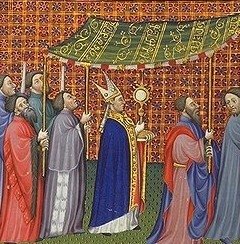
 On this coming Sunday, the Church will celebrate Corpus Christi. At its core the solemnity is a celebration of the Tradition and belief in the Eucharist as the Real Presence of the Body and Blood of Jesus Christ. In the early church there was no perceived need for a unique celebration. Celebration of the Tradition and belief was part of the Holy Thursday liturgy. But that all changed in the 12th century. You can read more about how the feast came to have its feast day here. Continue reading
Living Bread: context
1
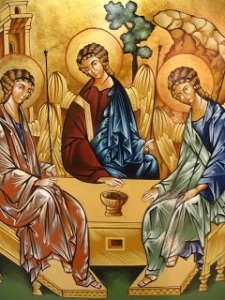 Years ago, while a Franciscan novice, my fellow friars and I attended a gathering of all the Franciscan novices, men and women, who lived in the Eastern United States. During our week-long gathering, each group was responsible for leading morning or evening prayer, or animating the Eucharistic celebration. One morning, a group of Franciscan sisters was responsible for morning prayer. Just before we were to begin, the leader of prayer explained that we would not being using the traditional words associated with the sign of the Cross. Rather, we would say “In the Name of the Creator, the Redeemer, and the Sanctifier.” She explained this was a way to remove the gender bias from the opening of prayer and so to make all feel welcomed.
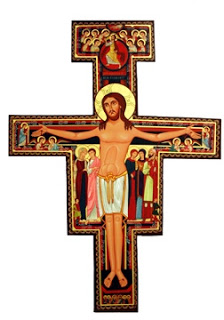


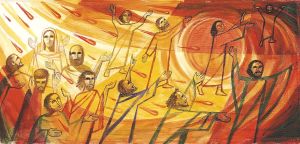 Pentecost Sunday is a day on which we are reminded that the Holy Spirit was promised and has been given. We celebrate the fulfillment of a promise by Jesus that the Advocate, the Paraclete, the one sent by Jesus would come to remind us of all that Jesus taught, to be with us, and to bring to us the power of God. We celebrate this day with three readings – each one of which is filled with mention of the Spirit. The first reading is the account from Acts 2 so familiar to every Christian, 50 days after the Resurrection. We imagine it as a very public event in which the power of the Spirit came with the roar of a great wind, as though tongues of fire, and suddenly the disciples can speak in a way that people from everywhere can understand them. It is as though what happened at the Tower of Babel is undone and finally the world can be united. The Spirit-filled disciples are to be the agents that restore unity to the world.
  friarmusings