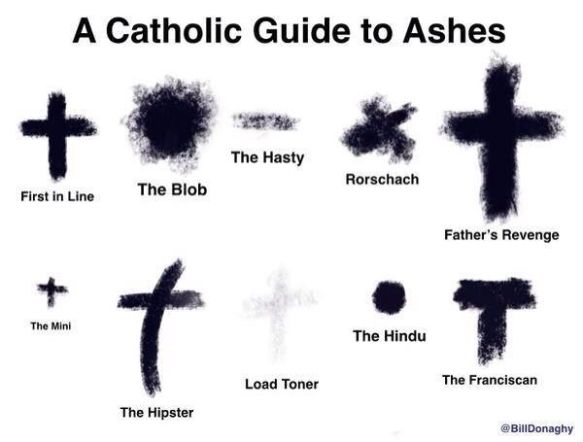
Marks of Ash Wednesday
Image
1

 Satan. “Satan” comes from the Hebrew verb STN meaning “to be hostile, to oppose”. The noun means “adversary,” who usually is an earthling in the OT, but in 1 Chr 21:1; Job 1 & 2; Zech 3:1, 2 it refers to a heavenly being and is transliterated “Satan”.
In the LXX, the Hebrew satan was always translated by the Greek diabolos (“the slanderer, the devil”), a word that doesn’t occur in Mark. Continue reading
 Traditions can be big or small, important and not. Not all traditions are created equal. If each one of us are to be a person faithful to Gods’ eternal covenant in Christ; if we are to be a church faithful to that covenant, then we must be a people who remember rightly and hold onto the Traditions that go to the heart of faith, the heart of the covenant. Continue reading

