 August 11th, is the feast of St. Clare of Assisi. Clare was born July 16, 1194 as Chiara Offreduccio the eldest daughter of Favorino Scifi, Count of Sasso-Rosso and his wife Ortolana. There are many legends of how Clare and Francis met, but it is clear that Clare would have know about Francis and his movement of brothers seeking to embrace Holy Poverty.
The Beginning. Having refused to marry at 15, she was moved by the dynamic preaching of Francis. At 18, she escaped one night from her father’s home, was met on the road by friars carrying torches, and in the poor little chapel called the Portiuncula received a rough woolen habit, exchanged her jeweled belt for a common rope with knots in it, and sacrificed the long tresses to
Francis’ scissors. He placed her in a Benedictine convent which her father and uncles immediately stormed in rage. She clung to the altar of the church, threw aside her veil to show her cropped hair and remained adamant. Continue reading →

 I am sometimes given to modifying a homily after having already given it during Mass. Sometimes the genesis is a connected thought, sometimes a comment from a parishioner, and sometimes it is just the Holy Spirit… Here was one of today’s diversions from the original homily – When things change. Continue reading
 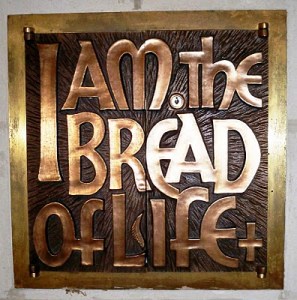 The good news is that during this summer we are graced to hear the Gospel of John, chapter 6 – the “Bread of Life Discourse.” It is a wonderfully-told narrative, it is theologically rich, it is incredibly human, and above all it is profoundly Eucharistic. The bad news is that is divided over five weeks of Gospels, breaking up the narrative and challenging our understanding in continuity as we hear what was always meant to be one cohesive gospel. This is week three of five… hmmm? So, let me do this – I will give you a brief summary of my homilies from the last two weeks (or you can read them here: (“
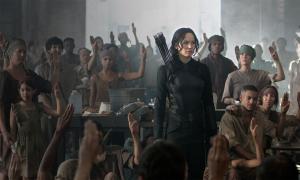 Every year there are many apocalyptic, post-apocalyptic, dystopian movies that make the big screen — and a whole lot more that make Netflix, Amazon Prime, and all the other outlets for cinematic entertainment. These are just a few I thought of over the last several years: “The Hunger Games,” “The Matrix,” “Serenity,” “Blade Runner,” “The Book of Eli,” “Children of Men,” “Divergent,” “Maze Runner,” “The Postman,” “Terminator” — and you will note several of these were series of multiple movies.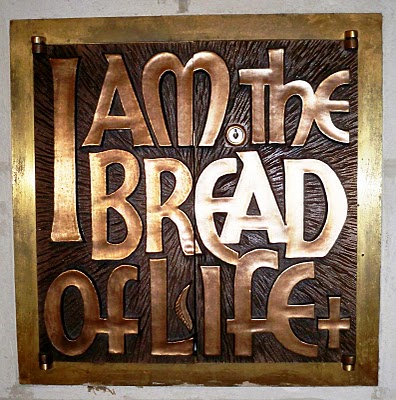
 Cue the music marking the entry of Indiana Jones on horseback (replete with leather jacket, hat tilted at a rakish angle, whip at the ready) accompanied by skilled Bedouin horsemen all at a mad-dash gallop – and all we need is an amazing backdrop. The Nabatean world historical site at Petra, Jordan was happy to supply the setting for Indiana Jones and the Last Crusade. Part of my summer pilgrimage was a two-day excursion into Jordan visiting the place of Jesus’ baptism, Mt. Nebo, where Moses overlooked the Jordan River into the Promised Land; and Petra. Petra is an amazing place for which my photographs do not do justice. But other than “how I spent my summer vacation,” why would I bring it up in this column?
  friarmusings