
 When I was a child, I used to walk five miles to school in the snow, just to let them know that I was too sick to come to school that day.” So my father used to tell me. Hmmm…? Really – but hey, dad was really old, right? He probably grew up in the ice age and maybe the weather was very different back then. Such are the stories of our youth as parents try to teach us the lessons of life, sometimes wrapped in yarns, tall-tales, and memories of a different time and place. I still wonder how the to-and-from the store was uphill both ways. Continue reading
Holy Week
Reply
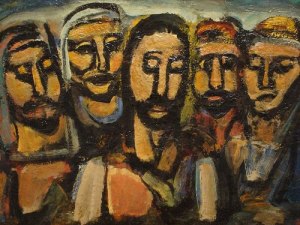 I find that Luke’s treatment of Judas offers an important message. There are some major differences between Luke’s account of Judas and what the other Gospels say about him — and in our day and age, it might be good to hear about Judas — at least Luke’s presentation of Judas.
 A week or so ago, at our Men’s Prayer Group meeting, at the very end of the meeting, I offered a spiritual exercise in the light of that weekend’s Sunday gospel – the Prodigal Son. The exercise was to write a letter to one of the characters in the parable. Here is one of the letters that was sent to me. It is an interesting Lenten reflection for all of us. My
  Every year on the Sunday before Easter – the sixth Sunday of Lent – the church celebrates “Palm Sunday.” Most general calendars list the day as “Palm Sunday,” but if you look closely at a liturgical calendar you will see that it is actually called “Palm Sunday of the Lord’s Passion.” The name is appropriate as it celebrates Jesus’ triumphal entry into Jerusalem but also commemorates the beginning of Holy Week and Jesus’ final journey to the cross.
 Part of life is often seen in the rearview mirror. Repentance and conversion need the rearview mirror – to see what has been and to begin to think what is possible. Lots of things can be seen in that mirror – memories good and bad, wisdom, information about the choices we’ve made, … and regret.
  Word gets around. Visitors or parishioners will sometimes stop me on the sidewalk in front of church and remark, “I heard you were in the Navy…” This is, of course, a prelude to reminisce, tell sea stories, recount homeports and ports-of-call, and all manner of things true and…. well, sea stories. Back in the day I was conversant in all the acronyms of naval service of the day. If someone asked if I ever did a loop through AUTEC, I knew what they were talking about. If someone said, “Bravo Zulu,” I understood. “COMNAVSEASYSCOM” – got it… but this century has a whole lot of new acronyms that just evade my comprehension.
  This coming weekend the
  This coming Sunday marks the
  friarmusings