
One of the descriptions of God that is oft repeated in the Bible is that God is “gracious and merciful, slow to anger and abounding in love and fidelity, continuing his love for a thousand generations” (Ex 34:6-7). Our good friends at The Bible Project have produced an series of videos that explores and explains this simple verse. Today’s installment is “Faithful.” At the bottom of the page who will be able to see the entire series if you would like a refresher or to catch up. Enjoy!
As I always note, the Bible Project is an amazing not-for-profit group that I think worthy of our support for their great work of evangelization.
 Between yesterday and today, our first reading covered the story of Creation from Genesis 1. It is a familiar story, a story told in children’s book, a story we have heard countless times over the years. It is a story that I think we are so familiar with that we no longer bring that same wonder and imagination when we first heard the account as children. And yet it is perhaps the fundamental account of the Power of God’s word – working toward good – working toward very good. Which is not a bad description of what we hope God’s word is creating in us: a movement from good to very good.
 Next Sunday is the

 The story of Job is the well-known biblical account in which a person’s life goes from prosperity and security, from joy to despair. He has lost his family, his possessions, his security – and Job is the one who asks aloud what some of us only whisper – where is God in all of this? Job watches while his life unravels losing prosperity, family and feeling that the entirety of his life under assault. He has looked into his life to see if he is being punished for sin. But he finds none. And the assault doesn’t stop. He grows sick and covered with sores. No wonder he laments: “My days … come to an end without hope. …. I shall not see happiness again.”
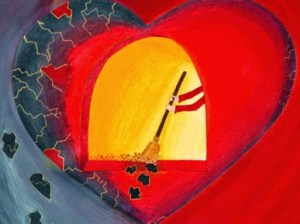 Back in the day when I was working in the world and spending way too much time on airplanes accumulating way too many frequent-flyer miles, it seemed to me business travelers did three things on longer flights: sleep, work, or read Stephen’ Covey’s “The 7 Habits of Highly Effective People.” The book argues that one should align universal and timeless principles with one’s values. Covey sees principles as external natural laws, while values remain internal and subjective. Covey asserts that values govern people’s behavior, but principles ultimately determine the consequences. If sales volume is a measure of the usefulness of this self-help book, then 25+ million copies sold says something. Maybe there are some possibilities for a parallel book about the best practices and habits for Catholics. Might be a Lenten best seller! “The 7 Habits of a Clean Heart.”
 friarmusings