
 Does anyone here really understand bitcoin? It is a mystery to most of us, we really don’t know what it is or how it works – we sort of know – it’s like electronic money, right? In any case, we can figure out how to use it. I think it’s theological parallel is grace; the grace that St. Paul talks about in our second reading. “My grace is sufficient for you.” It’s short, sweet and to the point. Three times St Paul asked and the answer was essentially “No.” But grace is sufficient…. If he can figure out how to use it.
In Bible studies this passage always raises lots of questions. In the course of the dialogue I have always been struck by language we use surrounding the topic: sanctifying grace, actual grace, habitual grace, prevenient grace, sacramental grace, get grace, lose grace, fall from grace, a state of grace and more. Grace is part of the mystery of God and so we humans will ever want to describe it, categorize it, tame it, corral it – all in hopes we can discreetly and definitively understand grace. But it is a mystery. Continue reading
 The world is a much smaller, more connected place. Times change, technology changes, and it unfolds in different experiences. In an earlier post,
  OK, pop quiz time. Who were the “Freedom Riders?” My random (and quite small) sample yielded some interesting answers. The most common was a speculation that it was an organized motorcycle ride akin to the “Rolling Thunder” ride in Washington D.C. around Memorial Day. As it turns out the initial “Rolling Thunder” ride was officially titled “Ride for Freedom.” These rides are a way to bring full accountability for prisoners of war (POWs) and missing in action (MIA) service members of all U.S. wars. It was a good guess and in their way, the Rolling Thunder rides honor those who struggled to preserve our freedom. But they are not the “Freedom Riders.”
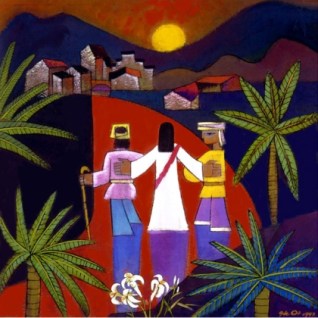 When last seen, in the previous post, I was in the final throes of deciding to step on the plane and go to Kenya. Here were the variables: my house was occupied by a family, my bags were packed, the mission group was financially strained, we were being given one-way tickets, the formation program was finished. A deep breath and a leap of faith, and off I went to Kenya.
 In our previous three articles we described Francis’ part of the 5th Crusade and his meeting with the Sultan of Egypt, Al-Malik al-Kamil. We know that Francis was away at a time when the community began to grow rapidly – and not just around Assisi, but in many other parts of Italy, Spain, France, and the Germanic nations as well. While Francis was away, what happened to the friars he left behind?
 After entering a boat, Jesus made the crossing, and came into his own town. And there people brought to him a paralytic lying on a stretcher. When Jesus saw their faith, he said to the paralytic, “Courage, child, your sins are forgiven.” At that, some of the scribes said to themselves, “This man is blaspheming.” Jesus knew what they were thinking, and said, “Why do you harbor evil thoughts? Which is easier, to say, ‘Your sins are forgiven,’ or to say, ‘Rise and walk’? But that you may know that the Son of Man has authority on earth to forgive sins”– he then said to the paralytic, “Rise, pick up your stretcher, and go home.” He rose and went home. When the crowds saw this they were struck with awe and glorified God who had given such authority to men. (Matthew 9:1-8)
 friarmusings