Unknown's avatar

About Friar Musings

Franciscan friar and Catholic priest at St. Francis of Assisi in Triangle, VA

Why I Keep Reading

People expect me to read the latest theology, spiritual, or scriptural commentary – and I try – but I am slowing down on those things. But I am working in a parish on a full-time basis. The people I serve are reading online news/opinions/articles/etc. from the different ends of the social/political divide and everything in between. I try to sample these things so that I can have some perspective on the perspective of the people I meet “on the sidewalk” after Mass. In our parish, we pretty much cover the spectrum with most people “in the middle” … more or less.

Boomers, Millennials, Gen X, Gen Y, Gen who knows and Gen Z – all have their own experiences, expectations, hopes, and the posture with which they face the future. It’s hard to keep up. I am a Boomer and can’t keep up with my generation. All my friends are retired and their world is morphing into something unknown to me.

Yesterday I read a fascinating article from The Free Press. The have White House credentials and an app – good signs of stability. If you want a Gen Z perspective on being an adult, take a “minutes” and read Admit It, Being an Adult Is Hard. It will give you some perspective.

I’ve shared it a few people and most of the initial reaction was “how could they not….” before pausing and realizing there was a point in time when we (boomers) did not know such things but we figured it out. Boomers and Millennials get to face: how does Medicare work? What is a RMD on by IRA? How could we not have known these things? Well… it wasn’t a need. I guess “need” is the mother of figuring things out.

Anyway… enjoy


Image credit: from the referenced article.

Know who, how and when to serve

By faith…” Abraham went out from a land not his own to a place he and Sarah were to inherit. And in that long journey they continued to move forward, against all odds and sense, but always in faith.  That journey was not only of faith, but also of service.  Three weeks ago our first reading was an example of how Abraham and Sarah welcomed three travelers with hospitality – and this adds to the accounts of Abraham’s service – to his family and clan, to Lot and his family, to the King of Salem, and so many others. The story of Abraham’s life is a story told in the outlines of faith and in the outlines of service – all part of discipleship.

Discipleship has been a focus of the summer gospels, all from Luke. Jesus has pointed out the importance of trust when engaged in mission (14th Sunday); compassion and the universality of the meaning of neighbor (15th Sunday); how anxiety can burden and impede discipleship (16th Sunday); the necessity of prayer (17th Sunday); the way earthly riches can interfere with discipleship (18th Sunday); and finally this week the parable of the reliable steward.

Continue reading

Reflection: Leaders and Disciples

This coming Sunday is the 19th Sunday, Year C. In the posts throughout this week Jesus is teaching his disciples to be ready to open to the Master “immediately when he comes.” The answer to Peter’s question (v. 41) directs the discourse toward the Christian leaders especially. The overriding image of authority in this text is one of service.  Something that Jesus applies in a special way to the Twelve as leaders of a restored Israel.  Where the servants are to stand in readiness for the return of the master, the stewards are responsible for their own work as well as that of the community as a whole.  The care of what has been entrusted foreshadows the parable of the sums of money (19:11–27). The sayings on the distribution of responsibilities or gifts in the concluding verse of the section are clearly pertinent for those in authority, but they have a wider application for all on whom spiritual and temporal gifts have been bestowed.

There is no inconsistency here among responsibility, mercy, and punishment. God’s mercy makes allowances for those who do not know what is expected of them. But the most severe punishment is reserved for persons who are entrusted with great responsibilities and who then high-handedly and irresponsibly mistreat others and fail the trust given to them by their Lord. In a time of permissiveness and daily reminders of the pervasiveness of immorality even within the church, these parables can still serve to remind, exhort, and warn Christians of the seriousness of their moral commitments. If much has changed since the first century, some things have changed hardly at all. [Culpepper, 265]

Blessed are those servants whom the master finds vigilant on his arrival.” (Luke 12:37)

But the message is not just for leadership. All disciples are urged  to remain watchful and faithful: lamps lit, loins girded, eyes alert—not with anxiety, but with readiness rooted in love and trust.

The core message is stewardship as all disciples are entrusted with the Lord’s household; our duty is not just to wait, but to actively care for what has been given to us. Jesus praises those whom the master finds “doing” — not merely believing, but living faithfully and responsibly.  In that we are accountable. Jesus cautions that those who know the master’s will and fail to act accordingly will be held to greater judgment. “Much will be required of the person entrusted with much” (v. 48). Our gifts, time, and opportunities are not solely for our benefit, but for the service of others and the glory of God. We are called to spiritual vigilance—not fear, but purposeful living. The Christian life is not passive waiting; it is daily discipleship, knowing that Christ may come at an unexpected hour.


Image credit: G Corrigan | CANVA | CC-0

There is only One

Today’s first reading is from the Book of Deuteronomy, the fifth and final book of the Torah, presenting Moses’ farewell speeches to the Israelites as they prepare to enter the Promised Land. Structured as a renewal of the Covenant, Deuteronomy restates the Law given at Sinai, calling the people to fidelity, obedience, and love for the Lord. It emphasizes the heart of Israel’s relationship with God—not merely external compliance, but covenant loyalty shaped by memory, gratitude, and reverence. 

In our first reading Moses reminds the  people of Israel’s unique experience of God’s direct action in history with them. It was not the interaction with some remote unknown deity. They have had a personal experience of God,  “the LORD, a God gracious and merciful, slow to anger and abounding in love and fidelity” (Ex 34:6) That experience shaped them (and us) as religious people.

We would do well to pause and consider the landscape of religions across time up to now. How do they compare with the claims Christianity makes about God? Perhaps a short review is in order.

Continue reading

What’s Next for this series?

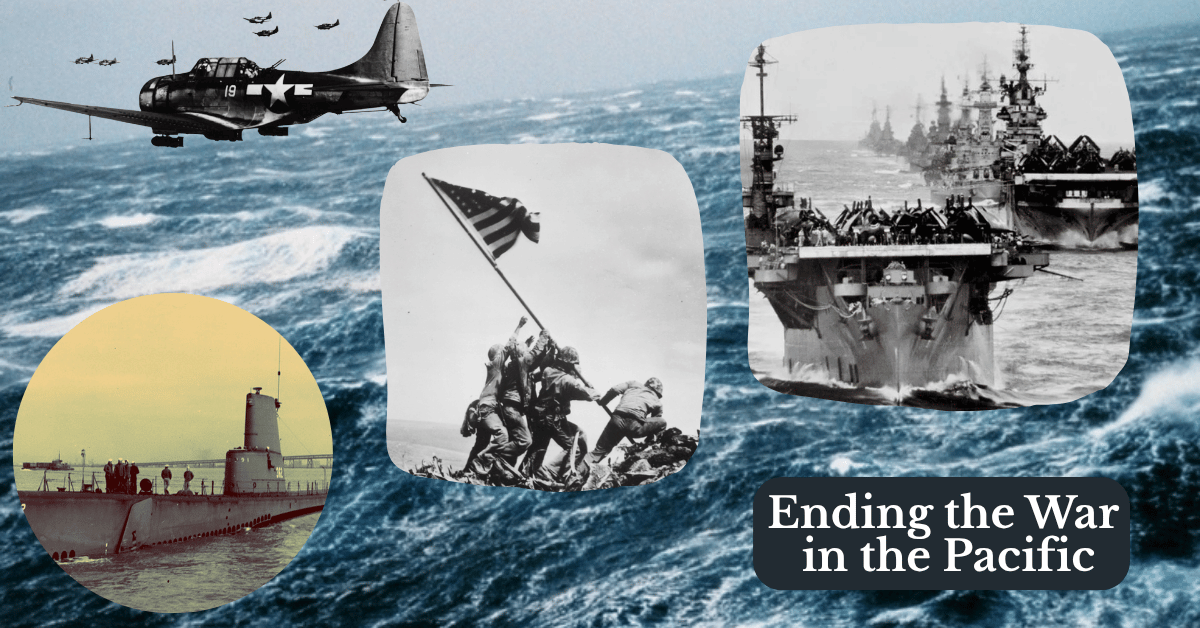
Lots of writing and research. The previous post outlined the moral landscape I want to explore, but I also have an additional objective. As we approach the 80th anniversary of the end of World War II with the unconditional surrender of the nation of Japan and as the last of our WWII veterans pass from this life, I hope this series can remind or teach readers about the long-ago events that still shape modern life.

While this series assumes that atomic weapons were not available for the prosecution of the end of the war in the Pacific, the discussion around the topic and critique of the use of the first atomic bomb offers areas worth considering. Some of those arguments for not using atomic weapons were: Japan knew they were defeated and were ready for peace, naval blockade would have been sufficient, the demand for unconditional surrender was unnecessary, worries about post-WWII communism were premature, estimates of allied invasion-related deaths were inflated, and several other arguments. They are ideas worth exploring in this series.

Continue reading

Failing in faithfulness

This coming Sunday is the 19th Sunday, Year C. In yesterday’s post Jesus highlighted the need for prudence and faithfulness. And now he follows that teaching with a variation on the basic parable. 

 45 But if that servant says to himself, ‘My master is delayed in coming,’ and begins to beat the menservants and the maidservants, to eat and drink and get drunk, 46 then that servant’s master will come on an unexpected day and at an unknown hour and will punish him severely and assign him a place with the unfaithful. 

Jesus rounds off this section with a warning of the certainty of punishment for those who fail to do their duty (v.47). Verse 45 turns to consider the punishment to come for those who are not “faithful and prudent” while the master is away. If the master’s absence tempts the servant to say in his heart, “My master is delayed in coming,” he will be punished severely. But we should recall that Luke has established repeatedly that Jesus knows what is in a person’s heart—2:35; 5:22; 7:39ff.; 9:47; 24:38; Acts 1:24). 

Continue reading

Who must listen?

This coming Sunday is the 19th Sunday, Year C. In yesterday’s post there is a message about being prepared for when the master of the house returns. Peter engages Jesus: 41 Then Peter said, “Lord, is this parable meant for us or for everyone?” Peter perhaps speaks for all the apostles when he asks about the parable. Peter’s question may be meant to raise the question of the privileges and responsibilities of the apostolate. It certainly has relevance to the work of the ministry, a topic that would have been important to Luke’s readers. Both the disciples and the crowd of thousands are introduced in 12:1. In 12:13–14 Jesus responds to a man from the crowd. The sayings introduced in v. 22 are directed to the disciples; therefore, Peter’s question in v. 41 asks for clarification regarding the intended audience, but Jesus answers with another parable. Jesus does not answer directly, but draws attention to the responsibility of all servants, stressing that the greater the privilege the greater the responsibility (v.48)

Green [503] notes: “Perhaps Peter will be as frustrated as the reader may be with Jesus’ answer in vv 42–48, for no direct answer is forthcoming. Instead, Peter’s question (1) draws attention to the universal relevance of Jesus’ message regarding alertness—equally applicable to Pharisees and scribes, the masses, and the disciples; (2) heightens, however, the responsibility of the disciples as people to whom the divine will has been disclosed… and, thus, (3) at least potentially captures the reader in the web of self-reflection: Is this instruction for us?

Continue reading

Listen to Him

The Feast of the Transfiguration is one of those Gospel scenes that almost overwhelms us with beauty. Jesus, radiant with divine light. Moses and Elijah appeared in glory. The mountain enveloped in a cloud—the biblical sign of God’s presence. And the Father’s voice from heaven.

It’s no wonder Peter is caught up in the awe of the moment. “Master,” he says, “it is good that we are here. Let us make three tents.” In other words: Let’s stay here. Let’s not go back down. Let’s preserve this moment forever.

Peter speaks for many of us. When life is full of light and peace, when prayer feels rich, when faith is consoling—we want to build our tents and stay put. We want the mountain without the valley. The glory without the Cross. The vision without obedience to the Word. We want Jesus the shining Savior, not Jesus the suffering servant.

Continue reading

Genesis of the Series

Each year as we approach the Feast of the Transfiguration, which (sadly) shares a date with the atomic bombing of Hiroshima, there will be new reflections from military, political and moral perspectives. There are some reflections that ask the reader to ponder what was revealed/unveiled in Jesus’ transfiguration on Mt. Tabor and then ask the reader to ponder what was revealed/unveiled in the light of the atomic blasts at Hiroshima and Nagasaki. I think that is a good and holy endeavor: considering the revelation of the Divine vs. the human capacity for unleashing that which is wholly other than divine into this world. 

We have long grown accustomed to living in an era of nuclear deterrent, mutually assured destruction. I would venture to say that most days we don’t think about the arsenals, unused in the last 80 years. We are more concerned about new entrants into the “nuclear weapons club.” Those are our modern day concerns and questions.

What were the questions facing leaders in 1945 when considering the first use of atomic weaponry? A weapon that until July 1945 they did not know if one would actually work. Nor were they sure of its explosive power; and there is some indication that there was not a clear understanding of the long term effects of radiation and fallout of post-denotation radioactive materials.

I find that many who have (and will) moralize for or against the decision to use nuclear weapons will make arguments that have been frozen in amber since the 1960s. Those arguments made some 60 years ago against the weapons use were largely made by academics and others detached from the experience of the combat and its history in the Pacific. Those that supported the decision tended to be people who were closer to the grim reality of war and felt that millions of potentially lost lives were saved the day the bomb dropped. It is now 80 years later.

When the war in the Pacific concluded, America moved on to enjoy a time without war. Soldiers, sailors, and airmen returned home and did not talk about the war. Detailed history of war planning and execution remained classified and would remain so for another 50 years, until 1995. Not just Allied documents but also Japanese war plans, reports, orders, directives, and more. The War Tribunals revealed atrocities and crimes, but not overall planning – especially that associated with potential allied invasion of the Japanese home islands. In addition, war diaries and journals of Japanese soldiers, sailors, airmen, leaders and diplomats were available and translated many years later, even as the collection of war reminiscences expanded. The reminiscences tended to be written as that generation reached retirement – those fortunate enough to have survived the war to reach retirement. 

In the early 1960s, before these histories, documents and reminiscences became available, new voices arose from the ranks of society that were largely sheltered from service and combat. Of those who had experienced combat, few went on to become men of letters, ethical theorists, professors of contemporary history, or of international law. The arguments that began to arise in the 1960 were advanced in academia by solid historians such as Gar Alperovitz (b. 1936), Martin Sherwin (b. 1937), Barton J. Bernstein (b. 1936) and Lloyd Gardner (b. 1934) all of whom offered critiques of the decision to use atomic weapons. A summary of the bases of their objections might be simply described as:

  • Moral: killing tens of thousands of civilians non-combatants violated just war principles and humanitarian norms.
  • Military necessity: Japan was already militarily defeated and seeking ways to surrender – and even more so after Soviet entry into the war.
  • Alternative strategies: the U.S. could have demonstrated the bomb’s power or modified unconditional surrender terms.
  • Geopolitical motive: apart from the goal of ending the war in the Pacific, the bomb was a signal to the USSR.
  • There was a lack of consensus among some U.S. military leaders who, after the war, voiced opposition or skepticism about use of the bomb.  

A contemporary of these historians was Herbert Feis (b.1893). While, in general, he held some of the same objections, pointed out the paucity of historical records available to historians in the 1960s and criticized their work on that basis. He was critical of offering as history what were largely undocumented views, memories, and such.

My point is this: the five objections outlined above became the views/objections that have been “frozen in amber” ever since, unaltered by the release of historical documents. For example, the assertion that “Japan was already militarily defeated” is one without meaning in light of the post-1995 historical record. The question facing the leadership in 1945 was more: “The Japanese can not win the war, but they are not defeated. There is a demonstrated culture of fighting to the end with no surrender. Japan has militarized traditional non-combatants. Invasion of the home islands will bring about massive deaths on all sides” … and more. What the leadership had available to them that was not available to the 1960s historians were decrypted messages from the ULTRA (Japanese military code) and MAGIC (Japanese diplomatic code).

The release and declassification of war documents, the availability of translated Japanese war documents and war diaries, and the release of personal documents of Emperor Hirohito upon his death in 1989, all provided a wealth of information that has shed new light on the last four of the objections. But, what remains is still “Moral: killing tens of thousands of civilians non-combatants violated just war principles and humanitarian norms.”

I have a sense that the “decision” to use the atomic bomb was already presumptively “decided” well before August 1945. By the July 16, 1945 Trinity test in the Jornada del Muerto (Path of the Dead) desert in New Mexico, the USS Indianapolis (CA-35) had already set sail from San Francisco on the way to Tinian Island to deliver the weapons that would ultimately be dropped on the Japanese home islands. If I get that chance I may write up my notes on what led me to think that – and it is not an original thought.

But the arc of this series is not about the use of atomic weapons. The series will (attempt to) explore a “what if.” What if the bombs were not available/developed by the second half of 1945 and were not deemed to be ready for us in the foreseeable future? What then? 

What were the choices remaining for the Allies regarding the war in the Pacific? Because what still faced leadership is: “Moral: killing tens of thousands of civilians and non-combatants violated just war principles and humanitarian norms.” That was certainly a question facing planners of any potential invasion of the Japanese home islands. But the numbers involved in the Pacific Theatre of Operations (PTO) were already well past tens of thousands of civilians before 1945. 

The United States Holocaust Memorial Museum (USHMM) and Yad Vashem, Israel’s official memorial to the victims estimates 6 millions Jews were killed in the Nazi Holocaust. That is a number that should horrify anyone. But to give context, the War in the Pacific and East Asia had already resulted in 20-30 million deaths of civilians. In the last 12 months of the Pacific war, approximately 1 million civilians died in Japanese-held Vietnam (French Indo-China). This was only one of the countries occupied by Japan. Others include China, Taiwan, Korea, Cambodia, Laos, Thailand, Burma, Indonesia (Dutch East Indies), Malaysia and Singapore, Brunei and Borneo, Hong Kong, parts of New Guinea, the Marshall Islands, Truk, Palau, the Marshalls, and other Micronesian islands.  What would be the civilian death toll as the war dragged on past August 1945? Would it be another 18-24 months? Did the American public have the resolve to support operations in the Pacific given the war in Europe ended in May 1945. 

The war with Germany ended with the invasion of the German homeland and its unconditional surrender. Invasion and unconditional surrender would seem to be part of the Allied vision to ensure neither German or Japanese militarism ever arose in the future.

I should point out that in the aftermath of the war, the extent of civilian deaths in the European Theater of Operations became known to the American public. There were approximately 15 million civilian deaths with an estimated 10 million in Russia and 3 million in Poland alone. 

In the face of such numbers, the world was well past any humanitarian norms and “proportional response” seems like a luxury for “ivory towers.” In the context of the summer of 1945 what was a path forward to stopping the war in the Pacific in the face of the historic reality of the militarism and colonial ambitions of the nation of Japan – when atomic weapons were not available?

This series is not aimed at concluding with “the atomic bomb was the lesser of all the evils about to be faced.” It is intended to hopefully provide a correct historical understanding available to the 1945 leadership who faced the impossible task of ending a war and not repeating the armistice of 1919 that became the next war. 

If one holds that war is never justified, then these posts will likely make little difference. If one holds to the Catholic just war theory and doctrine, these posts will likely lead one to consider the moral question in the context of the “what if” there was no atomic bomb. What next?

For this series, “what’s next” is a brief post on why I am interested in the topic.


Image credit: various photographs from Naval Aviation Museum, National World War II Museum, and US Navy Archives.

Transient Wealth

This coming Sunday is the 19th Sunday, Year C. In yesterday’s post we noted how Jesus points to the past (the Exodus) as a model of what it means to be prepared. Now, having taught about the right use of wealth (vv.22-34, our “missing” text), Jesus reinforces those teachings with the reminder that earthly things are transient at best, but the return of Jesus is certain. In our day, we immediately think in terms of the second coming. But for Jesus’ first century listeners that would be incomprehensible. What is more likely is these verses represent a warning for the impending crisis associated with the crucifixion.  While other meanings may accrue, there is a permanent application in that Jesus’ followers must always be ready to face the crises of life in the spirit of true discipleship. This of course only is the beginning of the meaning and in no way exhausts the richness for clearly there is a reference to the second coming. This passage also fits within a larger theme of watchfulness (12:1-13:9) that is connected not only in theme but in using “masters and servants” as a metaphor for learning and reflection.

“be like servants…ready to open immediately when he comes and knocks”

Be it crisis or second coming, central to the test of faith is the challenge of constant readiness for the Master’s return – either in the parousia or in the Spirit. In several ways Jesus emphasizes that the time of the return will be a surprise – the return of the master from a wedding and the coming of a thief whose arrival is not certain. The examples highlight a constant preparedness – even during the long watches of the night (v.38).

Continue reading