

This week we’re continuing our reflection on the Bible’s raw and honest portrait of the human condition. We will look at the word “transgression” in the Bible, which refers to ways that people betray or violate someone’s trust. This concept provides us with an important perspective as we continue to lament and draw attention to the realities of racial injustice in our culture.It’s never pleasant to focus on our failures or the ways that we are complicit in the betrayal of others, but it’s necessary. Only then can we open ourselves up to the healing and forgiving love of God that transforms us into agents of justice and peace in our world.
The Bible Project is an organization supported by our donations. Support their good work.
 In
In  Kerry Weber, an associate editor at America Magazine, a wife and mom, offered her thoughts on Hope. Her words are from a letter she and her husband wrote to her not-yet-born son on their hopes for his life in the Faith. As do all parents, they wait with expectation to see how this new life unfolds. They wrote:
 Next Sunday is the celebration of the
  This morning I was preparing for the noon-Mass homily on
 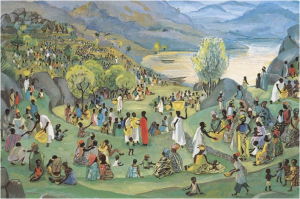 Years from now I will perhaps look back in my notes at this homily and will need to remind myself what was unique and different about this Solemnity of the Body and Blood of Christ, popularly known as Corpus Christi Sunday. Notes to self: 94 days ago, the World Health Organization declared pandemic status for the covid-19 virus. 87 days ago, the churches of the diocese of St. Petersburg were closed to the public. 79 days ago, a safer-at-home order was declared for the City of Tampa.
 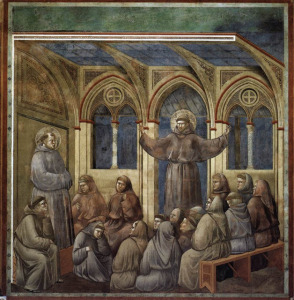 During these last days as the topic of racial justice was omnipresent around us, someone emailed to ask if Francis of Assisi had ever written on race relationships. The short answer is “no.” Francis of Assisi lived in the 13th century growing up in the Umbria region of Italy. His world was provincial and focused on the world in which diversity meant which town you were from and the “other” referred to the “Saracens,” against whom the Crusades were aimed in order to free the Holy Land from Islamic control.
 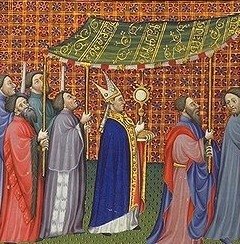 This weekend the Church celebrates the Solemnity of the Body and Blood of Christ, a feast perhaps better known by the Latin Corpus Christi. At its core, the solemnity is a celebration of the Tradition and belief in the Eucharist as the Real Presence of the Body and Blood of Jesus Christ. Many folks wonder why this celebration is not part of Holy Thursday, and it was, mixed in with other themes, e.g., institution of the priesthood. And, all this occurs in the shadow of Good Friday. The placement of the celebration was not one that necessarily lends itself to a joyful celebration.
  friarmusings