

 Sunday is a day when it is easy to find a priest if you want to mention, ask, or chat about something. Most topics are simple and straight forward, but once in a while someone asks a question that is very different from the others. It is then that the conversation is too important to have on the sidewalk but is better suited to a moment when time is more available and others are not waiting to chat or to simply offer their greetings.
Some time ago, a person asked if I thought there are “Times we need to forgive God?” My first reaction was, “Sorry, could you repeat that?” Definitely one of those “Can we talk about this in the office?” questions. That is when the person let me know they were a visitor. The best I could offer in the moment was, “I will have to think about that.” Continue reading
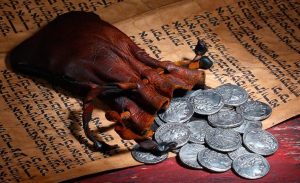 When was the last time you used the word “iniquity?” Admittedly, it is not one of those words that leaps to one’s mind. It sounds somewhat archaic and perhaps reserved to a fire-and-brimstone preacher. Iniquity is not exactly the same as sin. Iniquity describes something as being wicked or immoral in nature or character. It is not an action like sin, but rather the character of the action”. We have a hint of that in the phrase “the iniquity of my sin” (Psalms 32:5). Iniquity can be described as the essence of wrongdoing or evil.
  In
In 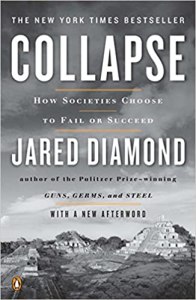 For the first 70 days of the pandemic when the area church’s shutdown, my days were long and demanding for a whole variety of reasons. Eventually we hit the steady-state of a new normal. I took a breath and decided to take up reading. I had long had Jared Diamond’s “Collapse” on my “I want to get around to reading” list. The promo for the book is “Environmental damage, climate change, globalization, rapid population growth, and unwise political choices were all factors in the demise of societies around the world, but some found solutions and persisted.” In other words, why did some societies collapse while other survived. It is not a short read, not overly academic, but was an engaging narrative even if “slow” at times.
 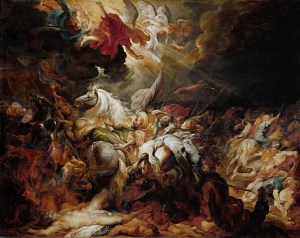 The image is of a painting by Peter Paul Rubens (17th c.), “The Defeat of Sennacherib.” King Sennacherib was the King of Assyria who attempted to conquer Judah and capture Jerusalem in the 7th century BCE. You can read a summary of the encounter with King Hezekiah of Judah in the
  Next Sunday is the celebration of the
 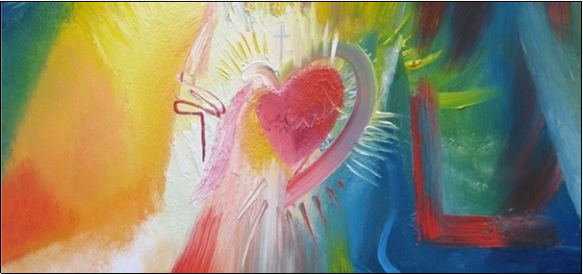 Today we celebrate the Solemnity of the Sacred Heart, our parish namesake. We celebrate what St. Bonaventure identified as the source of the fountain fullness of love poured into our hearts. Our hearts, in Latin the word is “cor” from which is derived the English word, “core” as in the core, the center of being, the center of prayer and hope, the center of our moral compass, and center of the stories that matter to us.
 This weekend we celebrate the patronal feast of our parish – The Sacred Heart of Jesus. There is an earlier post on the history of the feast day in which St. Bonaventure in his writing, “With You is the Source of Life” (which is the reading for the Divine Office on the Solemnity of the Sacred Heart) described the heart as the fountain from which God’s love poured into our lives.
 friarmusings