

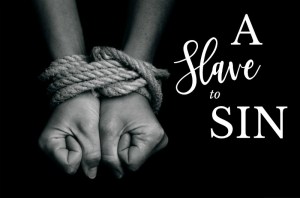
 From the readings of this day’s Mass: “Do you not know that if you present yourselves to someone as obedient slaves, you are slaves of the one you obey, either of sin, which leads to death, or of obedience, which leads to righteousness?”
I think it would interesting if everyone could sit on “the other side of the screen” for the Catholic sacrament of Reconciliation; could sit where the priest sits and hear what he hears. And it is a wish not rooted in any one particular confession, one moment of sin, a moment of redemption, but rooted in what “the big picture” has to say about one part of our human condition. Continue reading
 “Quid pro quo” – it has certainly made the news lately. I suspect (or at least hope most people know it is Latin). It is just one of the many expressions and word rooted in Latin that are part of the lexicon of modern English. Here’s a modest guide to some of the major Latin words and expressions, with special attention to those that are sometimes most misunderstood or misused by modern American speakers.
  This coming Sunday marks our journey in Ordinary Time, the
  In the epic novel The Lord of the Rings, the elves of Lothlorien admit that they are losing their forest lands. But they battle on. The describe their struggle as “fighting the long defeat.” This is source of the comment made by Paul Farmer, who has fought a “losing battle” for health care for the poor. In Tracy Kidder’s biography of Farmer called Mountains Beyond Mountains, Farmer says, “I have fought the long defeat and brought other people on to fight the long defeat, and I’m not going to stop because we keep losing… I actually think sometimes we may win… So, you fight the long defeat.”
 Stewardship in a parish is always a topic best approached cautiously. It shouldn’t be, but it is. People always assume that it is just a $20 word to bring up donations and the need for money. In this musing, I want to talk about Stewardship in two ways: (a) to lead you to online resources that explore the richness of Stewardship, Belonging and Gratitude – the call of who we are to be as Christians in the world. And (b) the easiest way you might ever find to donate to Sacred Heart by not changing a thing in your life.
  Saint Marguerite Marie Alacoque was a French Roman Catholic Visitation nun and mystic, who promoted devotion to the Sacred Heart of Jesus in its modern form. Today is her feast day
 On Sunday, October 19th, Pope Francis declared John Henry Newman, Mother Giuseppina Vannini, Mother Mariam Thresia Mankidiyan, Sister Dulce Lopes Pontes, and Marguerite Bays Catholic saints. In the west I suspect John Henry Newman is the best known, but here is the briefest of resumes of all five Saints. Of the new saints, one is the first woman born in Brazil; another is from Kerala, India. Five were priests or members of a religious order; one was a Swiss lay woman.
 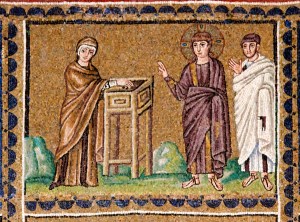 This coming Sunday marks our journey in Ordinary Time, the
  In the first reading, we hear the end of the story of Naaman, a Syrian general, who has just been cured of his leprosy. But we don’t get to hear the start of the story. It turns out that when Naaman comes to Israel he encounters the prophet Elisha. Naaman has come bearing all manner of riches and gifts, but Elisha wants none of it. He simply instructs Naaman to wash seven times in the Jordan. Pretty simple and ordinary, yes?
  There is the natural part of us that tends to speak in generalities or platitudes when we attempt to address God or our relationship to God. Unsurprisingly, after all, the core of it all is a mystery. Believers have struggled for centuries to express the ineffable, the mystery of the divine. Yet we still have hopes: “I want to have God first in my life.” So, what does that look like? Ineffable as God is, what does “first in my life” mean in concrete terms? If you don’t have an idea of what it looks like, how will you know when you have arrived? “But do you ever really arrive?” As they say, if you don’t have a destination then any road will get you there.
  friarmusings