

 I am not normally given to posting op-ed pieces from online sources. But there was an op-ed piece that caught my attention, more specifically, this:
….anger cannot be the sole fuel propelling us on life’s journey. We also need love, for without it, we are no better than those who fear us. To live with anger is to live powerless. That’s not to say the oppressed should never be angered by the actions of their oppressor. Only that anger can spark a movement, but it should not order its steps. Not if the goal of the movement is peace.
…not if the goal of the movement is peace… Continue reading
 This coming Sunday marks our journey in Ordinary Time, the
 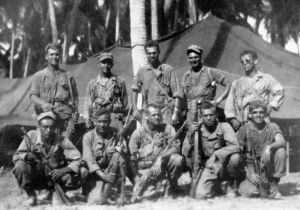 During WWII there was a platoon of Army Rangers deployed well behind enemy lines on a critical mission during the European campaign. A single sniper bullet had killed one of the platoon members. The mission had to continue, but they just could not leave their friend as a stranger in a strange land, buried in an unmarked grave that they might never again find. They remembered a small Catholic church in the area. So, under the cover of the moonless night, they approached the church and rectory, and knocked on the door. After a while a single light came on in the house. Eventually, the door cautiously opened, and the parish priest even more cautiously greeted them.
  In a 13th century text called the Il Foretti (The Little Flowers), a story is told about St. Francis in which a brother friar came to him and asked, “Why after you? Why is the whole world coming after you, wanting to see you, to hear you, to follow you?” Some 800 years after the life of St. Francis, this question remains. What is it about this unpretentious figure from the early 13th century that continues to exert such a perennial fascination for Catholics and non-Catholics, believers and agnostics alike? What is it that has made Francis the subject of more books than any other saint? Why has he inspired artists, led ecologists, peace activists, and advocates for the poor to claim him as a patron? Why has he inspired countless tens of thousands of men and women to follow his Rule of Life in religious and secular communities?
 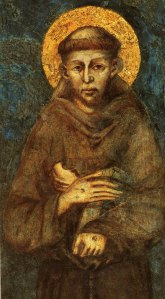 Today is the Feast of St. Francis of Assisi – buona festa!! to Franciscans and those of a Franciscan heart.
 Monday was the Memorial of St. Jerome, best known for his translation the Vulgate Bible. St. Jerome translated from OT Hebrew and NT Greek into Latin. He famously said: “Ignorance of Scripture is ignorance of Christ.” Advice we should all take to heart.
 This coming Sunday marks our journey in Ordinary Time, the
 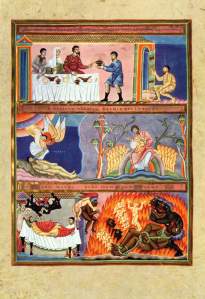 “…between us and you a great chasm is established to prevent anyone from crossing who might wish to go from our side to yours or from your side to ours.…” Such are words spoken about Lazarus and the rich man, traditionally known as Dives. The words describe their fates in the afterlife: Lazarus comforted by Abraham while Dives languishes in a hellish afterlife.
 In Jesus’ time, large agricultural operations such as the one described in our gospel parable were rarely run by the owner or the family, such things were left to the steward to oversee. The steward had the full faith and backing of the owner to operate the business. The steward would sell the oil and wheat production for cash, trade, or in exchange for promissory notes. The bartering that preceded the execution of the promissory note was classic commodity bargaining: I will give you so many measure of oil now, and at this future date you will repay with a higher measure of oil. There were two thing buried in the difference between the higher amount and the original amount: profit for the owner and commission for the steward. That was the way things worked.
  friarmusings