

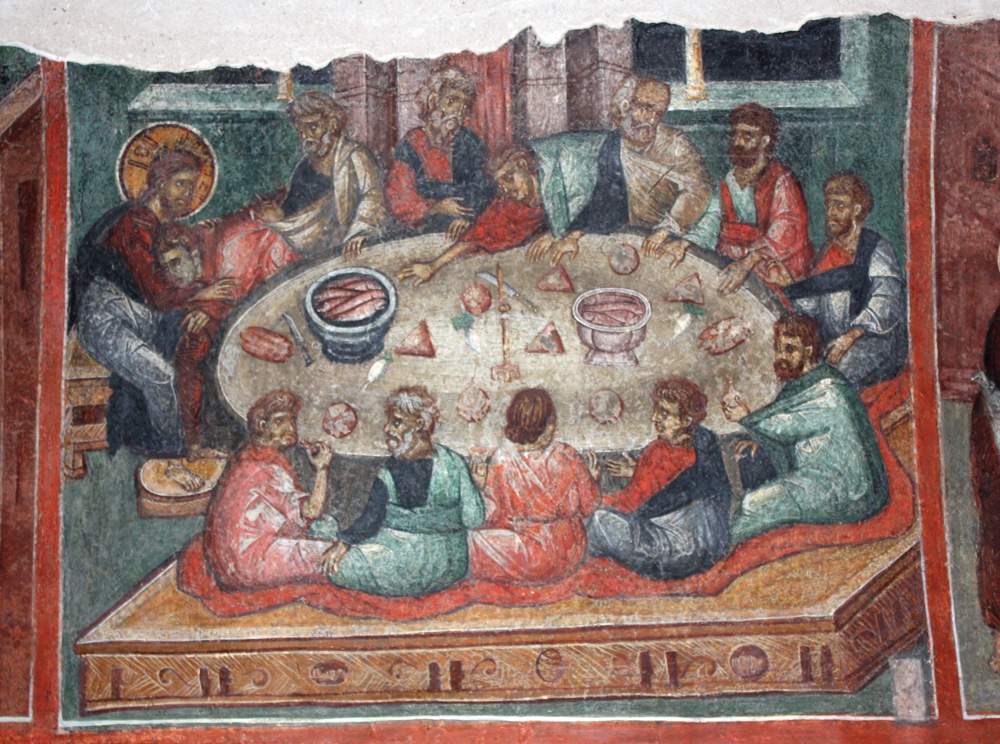
 22 While they were eating, he took bread, said the blessing, broke it, and gave it to them, and said, “Take it; this is my body.” 23 Then he took a cup, gave thanks, and gave it to them, and they all drank from it. 24 He said to them, “This is my blood of the covenant, which will be shed for many. 25 Amen, I say to you, I shall not drink again the fruit of the vine until the day when I drink it new in the kingdom of God.” 26 Then, after singing a hymn, they went out to the Mount of Olives.
The actions and words of Jesus are expressed within the framework of the Passover meal but also point to and indicate a transition to a new covenant that is sealed in the shedding of blood – as are all covenants (cf. Ex 24:1-8; Heb 9:19-21; 10:9-30). But as Jesus has been predicting, he will be the sacrificial offering and it will be his blood that will be shed as part of his passion and death. There are strong allusion to the rite described in Exodus 24:4-8 and thus indicates the new community that the sacrifice of Jesus will bring into being (Matthew 26:26–28; Luke 22:19–20; 1 Cor 11:23–25). Continue reading



 During the last several months, there have been lots of visitors celebrating Eucharist with us. They come from points north where winter has been unrelenting and particularly harsh this year. They are easy to spot. While we have all donned our sweaters and jackets, they are in shorts, polos, and flip-flops. Many of them introduce themselves to me after Mass and comment on what a beautiful church and how welcoming we are as a parish. They tell me of the great experience of parishioners greeting them, chatting with them, and making them feel welcomed. One couple remarked “There are just no strangers in your parish!” As pastor, it affirms that we are what we profess in a tangible way. We live in a way that impacts the visitors among us. Thank you!
 friarmusings