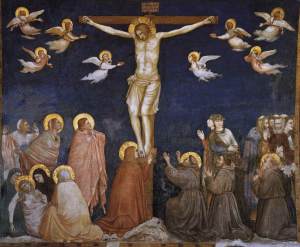
 20 Now there were some Greeks among those who had come up to worship at the feast. 21 They came to Philip, who was from Bethsaida in Galilee, and asked him, “Sir, we would like to see Jesus.” 22 Philip went and told Andrew; then Andrew and Philip went and told Jesus. 23 Jesus answered them, “The hour has come for the Son of Man to be glorified. 24 Amen, amen, I say to you, unless a grain of wheat falls to the ground and dies, it remains just a grain of wheat; but if it dies, it produces much fruit. 25 Whoever loves his life loses it, and whoever hates his life in this world will preserve it for eternal life. 26 Whoever serves me must follow me, and where I am, there also will my servant be. The Father will honor whoever serves me. 27 “I am troubled now. Yet what should I say? ‘Father, save me from this hour’? But it was for this purpose that I came to this hour. 28 Father, glorify your name.” Then a voice came from heaven, “I have glorified it and will glorify it again.” 29 The crowd there heard it and said it was thunder; but others said, “An angel has spoken to him.” 30 Jesus answered and said, “This voice did not come for my sake but for yours. 31 Now is the time of judgment on this world; now the ruler of this world will be driven out. 32 And when I am lifted up from the earth, I will draw everyone to myself.” 33 He said this indicating the kind of death he would die. Continue reading →


 24 Amen, amen, I say to you, unless a grain of wheat falls to the ground and dies, it remains just a grain of wheat; but if it dies, it produces much fruit. 25 Whoever loves his life loses it, and whoever hates his life in this world will preserve it for eternal life. 26 Whoever serves me must follow me, and where I am, there also will my servant be. The Father will honor whoever serves me. Continue reading
  Lately, during weekday Mass celebrations, I have been asking people, “So…how’s your Lent going? Are you getting there?” It is just under three weeks until we celebrate the Mass of the Lord’s Supper on Holy Thursday. So…. how’s your Lent going?



 friarmusings